Presence of gas within the wall of the small or large intestine
Pathogenesis
Mechanical theory
Gas dissects into the wall of the bowel from either the luminal surface through breaks in the mucosa or through the serosal surface by tracking along mesenteric blood vessels
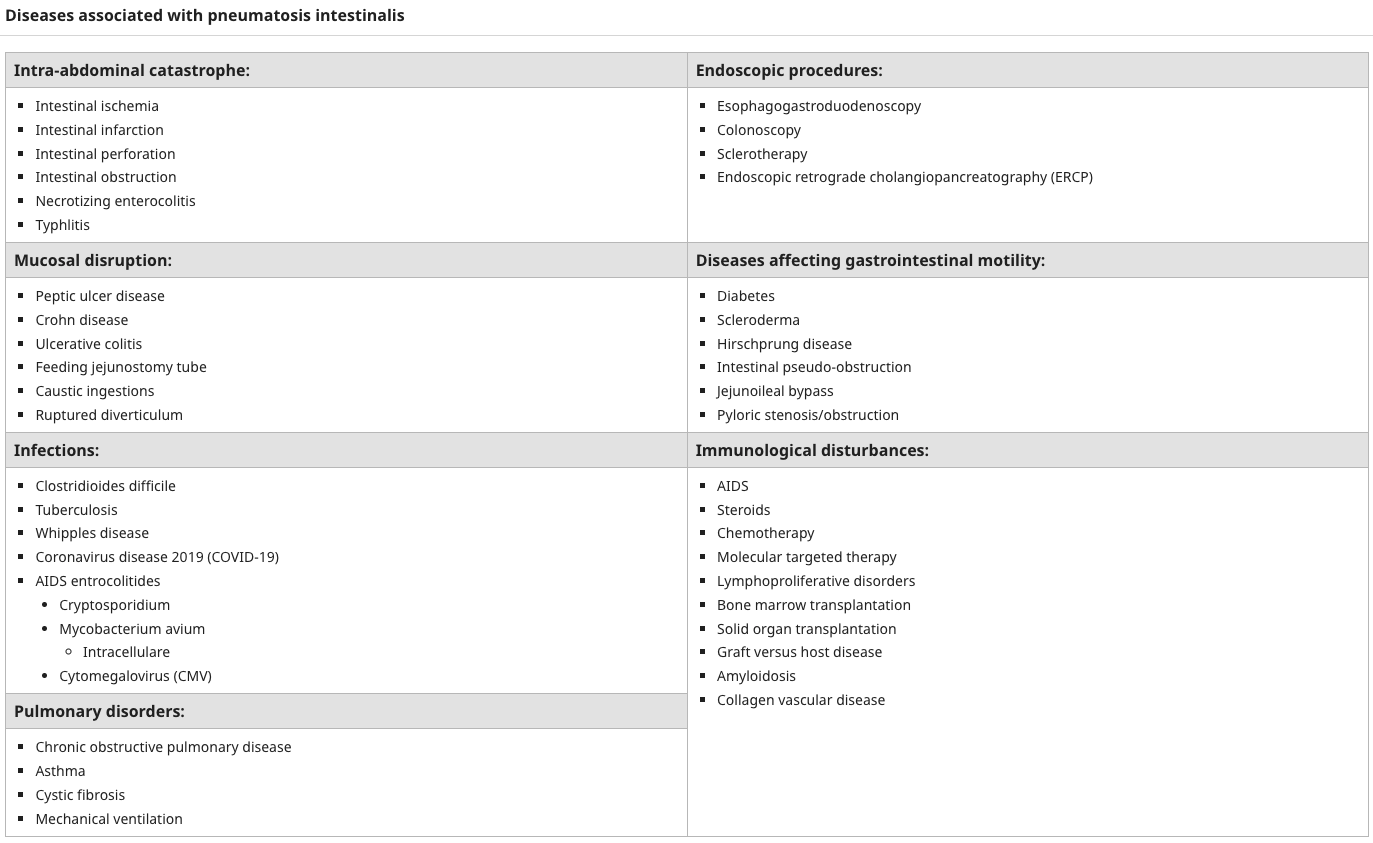
Supported by the association of PI with conditions that disrupt mucosal integrity, such as necrotizing enterocolitis, intestinal ischemia, caustic ingestions, inflammatory bowel disease, and intestinal infections
Offers an explanation for the association of PI with obstructive pulmonary disease. In these patients, coughing may cause alveolar rupture and air may subsequently track along blood vessels into the mediastinum, through the diaphragm, and ultimately to the mesenteric root. Once air has gained access to the mesenteric root, it may course along small mesenteric blood vessels that ultimately penetrate through the bowel wall.
Bacterial theory
Results from gas-forming bacteria gaining access to the submucosa through breaches in the mucosa.
Biochemical theory
Luminal bacteria produce excessive amounts of hydrogen gas through fermentation of carbohydrates and other food.
As the pressure of the gas within the intestinal lumen increases, gas may be forced directly through the mucosa and become trapped within the submucosa
Clinical
Idiopathic - Most patients are asymptomatic
Secondary - may have symptoms of the underlying cause e.g. intestinal ischemia
Causes
Idiopathic
Secondary
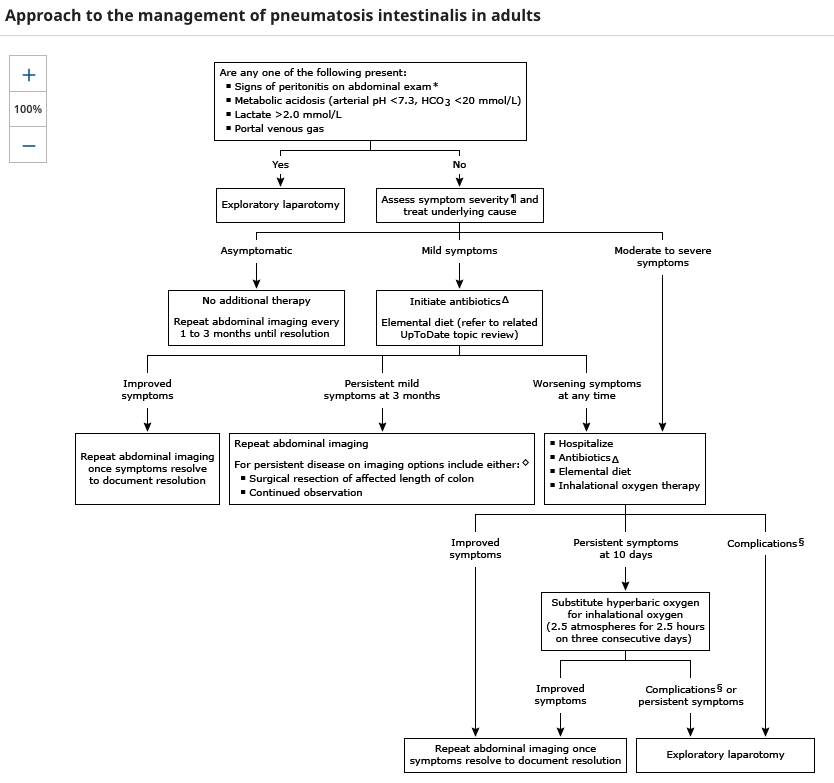
Treatment
Acute laparotomy if
Signs of peritonitis on abdominal exam (eg, abdominal rigidity, rebound tenderness, and/or pain that worsens when the examiner lightly bumps the stretcher)