Definition
- Frailty is defined as increased physical vulnerability of a patient due to a number of pre-disposing factors
- Frailty is an aging-related syndrome of physiological decline, characterized by marked vulnerability to adverse health outcomes.”
Assessment
Frailty can be assessed with a number of factors and scoring systems.
Eastern Cooperative Oncology Group score
- Identifies how active and functional a person is (From 0 fully active -4 bed or chairbound requiring complete care, based on their limitations)
- PS 0 – you are fully active, more or less as you were before your illness
- PS 1 – you can’t carry out heavy physical work, but can do anything else
- PS 2 – you are up and about more than half the day. You can look after yourself but can’t work
- PS 3 – you are in bed or a chair for more than half the day. You need help to look after yourself
- PS 4 – you are in bed or a chair all the time and need complete care
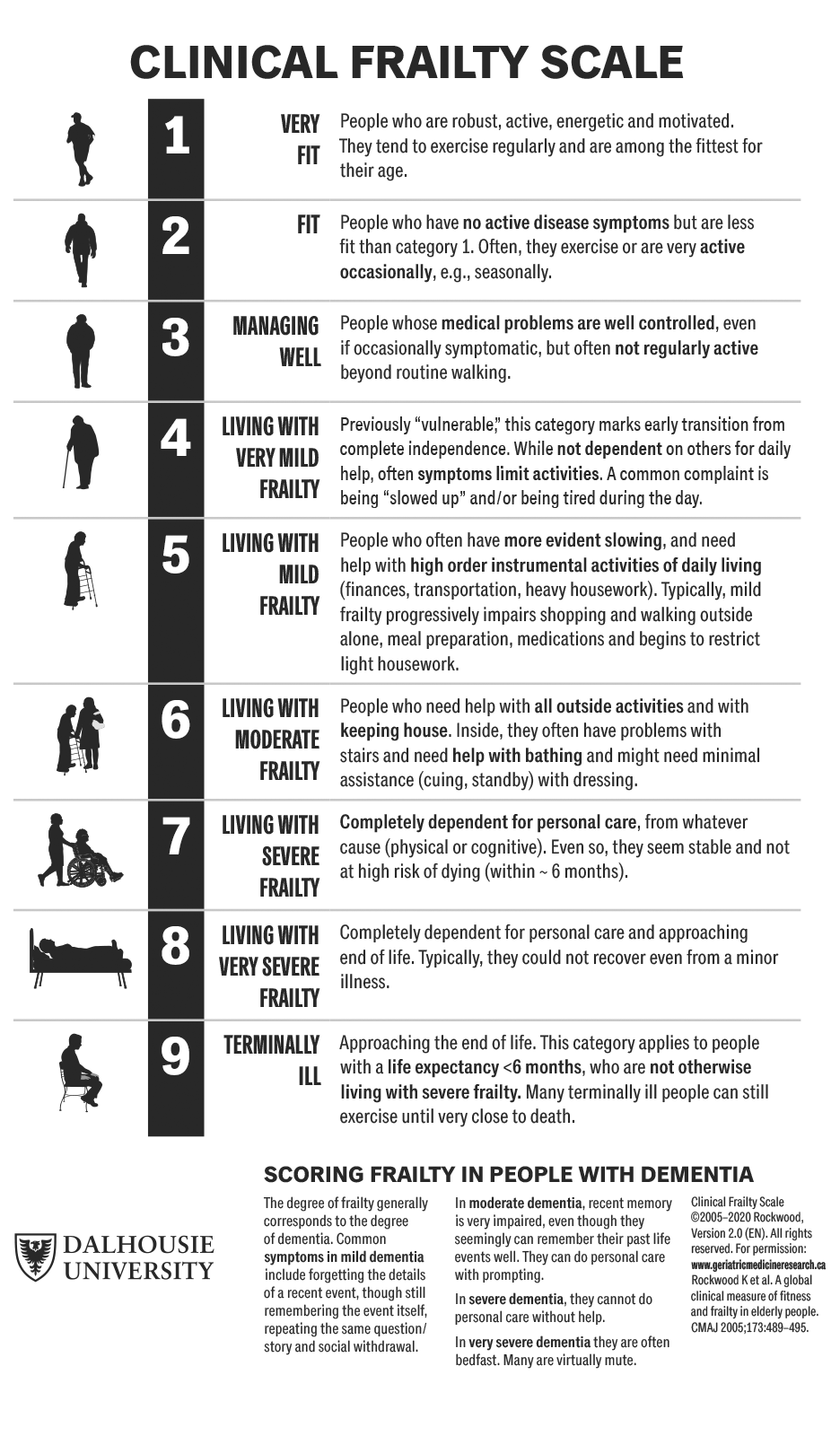
Clinical Frailty Scale
A scale of 1-9, which takes into account comorbidities, physical activity, degree of independence with ADL’s and life expectancy. ability to mobilise, independence, risk of falls and activities of daily living
FRAIL scale
- Fatigue (“Have you felt fatigued? Most or all of the time over the past month?“) Yes = 1, No = 0
- Resistance (“Do you have difficulty climbing a flight of stairs?“) Yes = 1, No = 0
- Ambulation (“Do you have difficulty walking one block?“) Yes = 1, No = 0
- Illnesses (“Do you have any of these illnesses: hypertension, diabetes, cancer (other than a minor skin cancer), chronic lung disease, heart attack, congestive heart failure, angina, asthma, arthritis, stroke, and kidney disease?”) Five or greater = 1, fewer than 5 = 0
- Loss of weight (“Have you lost more than 5 percent of your weight in the past year?”) Yes= 1, No = 0
Frail scale scores range from 0 to 5 (0 = best, 5 = worst) and represent frail (3 to 5), pre-frail (1 to 2), and robust (0) health status.
Reducing perioperative risk
- Pre-op
- Discussion with patient and family about risk vs benefits. Goals of care. Risk of loss of independence, need for higher level care, delirium, progressive decline
- Formal assessment of risk of surgery using P-possum or NZ risk score
- Pre-habilitation: Optimising strength, nutrition, social support, cognitive function and comorbidities prior to surgery
- Involvement of MDT (physio, social worker, OT) geriatrician or physician to optimize patient
- Intra-op
- Choosing less invasive, less extensive or less risky options where available
- Post-op
- Monitoring and aggressively treating post-op complications (delirium, UTI, pneumonia, infection)
- Involvement of family and social supports
- Involvement of MDT to assist recovery and return to function
- Consideration of rehabilitation admission to assist