Overview
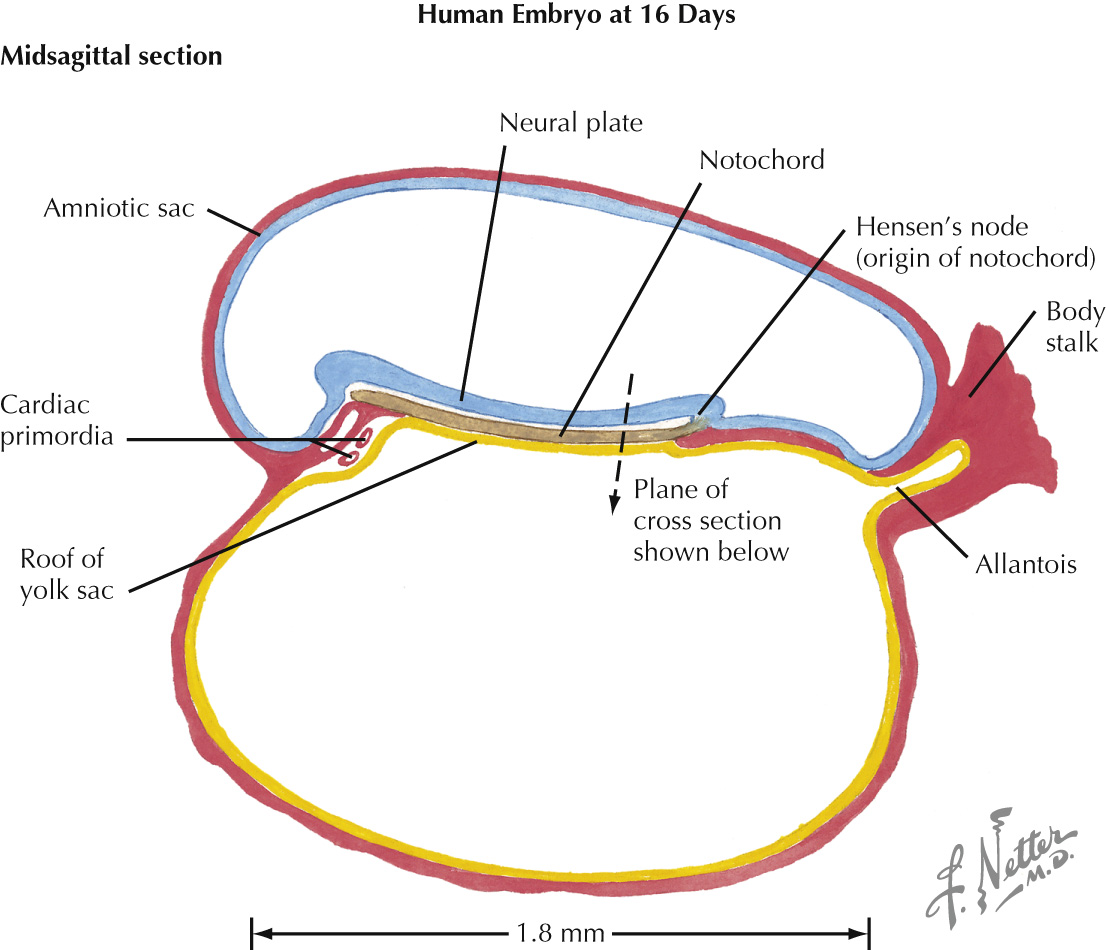
3 major germ layers form the initial developing embryo:
- Ectoderm
- Mesoderm
- Endoderm
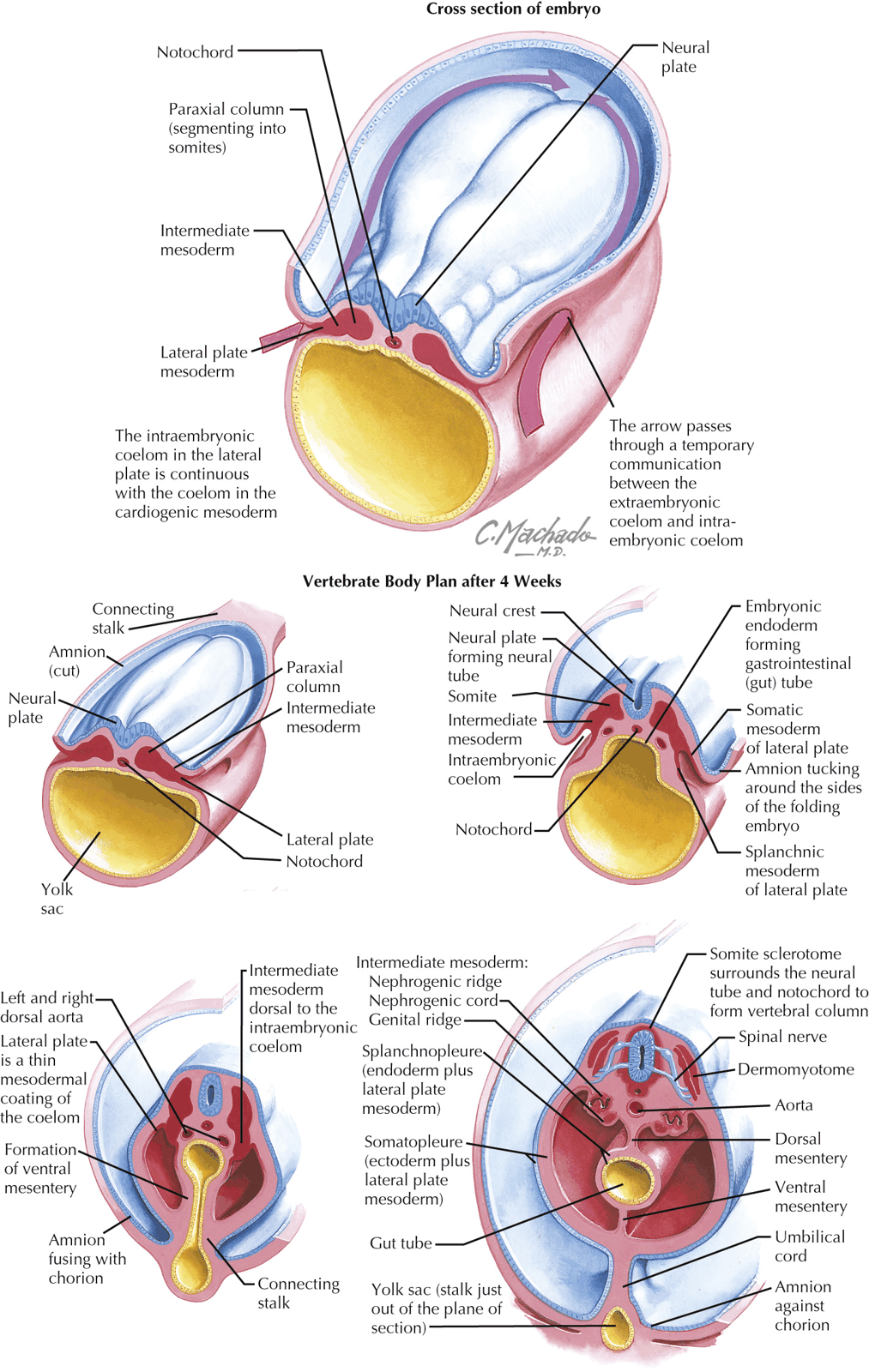
Mesoderm differentiates into:
- Paraxial mesoderm
- Intermediate mesoderm
- Lateral plate mesoderm Ectoderm gives rise to 3 layers:
- Neuroectoderm
- Neural crest
- Epidermis
Early development
Key Terms and Timeframes
- Zygote: Fertilized egg (0–1 day).
- Morula: Solid cell cluster (2–3 days)
- The zygote undergoes mitotic divisions to form a morula (solid ball of cells)
- This travels down the uterine tube
- Blastocyst: Hollow structure prior to implantation (4–6 days)
- The morula develops into a blastocyst, a hollow structure with two layers.
- Trophoblast - Contributes to the placenta.
- Inner cell mass - Becomes the embryo
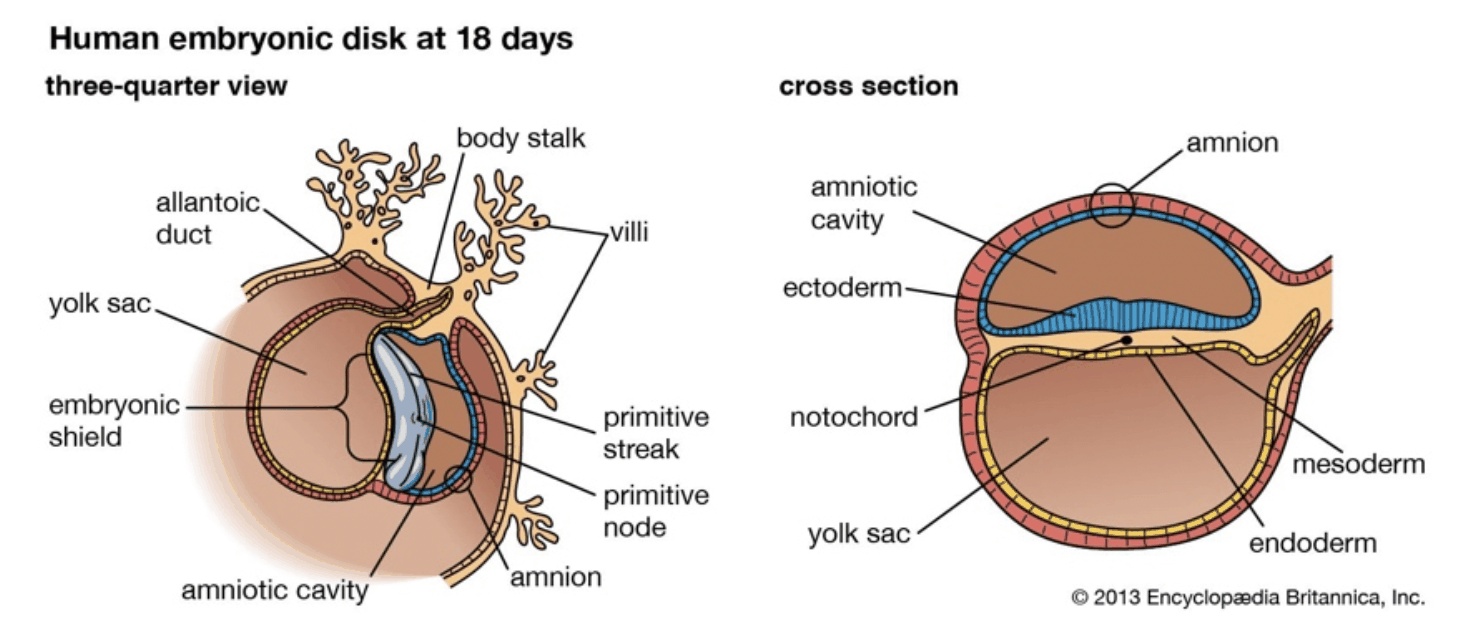
- This forms three layers - endoderm, mesoderm and ectoderm
- Two cavities appear, the amnion and the yolk sac.
- The morula develops into a blastocyst, a hollow structure with two layers.
- Embryo: From implantation to 8 weeks.
- By the end of 8 weeks most organs have differentiated and after that they just mature.
- Fetus: From 9 weeks until birth.
Endoderm
Development:
- The endoderm forms during gastrulation when cells migrate inward and establish the innermost layer of the embryo.
- It lines the primitive gut, which later develops into the gastrointestinal tract and associated structures.
Structures Derived from the Endoderm:
- Digestive System:
- Epithelium of the gastrointestinal tract (except parts of the mouth and anus, derived from ectoderm).
- Liver and pancreas.
- Respiratory System:
- Epithelium of the trachea, bronchi, and lungs.
- Endocrine System:
- Thyroid gland (including parafollicular cells, derived from the ultimopharyngeal body).
- Parathyroid glands.
- Urinary System:
- Epithelium of the urinary bladder and urethra.
- Other Structures:
- Epithelium of the tympanic cavity and auditory tube.
- Epithelium of the tonsils and thymus.
Mesoderm
Development:
- The mesoderm forms as a middle layer during gastrulation, situated between the ectoderm and endoderm.
- It differentiates into subtypes: paraxial mesoderm, intermediate mesoderm, and lateral plate mesoderm, each giving rise to specific structures.
Structures Derived from the Mesoderm:
- Musculoskeletal System:
- Bones, cartilage, and skeletal muscles.
- Connective tissues.
- Cardiovascular System:
- Heart, blood vessels, and blood cells.
- Urogenital System:
- Kidneys, ureters, gonads, and reproductive ducts.
- Dermis and Subcutaneous Tissues:
- Dermis of the skin and underlying connective tissues.
- Other Structures:
- Mesothelium lining body cavities (pleura, pericardium, peritoneum).
- Adrenal cortex and parts of the spleen.
Ectoderm
Development:
- The ectoderm forms the outermost layer during gastrulation and gives rise to both surface and neural tissues.
- It differentiates into surface ectoderm and neuroectoderm.
Structures Derived from the Ectoderm:
- Surface Ectoderm:
- Epidermis, hair, nails, and sweat glands.
- Enamel of teeth.
- Lens and cornea of the eye.
- Neuroectoderm:
- Central nervous system (brain and spinal cord) from the neural tube.
- Peripheral nervous system, including ganglia and nerves, from the neural crest.
- Neural crest cells also contribute to melanocytes, craniofacial cartilage, and parts of the heart (e.g., aorticopulmonary septum).