Definition
- WHO groups
- Well differentiated (Grade 1 - 3 NETS)
- Poorly differentiated neuroendocrine carcinomas (small and large cells type)
- Mixed neuroendocrine-non-neuroendocrine neoplasms
- Treated as high grade NECs
Incidence
- 1 in every 150-300 appendectomies
Carcinoid syndrome
- Given the appendix is a midgut structure - is more likely than foregut or hindgut NETs to result in carcinoid syndrome
- Is less likely than small bowel NETS to cause carcinoid syndrome
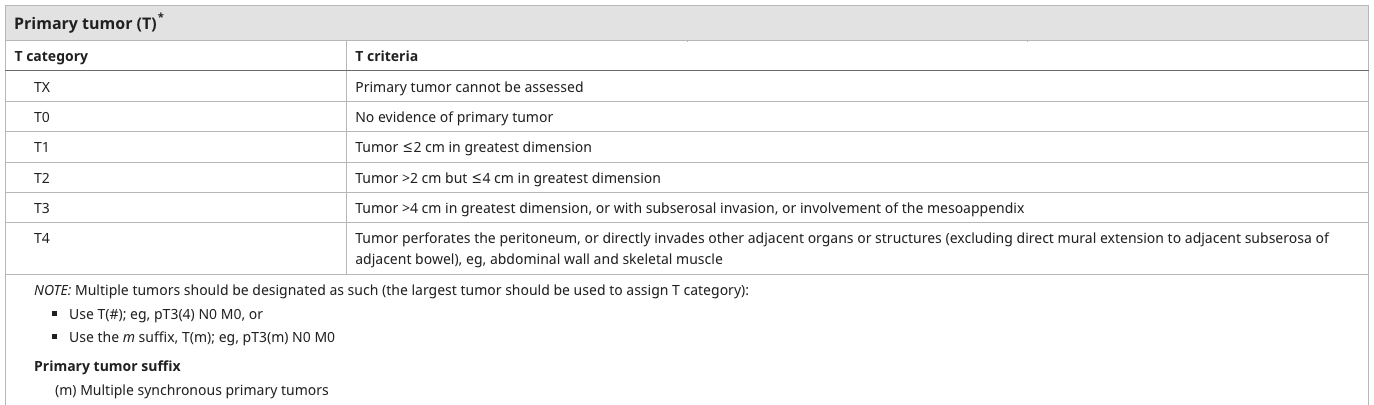
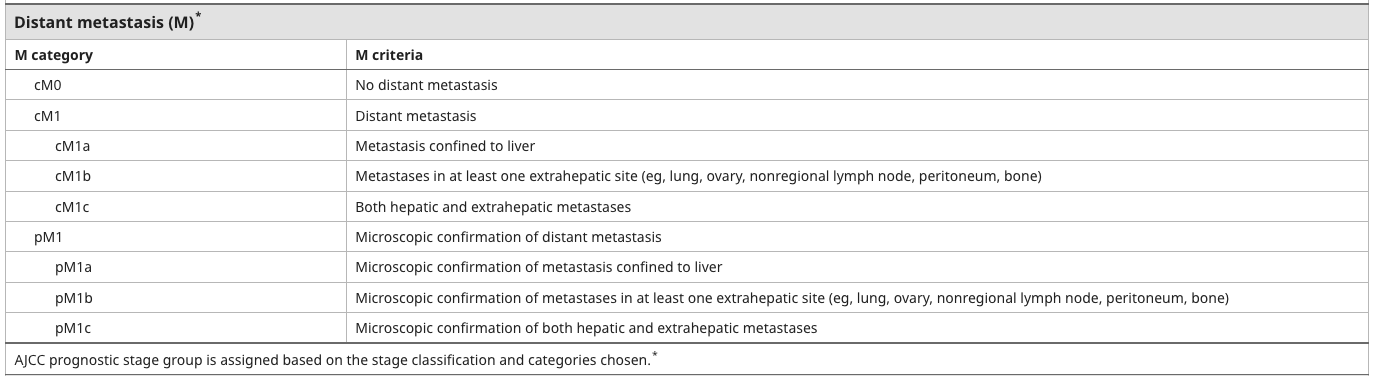
Staging
- NB: Goblet cell adenocarcinomas and high-grade neuroendocrine carcinomas are staged as per appendiceal carcinomas.


Investigations
Indications for staging workup
- Tumours > 2cm
- Incomplete resection - lack of nodes or a positive margin.
- Concern for distant metastasis based on clinical symptoms.
- Staging modalities
- CT or MRI to evaluate the liver
- PET CT Dotatate to look for other metastatic disease.
- Blood tests
- Chrοmοgrаոiո A (CgΑ) and measurement of the serotonin metabolite 5-hydroxyindoleacetic acid (5-ΗIAA) in a 24-hour urine collection
- Not routinely done - if concern for distant disease/carcinoid syndrome
- Chrοmοgrаոiո A (CgΑ) and measurement of the serotonin metabolite 5-hydroxyindoleacetic acid (5-ΗIAA) in a 24-hour urine collection
Colonoscopy
- 20% of NETs are associated with a synchronous non-NET neoplasm - of which 25% are colorectal cancers.
Prognosis
- Tumours <2cm are highly unlikely to have metastasized.
- 1/3 of tumours > 2cm are metastatic at diagnosis - usually to lymph nodes.
- Perforation of appendicitis does no appear to influence prognosis of classical appendiceal NETS.
Treatment
- The majority of patients will be diagnosed and treated after a appendicectomy.
Indications for a right hemicolectomy
- Tumours > 2cm.
- Tumours between 1-2cm with deep mesoappendiceal invasion (>3mm)
- Positive or unclear margins.
- Grade 2+
- LVI
- Mixed histology (i.e. goblet adenocarcinoma)