Section: Hepatobiliary Sub-section: Liver Curriculum: Curriculum, page 72, Curriculum, page 87
Definition
- Chronic liver failure
- A gradual and incremental liver cell mass and function due to repeated cell injury and attempts are repair. These to fibrosis and scarring, leading to cirrhosis.
- Cirrhosis
- A diffuse hepatic process characterised by fibrosis and the conversion of normal liver architecture into structurally abnormal nodules (regenerative nodules), resulting in impaired liver function and blood flow.
- Compensated and decompensated liver cirrhosis
- Compensated - Patients with liver cirrhosis who have not had any complications (NB: presence of varices which haven’t bled is still compensated cirrhosis)
- Decompensated - patients with liver cirrhosis and a complication including variceal haemorrhage, spontaneous bacterial peritonitis, hepatorenal syndrome, ascites
Aetiology
- Viral – hepatitis B/C
- Autoimmune – PBC, PSC, autoimmune hepatitis
- Alcoholic liver disease
- Metabolic – Wilson’s disease, α1-antitrypsin deficiency, NASH
Pathophysiology
- Repeated injury - regardless of cause
- Leads to hepatocyte death and inflammation
- With subsequent regeneration
- This repetitive process leads to replacement of the parenchyma with diffuse fibrosis and the presence of regenerative nodules
- This ultimately leads to cirrhosis which is characterised by
- Diffuse fibrosis, architectural distortion, increased vascular resistance and nodular regeneration
- The consequences of this are (see below what is normal):
- Portal hypertension
- Synthetic dysfunction
- Immune dysfunction
- Metabolic dysfunction
- Detoxification impairment
- Excretory dysfunction
- Progression to decompensation/end stage liver failure
Clinical
- Signs and Symptoms of Chronic Liver Disease
- Spider nevi
- Palmar erythema
- Nail changes
- Hypertrophic osteoarthropathy
- Chronic proliferative periostitis of the long bones that can cause considerable pain.
- Xanthelasma
- Esp. with cholestatic liver disease
- Loss of body hair
- Dupuytren’s contracture
- Gynaecomastia
- Increased estradiol, up to 66% of pts
- Hypogonadism
- Impotence
- Infertility
- Loss of sexual drive
- Testicular atrophy
- Liver size
- Can be enlarged, normal, or shrunken
- Splenomegaly
- Congestion of the red pulp
- Ascites
- Need 1500 mL to detect flank dullness
- Caput medusa
- Cruveilhier-Baumgarten murmur
- Venous hum heard in epigastric region because of caput medusa
- Fetor hepaticus
- Musty odor in breath as a result of increased dimethyl sulfide
- Jaundice
- Asterixis
- Spider Nevi
- Spider angiomata or spider nevi
- Vascular lesions consisting of a central arteriole surrounded by many smaller vessels
- Due to an increase in estradiol
- These occur in about 1/3 of cases
- In distribution of SVC
- Palmar Erythema
- Exaggerations of normal speckled mottling of the palm
- Due to altered sex hormone metabolism
- Exaggerations of normal speckled mottling of the palm
- Nail Changes
- Muehrcke’s lines
- Paired horizontal bands separated by normal colour
- Resulting from hypoalbuminaemia
- Terry’s nails
- Proximal two-thirds of the nail plate appears white with distal one-third red
- Also due to hypoalbuminaemia
- Clubbing
- Angle between the nail plate and proximal nail fold > 180 degrees
- Dupuytren’s Contracture
- Thickening and shortening of the palmar fascia that leads to flexion deformities of the fingers
- ? Fibroblastic proliferation & disorderly collagen deposition.
- 33% of patients
- More common in alcoholic liver disease
- Asterixis
- Bilateral asynchronous flapping of outstretched, dorsiflexed hands
- Seen in patients with hepatic encephalopathy
- Prelude to ataxia, rigidity, convulsions & coma
Scoring system
MELD (Model for End-stage Liver Disease)
- Developed to predict mortality after TIPS
- Linear regression model
Included:
-
Serum creatinine
-
Total bilirubin
-
INR
-
MELD = 3.78(Lnserumbilirubin(mg/dL)) + 11.2(LnINR) + 9.57(Lnserumcreatinine(mg/dL)) + 6.43
- Maximum score 40.
- For consideration of liver transplant
- MELD score >25 is 100% 1 year mortality
Child-Pugh score
| Measure | 1 point | 2 points | 3 points | Units |
|---|---|---|---|---|
| Bilirubin (total) | < 34 (< 2) | 34–50 (2,3) | > 50 (> 3) | μmol/L (mg/dL) |
| Serum albumin | > 35 | 28–35 | < 28 | g/L |
| INR | < 1.7 | 1.71–2.20 | > 2.20 | No unit |
| Ascites | None | Suppressed with medication | Refractory | No unit |
| Hepatic encephalopathy | None | Grade I–II (or suppressed with medication) | Grade III–IV (or refractory) | No unit |
- A = 5-6 points
- B = 7-19 points
- C = 10-15 points
Pathophysiology
Normal function
- Metabolism
- Carbohydrate metabolism
- Cori cycle:
- Anaerobic metabolism of glucose to lactate (mostly in skeletal muscle), then liver converts back to glucose.
- Failure of this causes lactic acidosis and hypoglycaemia
- Cori cycle:
- Protein metabolism
- Liver breaks down protein and amino acids and clears nitrogen.
- Lipid metabolism
- Synthesis of cholesterol
- Carbohydrate metabolism
- Synthetic function
- Coagulation
- Liver makes coagulation factors and fibrinolytic proteins – increased risk of bleeding AND thrombosis.
- Impaired bile salt excretion impairs absorption of Vitamin K – Vitamin dependent factors are reduced – 10, 9, 7 and 2. Liver also makes protein C and S which are antithrombotic factors (thus you have a tendency to clotting)
- Immune function
- Creates acute phase proteins (i.e. CRP)
- Innate immune cells (produces Kupfer cells which is part of the reticuloendothelial system).
- Also produces opsonin’s which allows phagocytosis
- Albumin
- Coagulation
- Detoxification
- Urea cycle
- Ammonia is produced as biproduct of enterocyte metabolism.
- Normally liver converts ammonia to urea which allows urinary excretion.
- In liver failure ammonia builds up – hepatic encephalopathy. Treatment is lactulose (lactulose reduces the absorption of ammonia in the gut)
- Drugs and toxins
- Hormones
- Urea cycle
- Excretory function
- Bile production
- Causes of death
- Bacterial infection
- Immune function compromised as liver’s phagocytic and synthetic capacity
- Hepatic encephalopathy
- Multifactorial.
- Cerebral oedema
- Raised ICP
- Brain herniation & death
- Bacterial infection
Liver assessment
- MELD/CPS
- Bloods:
- Platelets, PT
- LFTs
- ALT/AST – transaminases secreted by hepatocytes
- ALP – biliary epithelium
- GGT both hepatocytes and biliary epithelium
- Albumin, lactate, glucose, ammonia
Volume
- Measuring liver volume using CT or MRI
Liver function
- Substance clearance tests
- Indicator of dynamic function.
- Indocyanine green clearance test
- Hepatobiliary scintigraphy with radioisotope clearance (SPECT – combined with CT)
- Lidocaine clearance.
Liver blood flow
- Measuring liver blood flow: Intraop doppler USS
Regenerative capacity
- Full liver function and volume are usually restored within 6–12 weeks in humans.
- In chronic injury or in the presence of fibrosis, liver regeneration can be chaotic with repeated insults causing scarring, and nodular regeneration with disordered architecture leading to cirrhosis.
- Assessing regenerative capacity – mitotic rate post resection
Assessment of steatosis
- difficult
- Can be judged by size, rounded or sharp edges of liver and its appearance.
- Gold standard is histology – trucut or wedge biopsies.
Measure hepatic wedge pressure: measure hepatic vein free and wedge 🡪 this can differentiate between pre, intra and post sinusoidal.>)
Operating on a patient with cirrhosis
- Complications of cirrhosis:
- Ascites – consider paracentesis, fluid/sodium restriction
- Variceal bleeding risk – beta blocker, gastroscopy/banding, TIPS
- Encephalopathy – lactulose, rifaximin
- Nutrition
- Other comorbidities
- Anaesthetic considerations:
- Cardiac dysfunction
- Hypoxia
- Hypotension, intravascular volume
- Sepsis
- Portopulmonary hypertension
- Drugs – hepatotoxicity
- Operative risks
- Assessment of severity
- Child-Pugh
- Mortality in major abdominal surgery
- A - 10%
- B - 30%
- C - 80%
- Mortality in major abdominal surgery
- MELD
- Mortality
- 1% increase each one-point increase from 5 to 20
- 2% increase for each one-point increase above 20
- Mortality
- Child-Pugh
- Post-operative complications
- Bleeding/coagulopathy
- Wound complications – infection, impaired healing
- Ascites leak
- Sepsis
- Decompensation of liver failure
- Assessment of severity
Preop preparation
- Is operation needed? Is this time critical? Can liver disease be optimised?
- Is there time to transfer to an HPB unit
- MDT – hepatologist, anaesthetist.
- Optimisation
- Manage ascites
- Paracentesis
- Sodium restriction
- Diuretics
- TIPSS
- Variceal bleeding risk
- NSBB
- Banding
- TIPS
- Encephalopathy
- Lactulose
- Rifaxamin
- Nutrition
- B12/Folate/ Vit ADKE
- Macro
- Dietican review
- Low salt and high energy diet
- Coagulation
- Coagulopathy in cirrhosis
- Imbalance between anti/pro clot
- Normal clotting tests dont always show an issue
- TEG is the best to monitor
- Renal function
- Electrolytes
- Other comorbidities
- Manage ascites
- Planning
- Cross section imaging to help operative planning
- Bail out strategy
- TIPS/shunt if severe bleeding
- Prior to surgery
- G&H +/- transfusion
- HDU/ICU support
- Hepatology review
Intra-operative
- Prophylactic antibiotics
- Entry
- Port
- Recanalised umbilical veins
- Place your port away from the umbilicus
- Or divide/energy device them
- Avoid transverse incisions
- More likely to divide varices
- Port
- Manage ascites
- Suction out if present
- Consider leaving and train vs intermittent ascitic tap
- Minimise dehiscence risk
- Close all layers including peritoneum
- Bail out
- Leaving the back wall of the gallbaldder on
- Bleeding
- Use a ligasure
Postop care
- Aware of risk of decompensated liver failure
- Stress response to pathology, surgery, GA, fluid shifts
- Risk factors for decompensation:
- Dehydration
- Constipation
- Bleeding
- Infection e.g. SBP
- Monitor bloods: Bili / INR / LFTs
- Monitor clinically for ascites and encephalopathy and treat appropriately
- Ascites: Na restrict, diuretics, paracentesis if refractory
- Encephalopathy: exclude other causes (e.g. hypoxia, hypercapnia, hypoglycaemia, uraemia, EtOH Withdrawal, ICH), treat with lactulose to ensure 2-3 BM per day
- Lactulose acidifies colon and promotes conversion of ammonia to ammonium in bowel and not absorbed
- Monitor for Hepatorenal Syndrome
- AKI but HD stable, no nephrotoxics and not improving
- Treatment: Splanchnic vasoconstrictors (Terlipressin, Noradrenaline, Midodrine)
- Ensure VTE Prophylaxis
- Monitor for infection
- Be aware of complications unrelated to surgery:
- Variceal bleeding
- Volume overload
- Portal Vein Thrombosis
- Be aware of poor wound healing secondary to malnutrition – ensure dietician involvement
Supportive management
- N-Acetyl cysteine
- Initially used for paracetamol poisoning only.
- Now used generally to replenish glutathione.
- Nutritional support
- Enteral nutrition without excessive protein administration.
- Extracorporeal liver support:
- Artificial liver support
- MARS device.
- Used albumin dialysis circuit to remove water soluble and protein-bound toxins.
- MARS device.
- Bioartificial liver systems
- HepatAssist device
- human hepatoblastoma cell lines
- ELAD (Extracorporeal Liver Assist Device)
- porcine hepatocytes
- HepatAssist device
- Artificial liver support
From Adam Bartlet Talk
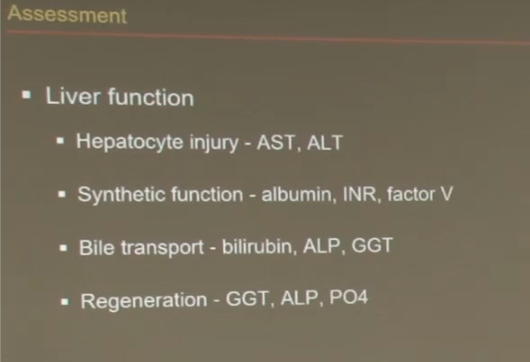 Note phosphate falls
Meld - 10 or more try and avoid
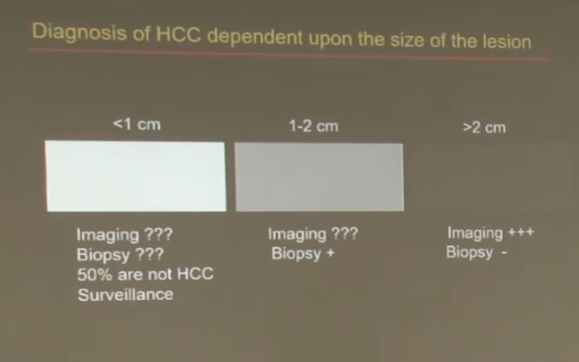
PH on imaging - 13cm spleen length or PV >13mm diameter