Section: Hepatobiliary Sub-section: Liver Curriculum: Curriculum, page 86
Definition
A parasitic illness caused by the tapeworm Echinococcus
Epidemiology
- E. granulosus – worldwide in Mediterranean, Asia, Africa, South America and Australia
- More common
- E. multilocularis - endemic North America, Asia and some European countries
- More serious
Aetiology
- Caused by parasitic Tapeworm Echinococcus.
- Liver most common organ but can metastasise to lung, brain, bones and local extension in abdomen, retroperitoneum or diaphragm.
Life cycle
- Definitive host: Dog
- Intermediate hosts: , ungulates (sheep, pigs, goats, horses)
- Humans accidental intermediate host
- Iingestion of eggs which are excreted by carnivores
- The eggs grow and form a cyst (mainly in the liver)
- Humans accidental intermediate host
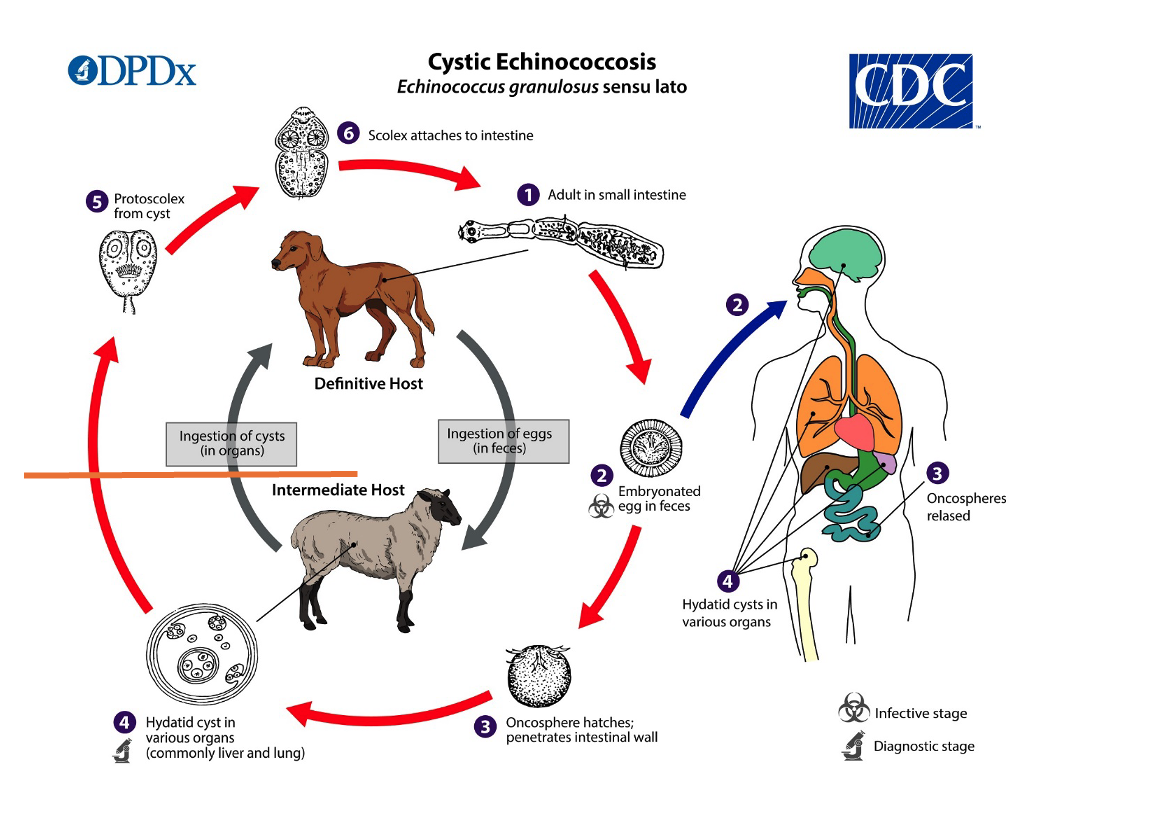
Pathology
- Hydatid cysts are round filled with a clear fluid
- Three layers
- Pericyst - fibrous layer
- Ectocyst: acellular laminated layer
- Endocyst: germinating membrane
- Cysts expand causing a granulomatous inflammatory reaction leading the cyst to be walled off by fibrous tissue.
- Maturing cysts may develop daughter cysts and septations.
- Peripheral calcifications are common
Clinical
- Clinical presentation – asymptomatic, incidental liver lesions.
- RUQ pain, loss of appetite.
- Complications from cysts:
- leakage, rupture causing anaphylaxis,
- cholangitis due to bile duct obstruction by daughter cyst or rupture into duct
- secondary infection of cyst
- Cyst classifications:
- WHO classification of cystic echinococcus
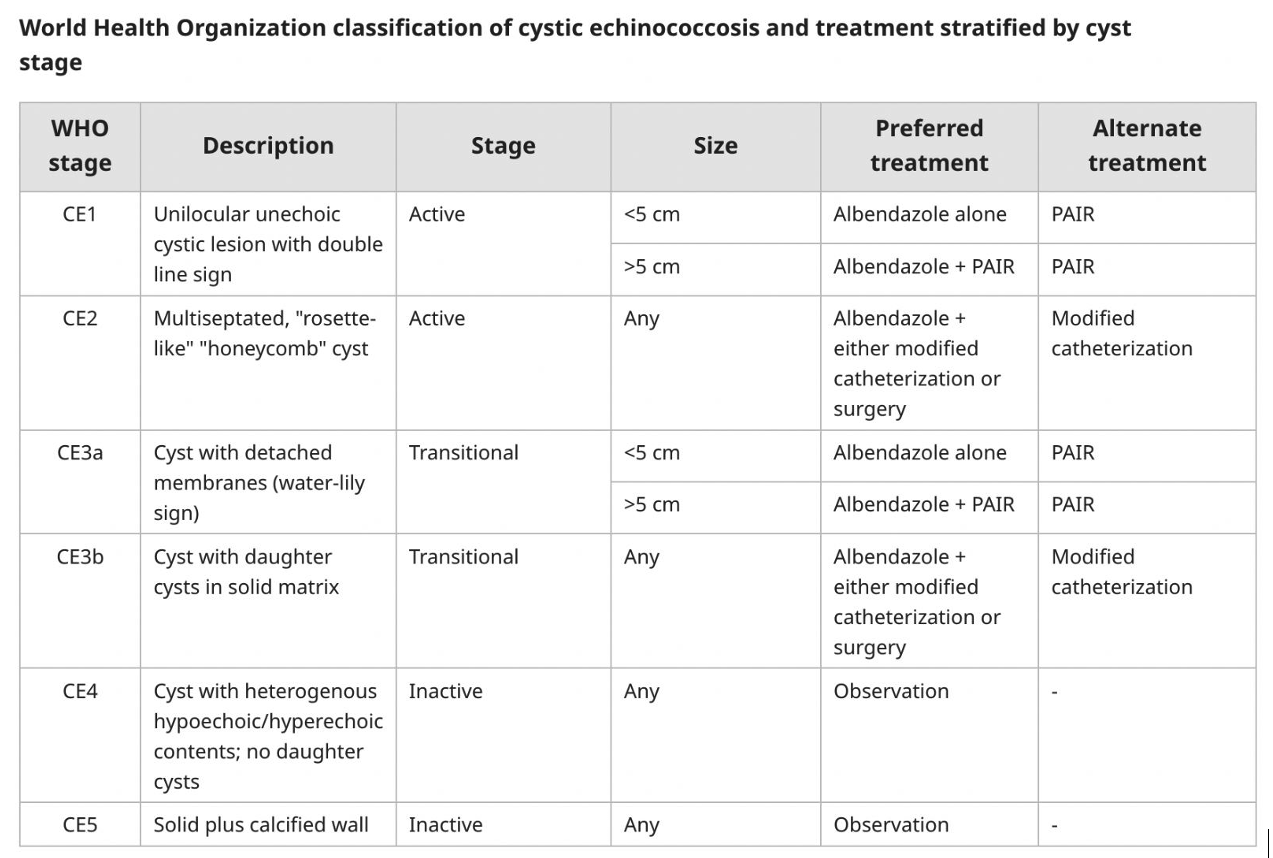
- WHO classification of cystic echinococcus
Investigations
Ultrasound
- Characteristics
- Hydatid sand (scolices in cyst fluid from ruptured vesiculae)
- Floating membranes
- Daughter cysts
- Vesicles in cyst CT
- Calcifications, internal structures and complications
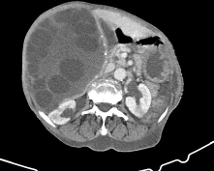
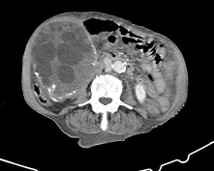 MRI
MRI - Superior for cyst wall defect, biliary communication and neural involvement.
Serology
- Serological useful to confirm radiological diagnosis.
- Not all patients will have detectable immune response (dependent on antigen secretion)
Management
- Surgery
- Complicated cysts (biliary fistula), multiseptated or daughter cysts, large superficial cysts with high risk of perforation.
- Best chance of cure.
- Albendazole usually given to reduce risk of anaphylaxis & secondary echinococcosis.
- Percutaneous
- PAIR (puncture, aspiration, injection, re-aspiration).
- USS guidance, injection of protoscolicidal agent (hypertonic saline and EtOH).
- 97% success rate.
- Not great for cysts with daughter cysts.
- Contraindicated if biliary communication (risk of sclerosing cholangitis).
- Concurrent albendazole.
- PAIR (puncture, aspiration, injection, re-aspiration).
- Medical
- Small cysts <5cm without daughter cysts or septations.
- Or patients who cannot undergo surgery or perc drainage.
- 1/3 cure rate.
- Liver transplant if advanced liver failure
Disseminated echinococcosis
- Spontaneously rupture can induce anaphylaxis or lead to secondary disseminated cystic echinococcosis.
- Can also arise as a complication of surgery for hydatid disease