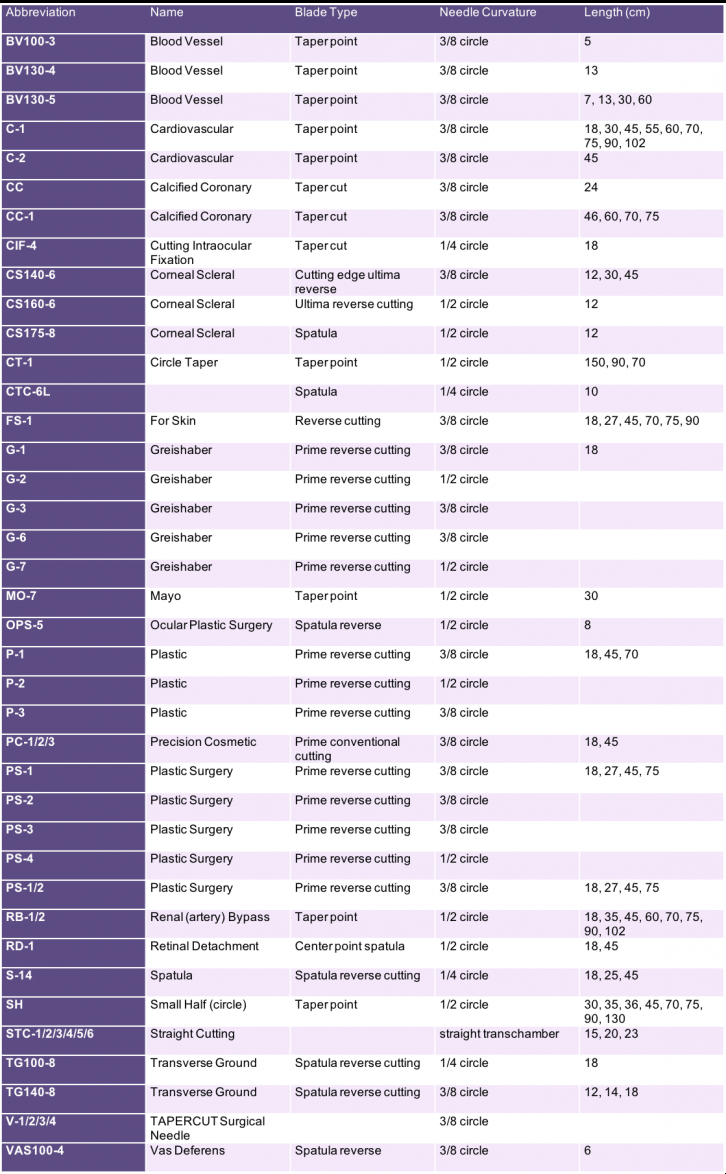
Needle shape
- 1/4 circile
- It has a little curvature, use on convex surface and delicate surgery, typically use on ophthalmic procedures, facial aesthetic, eyelids, fascia, and microsurgery.
- 1/2 circle
- It has a large arc to use in confined sites, the application area is skin, muscle, peritoneum, eye, abdominal surgery and gastrointestinal tract.
- 3/8 circle
- The most common needles use in large and superficial wound and it’s impossible to use in deep cavities. This needle applied in skin, hand surgery, fascia, muscle, subcuticular.
- 5/8 circle
- These needles perfect with deep and confined cavities due to the needle design make a maneuvering in small location easier. Application area Intraoral, urogenital, and anorectal procedures.
- 1/2 curved (ski needle)
- The curved portion for this needle passes through tissue easily, used in laparoscopic technique and skin closure.
- J shaped
- Used on deep incision so it used in laparoscopic surgery without any injury to visceral and applied in vagina and rectum.
- Straight
- Can be used without needle holder as is the case of curvature needle and there is a high risk of accidently sticking yourself. It uses in easily accessible tissue, typically in abdominal surgery, rhinoplasty.
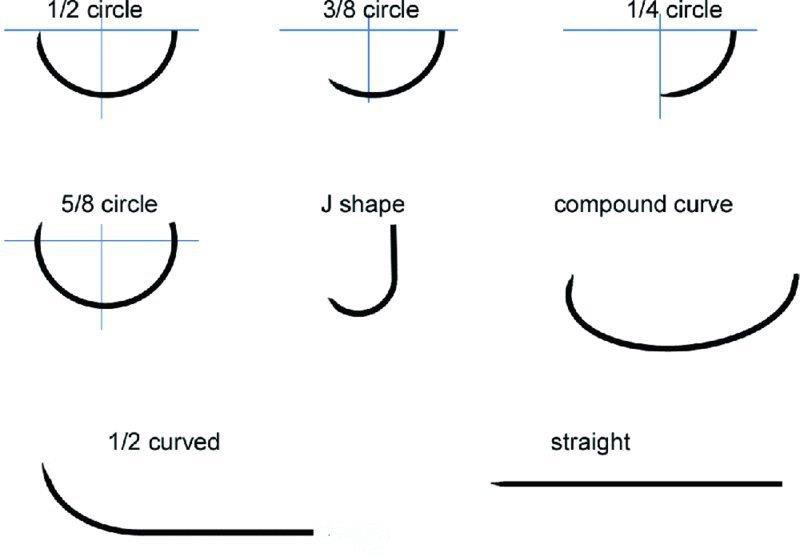
- Typically 3/8 circle
- Use J and 1⁄2 circle for laparoscopic post site
Thread size
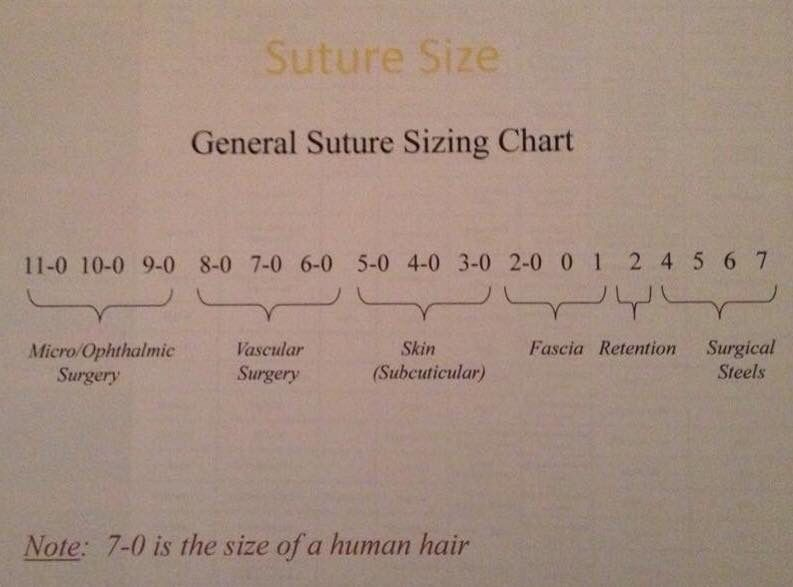
Needle Blade type
- Taperpoint
- Tapercut
- Spatula
- Reverse cutting
- Prime reverse cutting
- Prime conventional cutting
- Centerpoint spatula
- Pledgeted needle
- Use Conventional cutting for subcuticular – cutting edge on inside o Use blunt for fascia
- Use taper for pretty much everything else
- (Don’t generally use reverse cutting but less likely to tear tissue)
Thread type
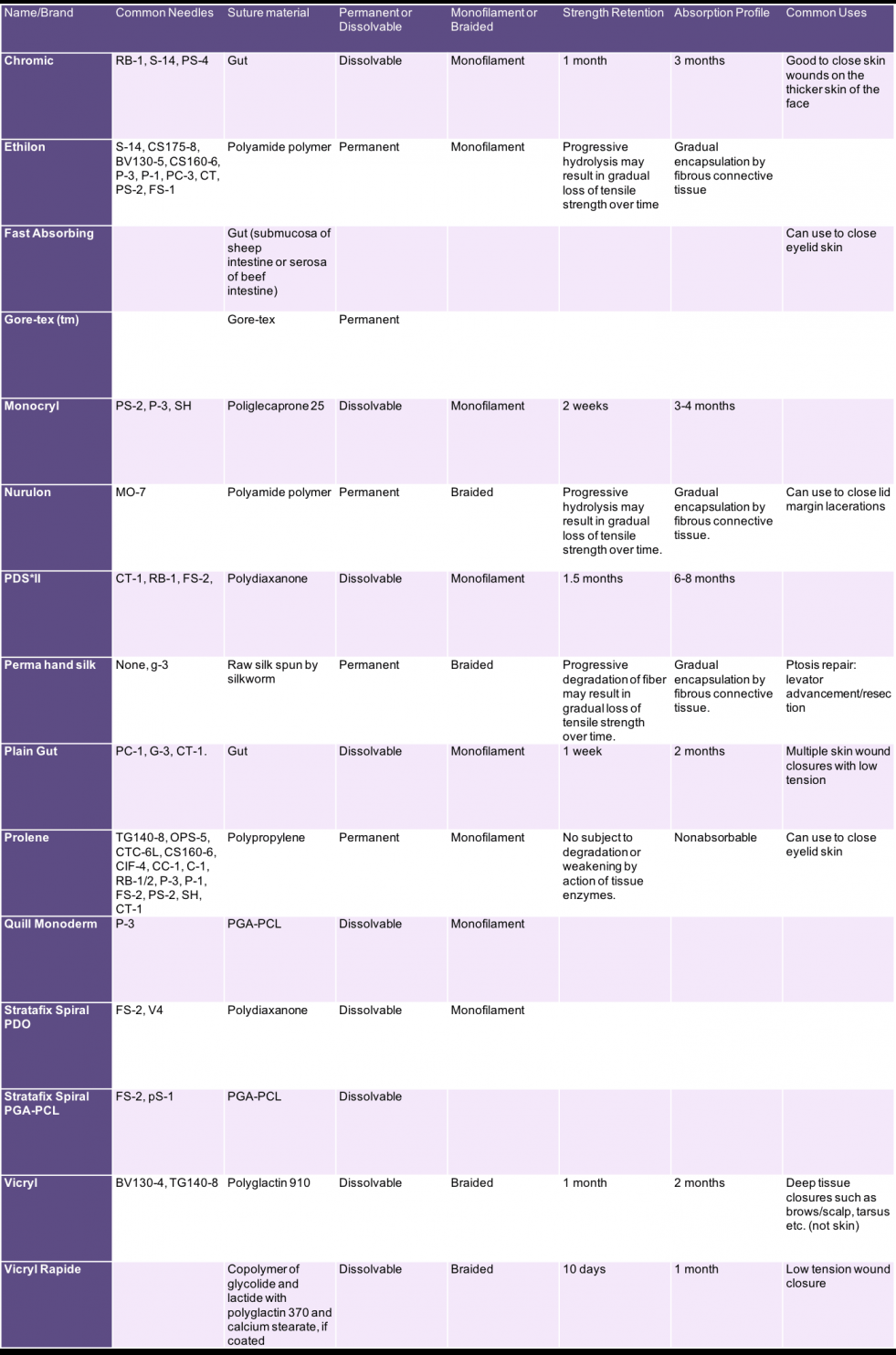 Overview
-
Absorbable - lose majority of tensile strength within 60 days (degraded by tissue enzymes or hydrolysis)
-
Multifilament – higher infection risk – harbor organisms between fibers & increased capillarity (absorb & transfer fluid more easily)
-
Natural fibers such as silk have a greater degree of reactivity
-
Absorbable
- Surgical Gut
- Seldom used
- Poor strength, high reactivity
- Chromic gut
- Coated
- Stays around for longer
- Monocryl (Poli-gleca-prone)
- Monofilament
- 20-30% tensile strength at 2 weeks
- Absorption 3 months
- Vicryl (Poly-glactin)
- Braided
- 50% TS at 3weeks
- A 3 months
- PDS (Poly-dioxa-none)
- Monofilament
- 4/0 60% TS @ 6weeks
- A 6months
- Maxon (Polytrimethylene carbonate)
- Monofilament – from Covidien (all others J&J) –
- Lasts as long as PDS but has improved knotting similar to Vicryl
- Non-absorbable weakening
- Silk – Braided, organic (natural), TISSUE REACTION
- Ethilon – Monofilament, Nylon, loses strength @15-20%/year
- Non-absorbable
- Prolene (Polypropylene) – Monofilament – not pliable
- Surgical Gut
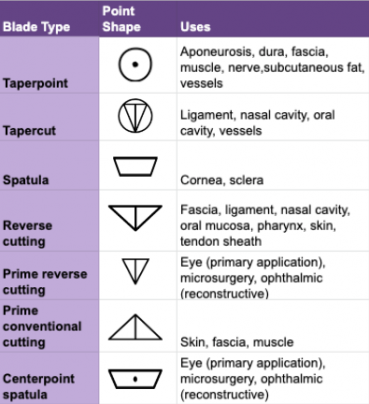
Specific needles