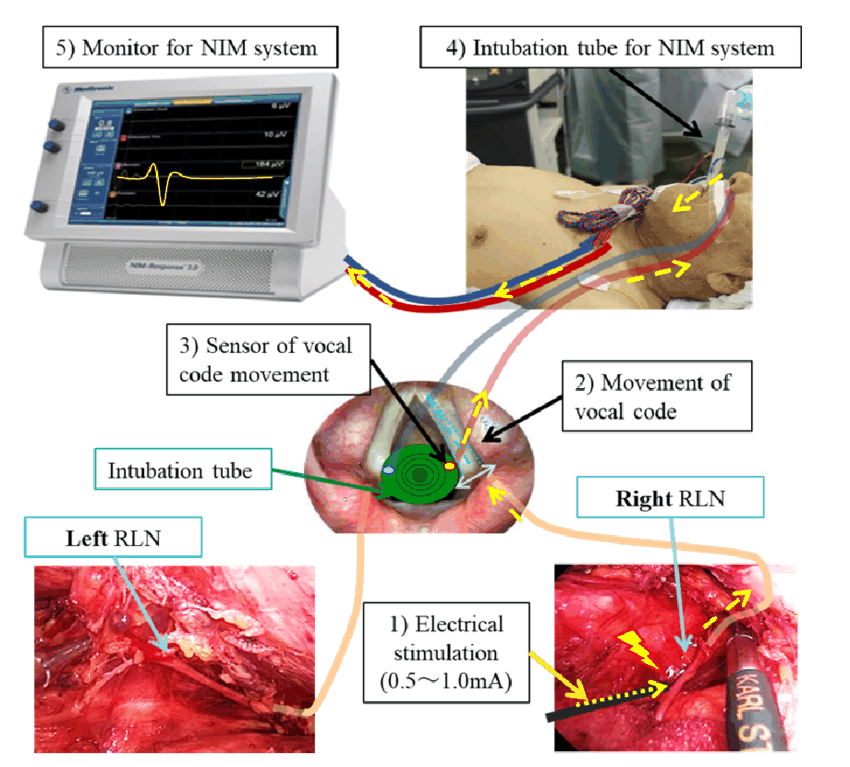
- Purpose
- To reduce the risk of RLN injury
- To identify and confirm functional nerve integrity during dissection
- To guide intraoperative decision-making (e.g. staged procedures)
- Preoperative setup
- Use of endotracheal tube with embedded electrodes that sit against the vocal cords
- Ensure correct tube positioning with help from a laryngoscope or video laryngoscope
- Avoid use of neuromuscular blockers after intubation, as they impair EMG signal detection
- Baseline checks
- Confirm vocal cord function pre-op via flexible nasendoscopy or laryngoscopy
- Test equipment before skin incision to verify signal quality
- Nerve stimulation protocol
- Use a stimulating probe (usually 1–2 mA)
- Four-point stimulation is common:
- V1: Vagus nerve before RLN dissection (baseline)
- R1: RLN at first identification
- R2: RLN at final dissection
- V2: Vagus nerve at end of procedure
- Record EMG signals from vocal cord muscles to confirm responses
- Interpretation of signals
- A robust signal confirms nerve integrity
- Loss of signal (LOS) may indicate traction, thermal, or transection injury
- Differentiating segmental LOS (specific to RLN) vs global LOS (vagal) guides management
- Surgical implications
- If LOS occurs on the first side in a planned bilateral procedure, consider staging the second side to avoid bilateral vocal cord palsy
- Helps with precise localisation of nerves, especially in scarred or re-operative fields
- Identifying the EBSLN near the superior thyroid pole is possible with high stimulation and EMG mapping
- Postoperative relevance
- Document neuromonitoring findings in operative notes
- Correlate EMG responses with post-op vocal cord function (e.g. early laryngoscopy if concerns)