- Preparation of bile duct
- Identify common hepatic duct
- Ensure bile flow is free and proximal ducts are patent
- Jejunal limb creation
- Identify a healthy jejunal loop 20cm distal to the ligament of Treitz
- Divide jejunum using stapler
- Bring up the Roux limb retrocolic or antecolic to the hepatic hilum without tension
- Hepaticojejunostomy anastomosis
- Mucosa-to-mucosa side-to-side anastomosis between hepatic duct and Roux limb
- Interrupted 4-0 PDS sutures
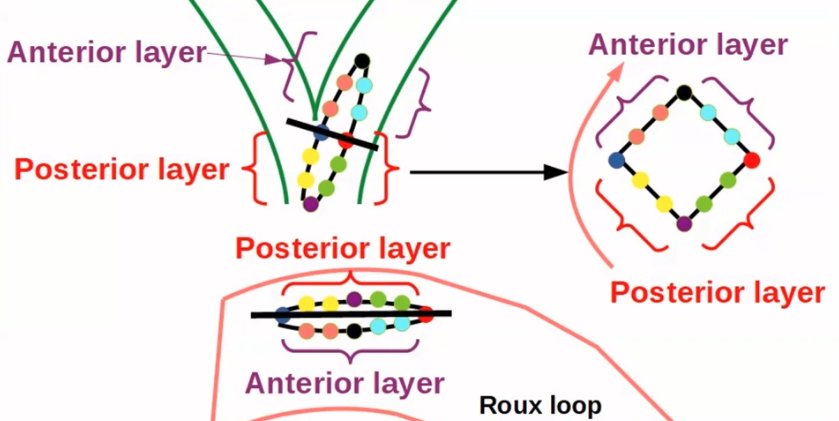
- I perform a diamond shaped HJ
- I place interrupted sutures in the anterior wall of the bile duct first and reflect these over the liver leaving the needles on
- I then place the posterior bile duct and jejunal sutures and tie them completing the posterior wall
- I then complete the anterior wall by taking the corresponding jejunal sutures
- Once all stitches have been placed I then tie them individually
- Jejunojejunostomy
- Performed ~40 cm distal to the hepaticojejunostomy to restore continuity
- Side-to-side using stapler anastamosis
- I line up both lumens in a iso-peristaltic fasion
- I create anti-mesenteric enterotomies
- I place an 80cm GIA stapler and create a common channel
- I close the common enterotomy with interrupted 3-0 PDS
- Completion
- Ensure no twist or tension in the Roux limb
- Test anastomosis for leak (e.g. saline flush or air test)
- Check haemostasis, place drain near anastomosis
- Close abdomen in layers
 https://www.youtube.com/watch?v=wpvehNnlEkU&t=62s&ab_channel=EdusurgClinics