- Indications
- Superficial T1 cancer, limited to the submucosa
- No radiographic evidence of metastatic disease to the regional nodes
- Tumor <3 cm in diameter
- Well-differentiated histology, no lymphovascular or perineural invasion
- Mobile, non-fixed
- Margin clear (>3 mm)
- Involving <30 percent of the bowel lumen circumference
- Patient is able to comply with frequent postoperative surveillance
- If has a transanal excision and then adverse histology → proceed to trans-abdominal excision
- If adverse features on histo, completion surgery has similar cancer-specific survival to upfront major rectal resection.
- Options
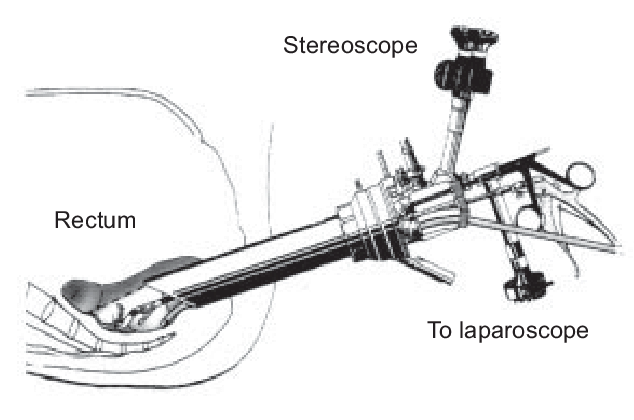
- TEMS (Transanal endoscopic microsurgery)
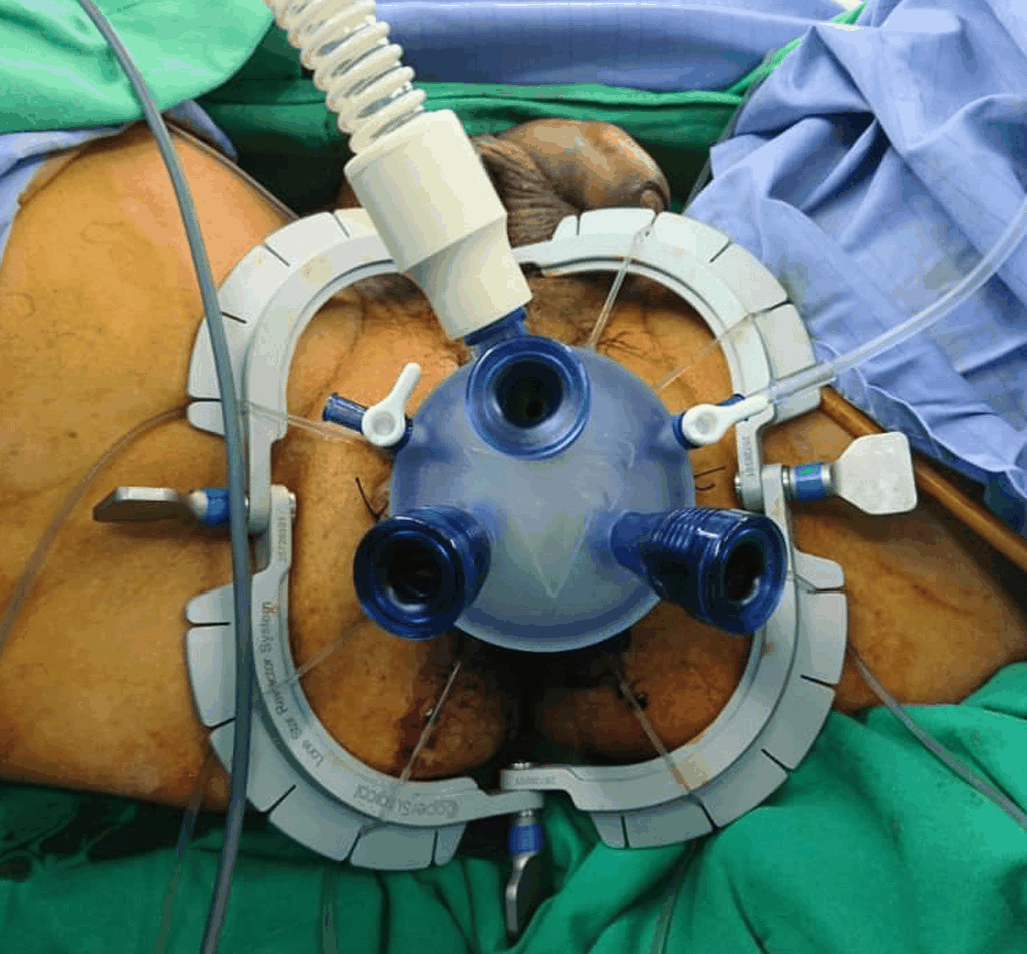
- TAMIS (Transanal Minimally Invasive Surgery)
- ESD
- Ta-TME
- Approached through rectotomy from below with an airseal system, followed by purse-string closure of the rectum.
| Feature | TEM | TAMIS |
|---|
| Platform | Rigid rectoscope (specialized TEM scope) | Uses standard laparoscopic instruments and a transanal access port (e.g., GelPOINT) |
| Cost | High (dedicated equipment required) | Lower (reuses existing laparoscopic tools) |
| Learning Curve | Steep (unique instrumentation and optics) | Shorter (familiar laparoscopic setup) |
| Instrument Mobility | Limited (due to rigid scope) | Greater (laparoscopic instruments allow more maneuverability) |
| Visualisation | High-definition 3D magnified optics | Depends on laparoscope; typically 2D, but improving |
| Access | Limited reach (mid to upper rectum best) | Slightly more flexible, especially for distal lesions |
| Setup Time | Longer (due to scope and platform) | Quicker (standard ports and instruments) |
| Use in Practice | Less common now | Increasingly popular due to versatility and lower cost |
TEMS
TAMIS