Section: Surgical Oncology Curriculum: Curriculum, page 68
Esophageal Cancer
- 75% of EC are unresectable on presentation
- Indications for palliation include patient wishes, comorbid disease, and distant mets or M1 nodal mets, T4 airway, aorta, or cardiac invasion, peritoneal disease
- Palliative -median survival of 8 months
- Little evidence to show any single or combo of treatment changes survival
- Symptoms
- Dysphagia
- Vomiting
- Bleeding
- Reflux
- Anorexia
- Pain
- weight loss
- hoarseness
- aero-digestive fistula
- Treatment for dysphagia
- Endoscopically or radiologically placed self-expanding metal stents
- Risks include malposition, incomplete expansion, migration, perforation, bleeding, tumour ingrowth, food bolus obstruction, reflux, pressure necrosis, stent fracture.
- Not suitable for cervical tumour
- Laser (Nd:YAG) - mainly used to deal with ingrowth around stent, non-circumferential tumours, or recurrence after surgery
- APC - now largely replaced laser
- Photodynamic therapy - photosensitiser (haematoporphyrin derivative) is injected IV 3-4 days before, then laser delivered to cancer, activating it to create reactive oxygen species which causes tissue destruction. SE include skin sensitivity for 6 weeks
- Ethanol injection - safe and cheap
- Radiotherapy
- External beam causes significant side effects (stricture, lung fibrosis, fistula) and only about 40% effective
- Brachytherapy using caesium down a flexible NGT effective - less side effects and better long-term relief of dysphagia than stents
- Chemotherapy - no good evidence to support its use
- Endoscopically or radiologically placed self-expanding metal stents
- Aero-digestive fistula - difficult to treat and short life expectancy - best treated with stenting
- RLN palsy - treat with Teflon injection
- Bleeding - treat with laser, adrenaline injection, diathermy, or EBRT
Stomach Cancer
- Median survival 6-8 months
- Indications for palliation include patient wishes, comorbid disease, distant mets or M1 nodal disease, peritoneal disease
- Chemo improves survival compared to best supportive care
- Palliative surgery or stenting can relieve symptoms
- Cardia tumours treated like esophageal cancers (Siewert)
- Symptoms of gastric body and antrum cancers include bleeding and gastric outlet obstruction
- Chemotherapy (ECF) is recommended treatment - improves survival and relieves symptoms, but often worsens general QOL
- Gastric outlet obstruction can be treated with subtotal or total gastrectomy, gastrojejunostomy, and stenting
- Bleeding can be treated with gastrectomy, laser, APC, or RT
Breast Cancer
- 6-10% BC patients present with metastatic disease
- Overall 5Y 26%, median survival 2 years
- Most patients do not need primary excised as they will not live long enough for local disease to be a problem. But patients with mets responding to systemic treatment can consider surgery for local control. RT not indicated unless in bulky disease with surgical margins positive.
- Bone mets most common - can treat with bisphosphonates as fracture prevention, or for treatment of bone pain. Other treatments include prophylactic or therapeutic fracture fixation and radiotherapy for pain or post stabilisation surgery
Melanoma
- Isolated limb perfusion or infusion with melphalan (L-phenylalanine mustard)
- Radiotherapy - relieve symptoms in patients with mets to bone, brain, soft tissue, liver, adrenal
- Single agent chemo (fotemustine, dacarbazine, temozolomide) can be used for palliation of patients with distant mets. Interferon-α and IL-2 can also be used, but no improvement in survival, and no benefit in adding it to chemo
- Patients with resectable distant mets have prolonged survival after resection - so limited mets to skin, distant nodes, lung, adrenal, liver, GI tract, brain should be resected
- Brain mets with poor prognosis (multiple, extracranial disease, poor performance status) can be treated with whole-brain RT, chemo, and steroids
Colorectal Cancer
- Locally advanced tumour can be resected if possible. If not bypass R-sided cancers and defunction L sided ones.
- Liver mets - consider resection
- Lung mets - small number of patients can be resected
- Palliative chemo - FOLFOX, FOLFIRI, Capecitabine
- Avastin (Bevacizumab) – angiogenesis inhibitor
Thyroid Cancer
- Surgery if symptomatic recurrent locoregional disease, or aerodigestive tract compromise
- Lung mets - radioactive iodine
- Bone or brain mets - resection, RAI, RT plus steroids
- Unresectable neck disease - consider RT
- Chemo - no good evidence for it
Pancreatic Cancer
- Jaundice - ERCP best, then PTC if lesion proximal, then surgical bypass. If life expectancy >6m, surgery may be better as stents may block. Metal stents better than plastic ones (larger diameter so block less)
- Gastric outlet obstruction occur in 20% - endoscopic stenting if life expectancy short, surgical bypass if prolonged - gastrojejunostomy best and can be done laparoscopically
- Pain - can consider chemical splanchnicectomy
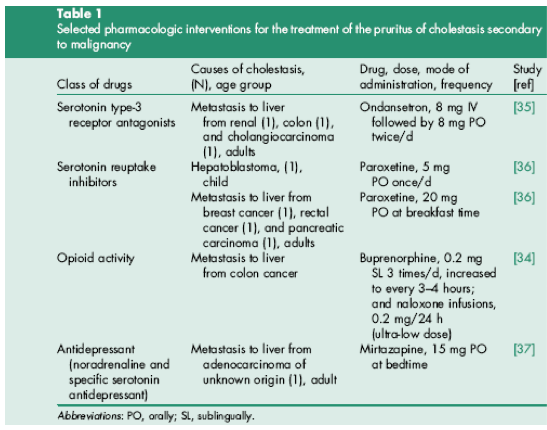
- Pruritus - cause unclear, but cholestasis may lead to liver to produce pruritogenic substances (? endogenous opioid).
- Treatment include sedatives eg benzodiazepines, ondansetron, SSRI, naloxone.
- Antihistamines not effective (except to act as sedative).
- Cholestyramine (non-absorbable resin that binds pruritogen excreted in bile) can be tried but probably doesn’t work that well, not surprising as bile not reaching gut.
PNETs - for non-functioning metastatic cancers no role for debulking, but if hormonal excess, liver mets cytoreductive surgery may be worthwhile if >90% tumour can be removed. Other potential options include somatostatin, interferon, hepatic artery embolization, RFA, chemo
Liver Cancer (HCC)
- Traditional chemo little role
- Antiangiogenic treatment eg Sorafenib which inhibits VEGF receptors
Colorectal Liver Mets
- FOLFOX/FOLFIRI - 40-50% response rate
- Role of RFA in addition to chemo for unresectable mets unclear
Cholangiocarcinoma
- Hilar
- Elderly comorbid patients - support care only
- PTC - not used for all jaundiced patients as significant morbidity (infection) so use in intractable pruritus or recurrent cholangitis
- Patients found to be unresectable at laparotomy - surgical intrahepatic biliary-enteric bypass (often to segment 3 or R anterior or posterior sectoral duct)
- Limited role for RT - no survival benefit
- Chemo (5FU based) - some evidence for short term improvements in survival and QOL
- Distal
- ERCP stenting or surgical bypass if unresectability found at surgery
- Intrahepatic
- No evidence to support use of chemo or RT for palliation
Gallbladder Cancer
- Percutaneous or endoscopic drainage preferred
Cachexia
- Due to hypercatabolic state
- Excess loss of lean body mass (skeletal – sarcopenia)
- Targets myosin heavy chain
- Cytokines
- ?Proteolysis-inducing factor
- ?Lipid mobilising factor – loss of fat also occurs but less dominant
- ?ATP-ubiquitin-proteasome pathway – final common pathway?
- Proteasome inhibitor – bortezomib – one trial so far didn’t work
- Cancer treatment
- Androgen deprivation therapy in prostate cancer = increased skeletal muscle loss
- Increased resting energy expenditure (cytokines – TNFα, IL-1β, IL-6)
- But so far TNFα inhibitors haven’t helped
- Excess loss of lean body mass (skeletal – sarcopenia)
- Loss of appetite
- Demonstrated that there is often a significantly lower caloric intake
- Chemotherapy may contribute – altered taste, nausea, vomiting
- Proinflammatory cytokines
- Direct tumor effect
- Weight loss
- 5% weight loss – independent poor prognostic factor
- Cachexia may be a direct cause of death
- Often have hyperglycaemia, hypertriglyceridemia & exaggerated insulin response to glucose
- Reduced LDL production & reduced lipolysis & reduced activity of lipoprotein lipase