Causes
- Reduced immune surveillance
- T-cell function suppression
- DNA damage and impaired repair
- Anti-metabolites cause DNA damage and impair repair
- Increased viral oncogenesis
- T-cell function that normally detects and eliminates virus infected cells is inhibited
- Increase UV-B risk
- Reduced immune response to UV damaged cells
Overview
Caused by a combination of impaired immune activity against viruses, impaired immune-surveillance of neoplastic cells, DNA damage and disruption of DNA repair mechanisms, and upregulation of cytokines that can promote tumour progression.
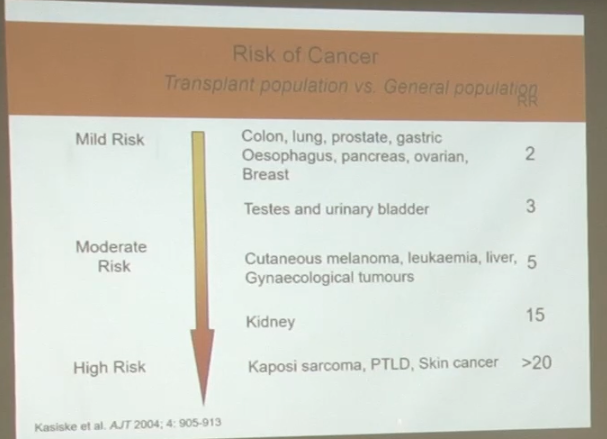
- Increased risk of developing most types of malignancy
- Risk particularly high for those types of tumour in which viral infection plays an aetiological role
- Cutaneous SCC most common skin cancer
- BCC and Melanoma also higher than in general population
- Risk rises with age and with exposure to sunlight
- 50% of transplant pts will develop a skin malignancy within 20 years
- Patients must be warned of this risk before they undergo transplantation
- Advised to take precautions to protect their skin from excessive sunlight
- Should undergo a regular review of their skin
- Treat malignant lesions promptly and aggressively
- Post-Transplant Lymphoproliferative Disorder (PTLD)
- Abnormal proliferation of B-Lymphocytes, usually in response to EBV
- Presents in a variety of ways
- Infectious mononucleosis-type illness
- Lymphadenopathy
- Occurs in around 1–3% of Kidney and Liver transplants
- Incidence considerably higher in children
- Biggest risk is aggressive immunosuppression
- Serious condition - mortality up to 50%
- If identified early:
- Reduction or cessation of immunosuppressive therapy may cause disease regression and result in cure
- Chemo often given and anti-viral therapy, surgery and radiotherapy may also have a role
- Kaposi sarcoma: 300x increased risk
- Although still very uncommon
Prevention
- Avoid carcinogens
- This is particularly true for skin cancers and avoidance of UV radiation.
- Smoking
- Alcohol
- Avoid excessive immunosuppression
- There is a dose response for all transplant patients and all immunosuppressive therapies
- Screening
- Viral
- Screen all donors and recipients of HSV8, EBV to minimize Karposi’s and PTLD respectively.
- If positive recipient, measure EBV titres and adjust immunosuppression if increasing
- Screen all donors and recipients of HSV8, EBV to minimize Karposi’s and PTLD respectively.
- Screen recipients regularly for malignancy o Skin check: 6-12m o Cervical smear and gynaecology assessment: regularly o Anogenital examination: regularly o Breast and Bowel: as per general population o Renal tract: annual MSU o Prostate: PSA and DRE annually >50 yo
- Viral
Management
• Tumours should be managed based on their type and stage • Main principles are to:
- Reduce immunosuppression, particularly calcineurins (which increase risk of Kaposi’s Sarcoma especially)
- Consider conversion to mTOR inhibitor (Sirolimus). o Sirolimus has been shown to induce complete regression of Kaposi’s Sarcoma