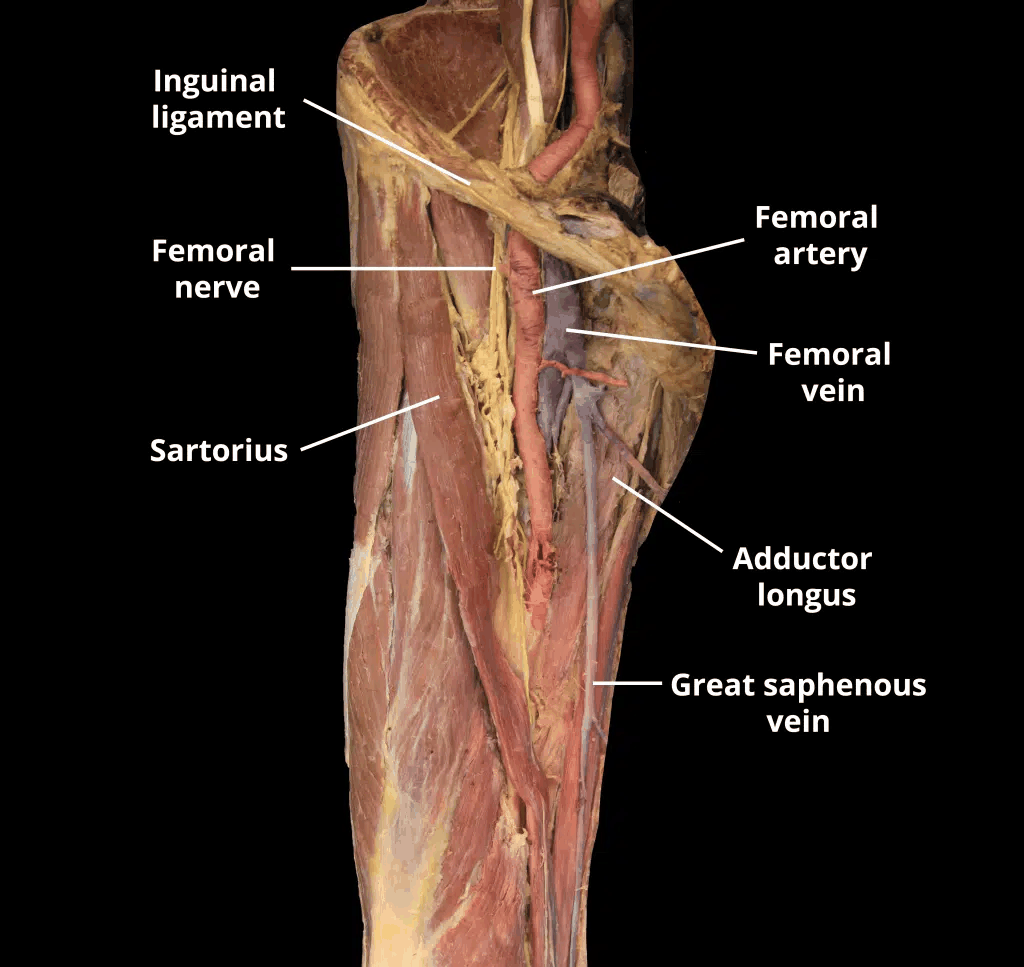
Definition
- The femoral triangle is a wedge-shaped area located within the superomedial aspect of the anterior thigh
Borders
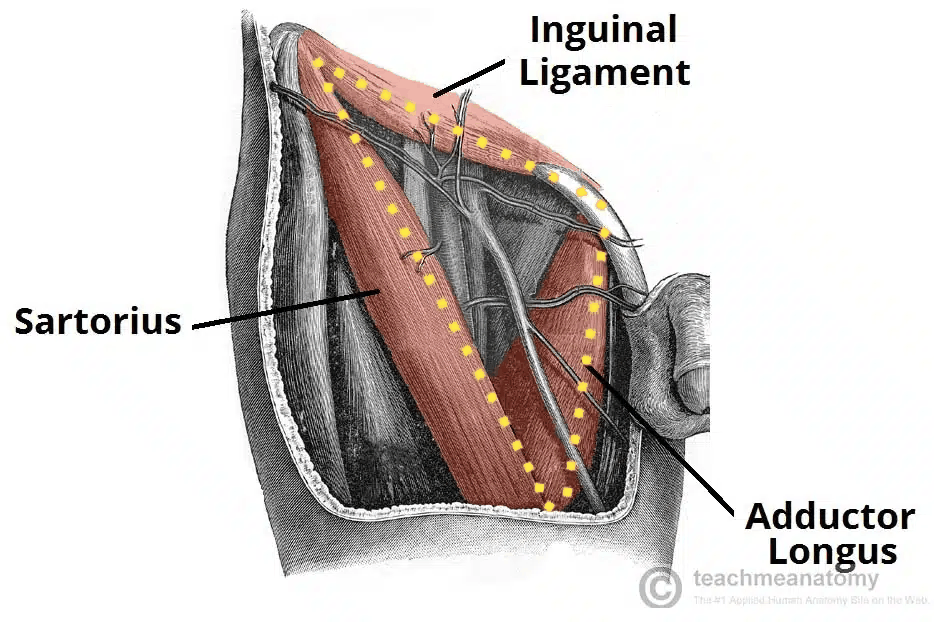
- The femoral triangle consists of three borders, a floor and a roof:
- Roof – fascia lata.
- Floor – pectineus, iliopsoas, and adductor longus muscles.
- Superior border – inguinal ligament (a ligament that runs from the anterior superior iliac spine to the pubic tubercle).
- Lateral border – medial border of the sartorius muscle.
- Medial border – medial border of the adductor longus muscle. The rest of this muscle forms part of the floor of the triangle.
Contents
- The femoral triangle contains some of the major neurovascular structures of the lower limb. Its contents (lateral to medial) are:
- Femoral nerve – innervates the anterior compartment of the thigh, and provides sensory branches for the leg and foot.
- Femoral artery – responsible for the majority of the arterial supply to the lower limb.
- Femoral vein – the great saphenous vein drains into the femoral vein within the triangle.
- Femoral canal – contains deep lymph nodes and vessels.
- The femoral artery, vein and canal are contained within a fascial compartment – known as the femoral sheath.