Section: Breast Curriculum: Curriculum, page 10
The Breast Journal - 2024 - Dilaveri - Idiopathic Granulomatous Mastitis, page 1
Definition
- Rare, benign, chronic non-caseating inflammatory breast disease
Incidence
- Most young parous women of child-bearing age (< 50)
- Post-partum (few months – 8 years)
- South east Asian and middle eastern
Classification
- Primary (or Idiopathic granulomatous mastitis)
- Secondary
- Systemic granulomatous disease e.g. Sarcoidosis, Wegener’s Granulomatosis
- Granulomatous infection – e.g. Tuberculosis, Histoplasmosis
Aetiology of Primary Disease
- Essentially unknown
- It is thought to start with milk stasis and which triggers an autoimmune reaction
- This seems to be modulated by Corynebacterium species
- Smoking not associated
Clinical
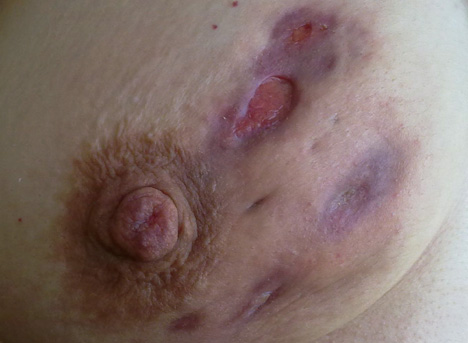
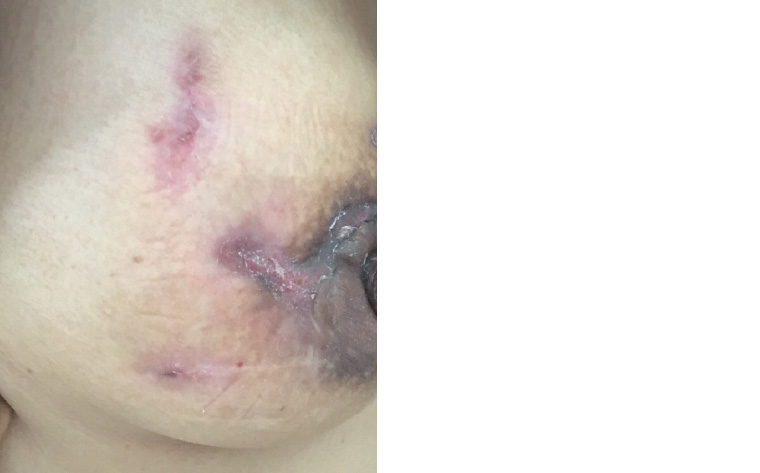
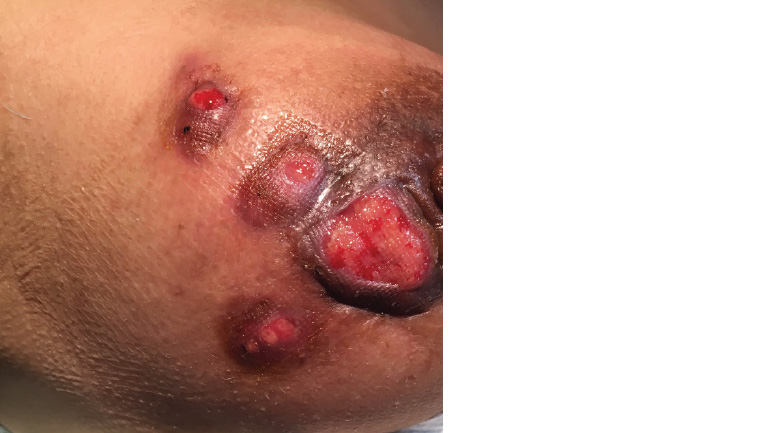
- Usually unilateral + peripheral, firm irregular mass
- Occur all quadrants, except for subareolar
- Mimic malignant tumours in terms of physical signs & mammographic findings
- May grow rapidly
Pathology
- Granulomas involving Lobular Epithelium
- PMNs, Epithelioid Cells, Plasma Cells, Giant Cells (Langhans or foreign body type)
Investigaitons
- FNA / Core / Excisional Bx required for Dx → Tissue for culture
- Consider Mantoux, CXR, Histoplasmosis serology
Management
- Drainage of sepsis
- I&D or aspiration
- Antibiotics
- Usually Doxycycline or Augmentin
- Can consider
- Doxycycline 3 months
- Steroids
- Steroids improve sx initially but condition worsens with dose reduction
- Can be used in persistent or recurrent disease
- Steroids improve sx initially but condition worsens with dose reduction
- Methotrexate and Azathioprine
- Excision if non-responsive
- May require Mastectomy
- Do not recommended local excision as often results on chronic non-healing wound
Prognosis
- Mostly resolves over 6–12-month period *** Dr Rapson - 12-18months. Fluctuating course.
- Long-term follow-up advised