Section: Breast Curriculum: Curriculum, page 9
Definition
- Excessive breast pain in the absence of a palpable lump
Incidence
- 70-80% if women will get breast pain in their lifetime
- Only 0.5% of women will have cancer
- Only 3% of women with breast cancer present with pain as their primary symptom
Classification
- True breast pain
- Cyclical 60%
- Non-Cyclical 40%
- Pregnancy, cyst, sclerosing adenosis, cancer
- Referred pain
- Mechanism
- True breast pain
- Hormonal change:
- ? Too much oestrogen – no sig evidence
- ? Too much prolactin – women with mastalgia produce more prolactin for longer after stimulation
- Tissue oedema in ?follicular phase – not proven and use of diuretics not supported
- Upper outer quadrant affected most (bulk of breast tissue)
- Hormonal change:
- True breast pain
Clinical
True breast pain
- Cyclical
- Usually starts in 20s, 50% < 30 years old
- Tends to be 1-2 wks before each period - pre-menstrual crescendo
- Frequently bilateral; UOQ & associated with increased nodularity (± radiates to inner arm)
- “Tender” / “heavy”
- Mean duration ≈ 7yrs (longer if onset < 20yrs)
- Non-cyclical
- Most common in 30s; 12% post-menopausal
- No relation to menses
- Frequently unilateral and long duration
- Can be associated with trigger points
- “Burning” pain
Referred pain
- Features
- Unilateral, worse with movement, can be reproduced with pressure on the chest wall
- Tietze’s syndrome
- Not = Costochondritis
- Swelling at costal cartilages, aetiology unknown
- Rx: Steroid injection or anti-inflammatories
- Rib injury
- Cervical root syndromes
- Angina
- Mondor disease
Principles of Management:
- Exclude malignancy – clinical exam, Mamm if > 40 yrs, USS if localised breast pain
- Assess cause – treat if possible
- Reassurance
Chest wall pain
- Reassurance +/- NSAIDS
- Lifestyle modification
- Single injection of prednisone/local anaesthetic if localised to costal margin
Chronic pain following surgery
- Up to 50% women
- Rule out underlying recurrence
- Gabapentin/amitriptyline
True mastalgia
- Reassurance is the only treatment necessary in up to 85% of pts
- Supportive well fitted bra (± Wear night & day)
- Simple pain relief – e.g. Panadol + anti-inflammatory creams – Voltaren Emugel
- Lifestyle - Healthy weight, ↓ caffeine intake (overstimulates breast cells), ↓ fat intake
- Try stopping COC or HRT …or take HRT on alternate days or change to higher progesterone pill
Medical Rx for Refractory Pain:
- Failed above measures / mastalgia > 6/12 / major life disruption
- Pain chart
- NSAIDs (for short periods in the cycle)
- No evidence for evening primrose oil
- Tamoxifen (10 mg daily) for 3 – 6 months
- During luteal phase
- If refractory then every day
Appropriate Use of Imaging
- Up to 7% of operable cancer presents with pain as only symptom
- Image if
- Screening mammography is not up to date
- Palpable abnormality
- Non-cyclical / unilateral / other clinical suspicion
- If no evidence of disease:
- Simple measures to relieve breast pain ± re-assess after 3 months with a pain diary (including relation to menstrual cycle)
Mastalgia – Chronic Pain Principles
- General Principles of Pain Assessment
- Starts with adequate assessment of the pain
- Absence of appropriate assessment is the leading reason for poor pain management
- A comprehensive pain assessment addresses the pain’s:
- Nature
- Cause
- Personal context:
- Psychological
- Social
- Spiritual
- Practical issues
- Underlying pathophysiology
- General Principles of Pain Management
- Use of appropriate interventions
- Pharmacologic
- Non-pharmacologic
- Education of the patient, family, and all caregivers about the plan
- Ongoing assessment of treatment outcomes
- Regular review of the plan of care
- Use of other members of the interdisciplinary team, including:
- Nurses
- Social workers
- Pharmacists
- Chaplains
- Physiotherapists
- Occupational therapists
- Child life specialists
- Flexibility is essential—successful plans are tailored to the individual patient and family
- Willingness to ask for help from colleagues with more expertise when the plan is not effective at controlling the patient’s pain
- Use of appropriate interventions
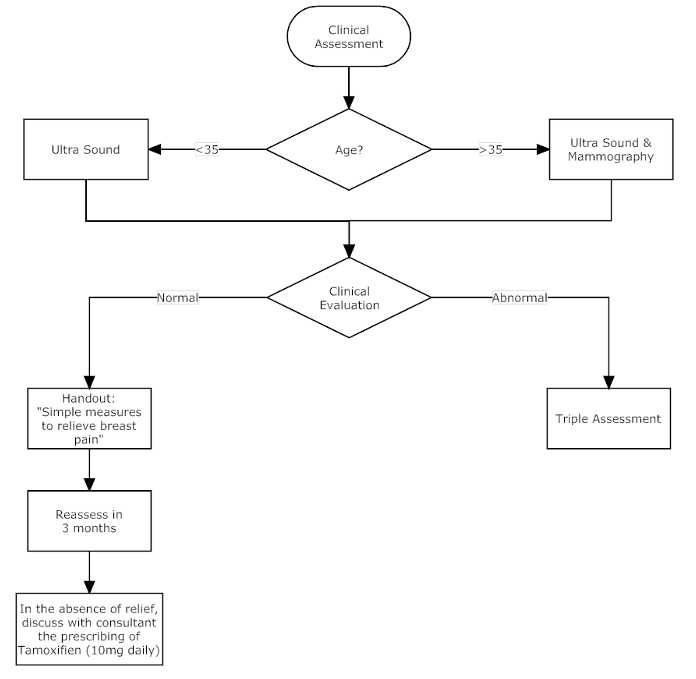
Northshore Guidline
In the absence of clinical asymmetry, a palpable lump or other risk factors:
- Bilateral or Cyclical
- Imaging and treatment on clinical grounds:
- Mammography age > 35 years.
- Ultra Sound age < 35 years.
In the absence of clinical evidence of disease
- Provide Mastalgia Pamphlet
- For severe pain and in the absence of clinical evidence of disease, discuss with consultant the prescribing of Tamoxifen (10 mg daily) for 3 – 6 months.
- The risk of endometrial cancer must be discussed with patient.
- The risk of endometrial cancer must be discussed with patient.