Section: Endocrine Sub-section: Parathyroid
Incidence
- 0.5% of general population
- 5% of hospital population
- Most common outpt cause: Primary hyperparathyroidism
- Most common inpt cause: Malignancy
Causes
Can be broken down into
-
Increased intake
-
Decrease output
-
Redistributive
-
Redistributive
- Hyperparathyroidism
- Malignancy
- Associated hypercalcaemia
- Three causes
- Release of PTHrP
- Release of Calcitriol
- Lytic bone mets
- Granulomatous Diseases
- Extra-renal 1,25-dihydroxyvitamin D synthesis
- Extra-renal 1-α-hydroxylase
- PTH independent
- Sarcoidosis
- Tuberculosis
- Histoplasmosis
- Coccidioidomycosis
- Extra-renal 1,25-dihydroxyvitamin D synthesis
- Endocrine disorders
- Thyrotoxicosis, Acromegaly, Phaeochromocytomas, Adrenal insufficiency
- Prolonged immobilization
-
Increased intake
- Vitamin D or calcium replacement.
- TPN
-
Decreased output
- Thiazide diuretics
- Lithium
- Familial hypocalciuric hypercalcaemia – germline mutation resulting in reduction in urinary excretion of calcium
Signs and Symptoms
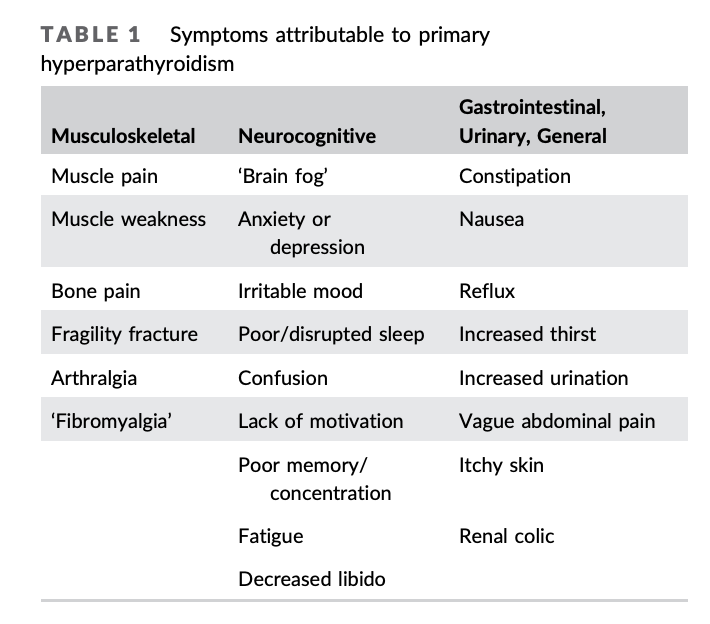
- Stones
- Nephrolithiasis and Nephrocalcinosis
- Bones
- Osteopenia and pathological fractures.
- Abdominal moans
- Abdominal pain, constipation, peptic ulcers, pancreatitis.
- Psychotic groans
- Neurocognitive symptoms – fatigue, malaise, depression, memory loss
- Other
- Calciphylaxis
- Serious but uncommon disease caused by calcium blocking the small vessels of the fat and skin.
- Causes painful ulceration of the skin.
- ECG changes
- Prolonged PR interval
- Shortened QT
- Wide QRS
- Bradycardia.
- Calciphylaxis
Cut offs
- Mild: < 3mmol/L
- Can be asymptomatic
- Non-specific constipation, fatigue, depression
- Moderate: 3-3.5mmol/L
- Can tolerate chronically, if acute may get marked symptoms
- Polyuria, polydipsia, dehydration, anorexia, nausea, muscle weakness, and changes in sensation
- Severe: > 3.5mmol/L
- More severe manifestations of moderate symptoms
Treatment of hypercalcaemia
- Mild – treat risk factors, hydrate the patient
- Moderate – rehydrate with N saline, consider bisphosphonates
Management of Hypercalcaemic Crisis
- Fluid resuscitate aggressively
- Aiming for a urine output above 100mls/hour.
- Loop diuretic (Frusemide)
- Inhibits calcium reabsorption
- Once intravascular volume has been restored
- Glucocorticoids (Hydrocort 100mg QID IV)
- Decrease intestinal absorption of Ca2+, increase renal excretion of Ca2+, and inhibit osteoclast-activating factor
- Not effective in cases of hypercalcaemia associated with malignancy
- Decrease intestinal absorption of Ca2+, increase renal excretion of Ca2+, and inhibit osteoclast-activating factor
- For patients with renal failure of heart failur
- Requires dialysis
- Calcitonin (4-8U/kg IV)
- Lowers serum Ca2+ levels quickly (within 24 to 48 hours)
- Synergistic effect with glucocorticoids
- Diminishes osteoclastic activity and increased calciuresis within minutes
- IV Bisphosphonates - Pamidronate (60-90mg) or Zoledronic Acid
- Good in malignancy-associated hypercalcaemia
- Rapid reduction of serum Ca2+
- Inhibit osteoclast activity, reducing serum Ca2+
- Have long half-life of bisphosphonates
- Can exacerbate severe post-op hypocalcaemia and complicate surgical management