Sub-section: Thyroid Section: Endocrine
Definition
- Inflammation of the thyroid
- Common causes
- Hashimoto thyroiditis
- Acute suppurative thyroiditis
- Subacute thyroiditis
- Riedel Struma thyroiditis
Hashimoto thyroiditis
Definition
- Autoimmune destruction of the thyroid gland
- Characterized clinically by gradual thyroid failure, with or without goite formation
- The major cause of Hypothyroidism in adults
- Enlarged painless thyroiditis
Risk factors
- Genetics
- Autoimmune conditions
- Iodine excess
- Radiation
- Female (4-10:1)
Pathophysiology
- Autoimmune-mediated destruction of thyrocytes
- Formation of immune complexes and compliment in basement membrane of follicular cells
- Thyroid function altered
- Impaired T3 and T4 production due to TPO inhibition
- Infiltration of lymphocytes and resultant fibrosis
- “Chronic lymphocytic thyroiditis”
- Decreased number and efficiency of thyroid follicles
- Autoantibodies
- Presence of Thyroid Peroxidase antibodies (anti –TPO Abs) can be detected
- Many also have antibodies that block TSH
Management
- Thyroid hormone replacement
Acute Suppurative Thyroiditis
- Extremely rare
- Usually result of severe pyogenic infection of upper airway
- Can be related to piriform sinus fistula or other congenital abnormalities
- Results in severe localised pain
- Usually unilateral
- Staph aureus and Streptococcus most common organisms
- Treatment is to drain abscess and give antibiotics
- Long-term effects on thyroid rare
Subacute Thyroiditis
- De Quervain’s Thyroiditis
Clinical features
Characterised by
- Neck pain
- A tender diffuse goiter
- A predictable course of thyroid function evolution
- Hyperthyroidism is typically the presentation, followed by euthyroidism, hypothyroidism, and ultimately restoration of normal thyroid function
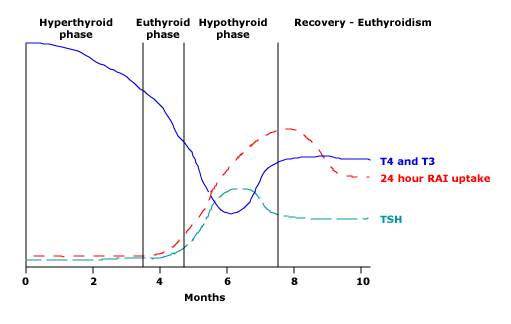
- Hyperthyroidism is typically the presentation, followed by euthyroidism, hypothyroidism, and ultimately restoration of normal thyroid function
Cause
- Presumed to be caused by a viral infection or a postviral inflammatory process
- Usually have preceding hx of URTI (? Coxsackie)
- Destructive thyroiditis causes release of pre-formed hormones
Risk factors
- Predominates in women (2:1), mean age 40
- Mostly in US, England and Japan
Symptoms
- Diffuse cervical swelling and pain
- 2/3 patients have fever, weight loss and severe fatigue
- Usually hyper, then hypothyroidism, then resolution and normal function
Diagnosis
- Usually clinically
- FNA can be diagnostic
- Giant Cells of epithelioid foreign body type (characterises lesion)
- Microscopy shows
- Large follicles infiltrated by mononuclear cells, neutrophils, and lymphocytes
- RAI uptake decreased
Treatment
- Don’t affect disease process
- Usually self-limiting (90-95% in months)
- Pain
- Steroids or NSAIDs relieve symptoms
- Hyerthyroid
- Short lived
- Supportive Rx (β-B for tachycardia)
- Hypothyroid
- Often nothing needed
- If needed then for 6-8 weeks and then discontinued and patient reevaluated
Riedel Thyroiditis
- Invasive fibrous thyroiditis
- Etiology is not known
- Often believed to be the local involvement of the thyroid in a systemic disease and may occur with other fibrosing conditions such as retroperitoneal fibrosis, fibrosing mediastinitis, sclerosing cholangitis, pancreatitis etc
- May occur within the spectrum of immunoglobulin G4 (IgG4)-related systemic disease
- Etiology is not known
- Extremely rare
- Characterised by firm thyroid
- Associated with a mononuclear cell inflammation that extends beyond the thyroid into the perithyroidal soft tissue
- Symptoms
- Severe discomfort from extension into Trachea, Oesophagus, RLN
- Can make surgery difficult with planes obliterated
- May have impending airway obstruction or dysphagia
- Pathology:
- Dense fibrous tissue and almost total obliteration of normal follicles
- Management
- Thyroid hormone replacement, Steroids or Tamoxifen may be effective
- Surgery if tracheal/oesophageal obstruction imminent
- Needs to be experienced surgeon