Section: Head and neck Curriculum: Curriculum, page 42
Definition
- Emergency condition of upper airway obstruction secondary to FB, trauma or oedema
Epidemiology
- M>F
- Children>adults
Pathology
- Complete obstruction above level of carina
- Partial obstruction is distal to carina or above and only partially occluded
- Right bronchus most common - shorter, broader, less angulated from carina and more airflow into right lung
Clinical
- Symptoms
- Aspiration hx
- Partial vs complete obstruction
- Signs
- Can’t talk or cough
- Stridor
- Wheeze
- SOB
- Tachypnoea
- Resp distress
Investigations
- CXR (AP and lateral)
- FB prevents trapped air from being expired
- Overinflated lung, ribs flared and hemipdiaphragm depressed
- Lung volume doesn’t change during respiration - air trapping
- DO XRAY IN EXPIRATION
- Emphysema, atelectasis
- Often the FB is not radiopaque
- CT
- If high suspicion and normal CXR
- Endoscopy
- Laryngoscopy or bronchoscopy
- If FB identified on imaging
- ID and remove
- Can be done in non life threatening situation
- Laryngoscopy or bronchoscopy
Management
- Principles
- Follow CRISP algorithm
- Need to secure AIRWAY ASAP
- Obtain airway and ventilation
- Remove FB to prevent complications
- CRISP - back blows/chest thrust may be needed
- Enlist help of airway team - anaesthetist/ICU EARLY
- Life threatening
- Can’t secure A with usual measures - guedel, ETT
- EMERGENCY CRICOTHYROIDOTOMY
- Then do direct laryngoscopy as ⅓ of FB are supraglottic
- So can be retrieved
- Can’t secure A with usual measures - guedel, ETT
- Non-life threatening
- Early dx flexible bronchoscopy
- Retrieval
- Via scopes
- Instruments inserted under scope guidance
- Include forceps and suction
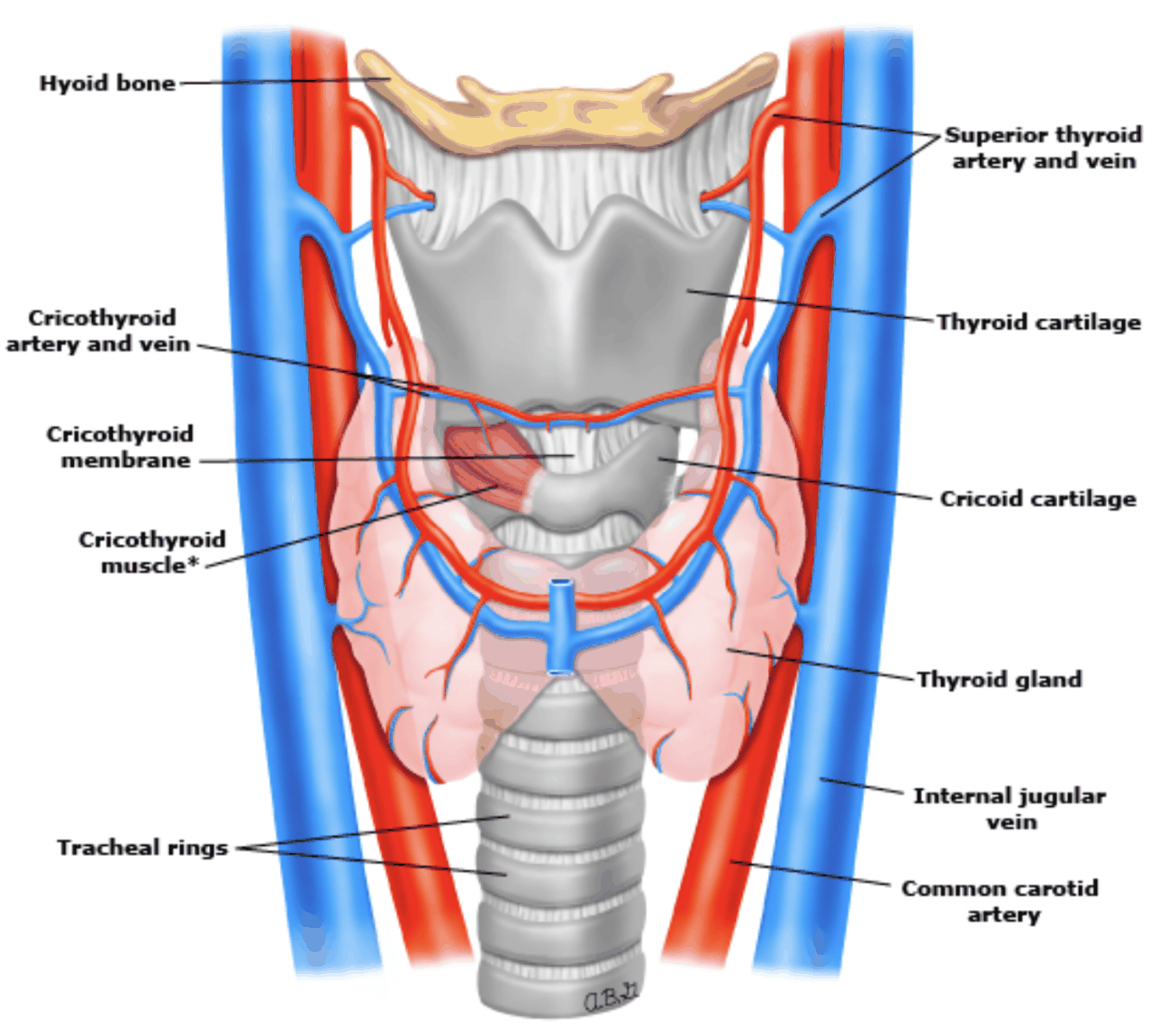
Cricothyroidotomy
- Indications
- Can’t intubate can’t ventilate
- Common situations
- Haemorrhage
- Emesis
- Trismus
- Obstructing lesions
- FB occlusion
- Deformities
- Contraindication
- NO ABSOLUTE ONES
- Relative
- Fractured larynx
- Laryngotracheal disruption
- Tracheal transection with distal tracheal retraction into mediastinum
- THEN NEED tracheotomy or stabilization of distal segment and direct intubation
- Children
- Narrowest part is at cricoid ring (funnel shaped AW)
- Cricoid cartilage is main circumferential support for trachea in kids
- As c shaped tracheal rings are pliable
- Thus a cricothyroidotomy increases the risk of subglottic stenosis
- Recommendation - transtracheal oxygenation via 14g needle
Anticipating difficult cricothyroidotomy - SMART
- Surgery - recent or remote
- Mass - haematoma, abscess or other
- Access of Anatomy - obesity, poor landmarks, otherwise poor access
- Radiation - or other tissue deformity/scarring
- Tumour - including intrinsic AW tumour
Anatomy
- CTM boundaries
- Superior - thyroid cartilage
- Inferior - cricoid cartilage
- Lateral - cricothyroid muscle
- Cricothyroid arteries
- Branches of superior thyroid arteries
- Course along sides of CTM then anastomose in the midline
- Upper half of CTM
- So incise lower half