Section: UGI Sub-section: Bariatrics Curriculum: Curriculum, page 83
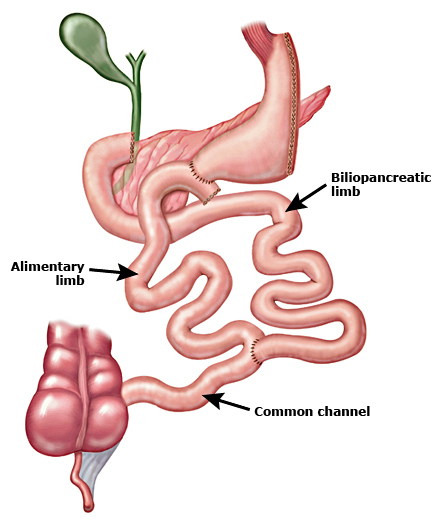
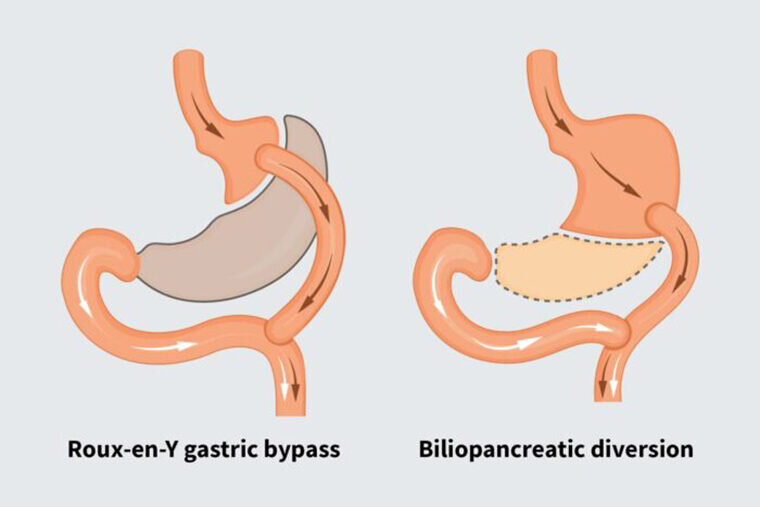
The original BPD procedure involves dividing the duodenum from the pylorus, removing the pylorus, and dividing the ileum. The distal ileum is then anastomosed to the stomach and the proximal ileum, with the output from the liver, pancreas, and duodenum (or biliopancreatic limb) anastomosed to the terminal ileum some 50 to 100 cm away from the ileocecal valve. The BPD with a DS procedure involves creating a sleeve gastrectomy with preservation of the pylorus and creation of a Roux limb with a short common channel. The BPD/DS procedure differs from the BPD in the portion of the stomach that is removed, as well as in the preservation of the pylorus, similar to an SG. This allows more forward flow of the contents of the biliopancreatic limb and avoids the complications of stasis that plagued the jejunoileal bypass (JIB). It is associated with a lower incidence of stomal ulceration and diarrhea than with BPD alone. SG complications can still occur with this procedure, though. Although complex, BPD/DS can be performed laparoscopically by experienced surgeons
Principles
- Malabsorptive
- Concerns re: Potential metabolic & nutritional sequelae
- DS component developed to help lessen the high incidence of marginal ulcers, malnutrition, diarrhoea & dumping syndrome after BPD alone.
- Common channel = 75-100cm
- Entire alimentary tract = 100-250cm
- Two steps
- Sleeve Gastrectomy
- Duodenal Switch/BPD
Procedure
- First step
- Sleeve Gastrectomy
- 60F Maloney dilator
- Aim 150-200mL volume
- Then
- Duodenum divided 2cm beyond pylorus
- Distal connection 100cm prox to TI
- Proximal anastomosis
- Antecolic end-to-side duodenoenterostomy
Pros and Cons
- Associated with less severe protein-energy malnutrition than BDP alone
- Needs long term high protein diet and supplements:
- B12
- Iron
- Folic Acid
- Multivitamins
- Calcium + Vit D
- Needs long term high protein diet and supplements:
- May have best weight loss profile, but studies haven’t been done to compare
- Pros:
- Excellent weight loss and prolonged duration
- Excellent T2DM remission rate (80-90%)
- Can be used a rescue operation if weight regain after previous sleeve
- Pylorus preserved so ? reduced risk of dumping
- Cons:
- Two to four bowel motions per day, excessive flatulence, foul stools
- High risk of malnutrition
- If get severe protein malnutrition may need to revise/ lengthen common channel
- Needs close and long-term follow up
- Patients will still absorb simple sugars, alcohol & short chain fatty acids well
- Over-indulgence will still increase weight
Complications
- Dumping & nutritional deficiencies
- Protein malnutrition 12%
- Diarrhoea/ Abdominal bloating 33%
- Fatty acids irritate colon
- Sorbitol (fruits) ferments in colon, gas and diarrhoea
- Fast transit
- Bile salt toxicity
- Leaks 1.8%
- Strictures
- Marginal Ulcers
- Obstruction/Internal Hernias
- Cholelithiasis
- Need to re-operate 4.2%
- Bone pain 30%
- Mortality rate 1.1%