- Nerve roots: L2-L4
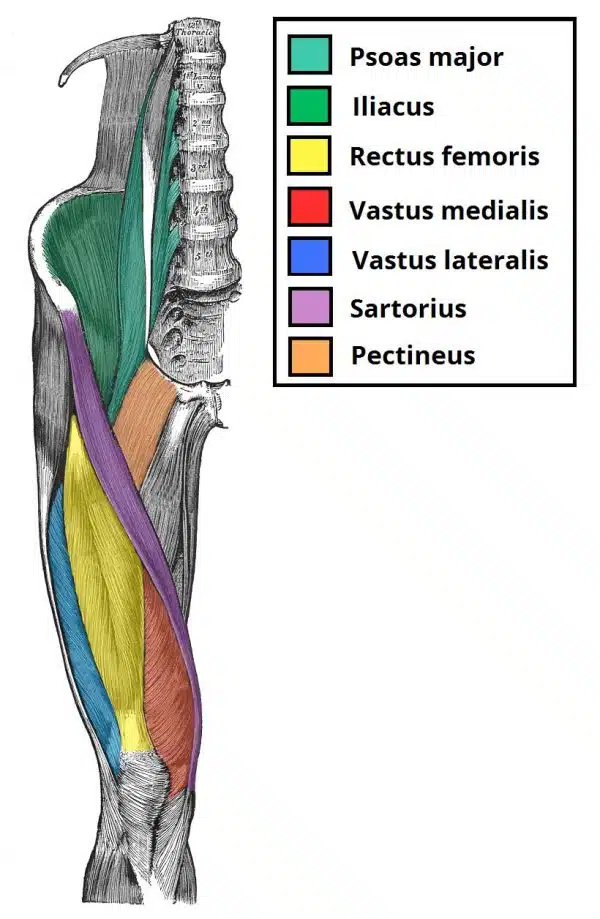
- Motor functions: Innervates the anterior thigh muscles that flex the hip joint (pectineus, iliacus, sartorius) and extend the knee (quadriceps femoris: rectus femoris, vastus lateralis, vastus medialis and vastus intermedius),
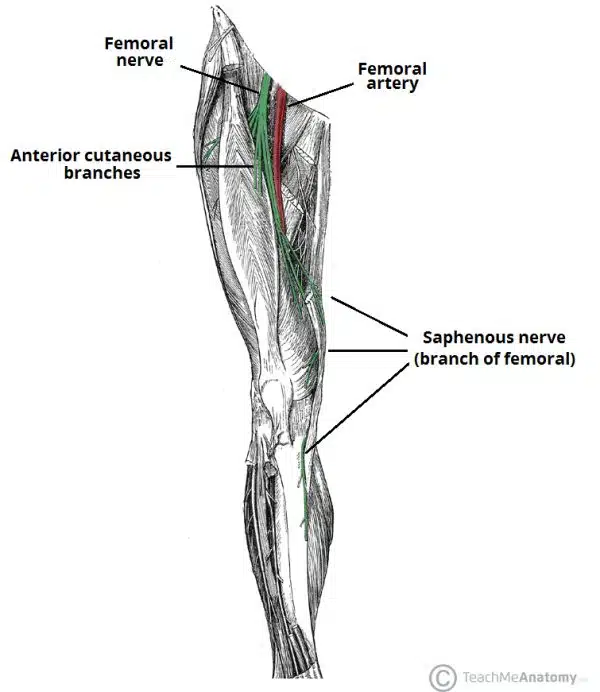
- Sensory functions: Supplies cutaneous branches to the anteromedial thigh (anterior cutaneous branches of the femoral nerve) and the medial side of the leg and foot (saphenous nerve).
Course:
- Approximately 4cm below the inguinal ligament, the femoral nerve divides into anterior and posterior divisions:
- The terminal cutaneous branch of the femoral nerve is the Saphenous nerve
- Travels through the adductor canal (accompanied by the femoral artery and vein) and exits prior to the adductor hiatus.
- Saphenous nerve innervates the medial aspect of the leg and the foot.
| Anterior division of the femoral nerve | Posterior division of the femoral nerve |
|---|---|
| - Anterior cutaneous branches - Branch to sartorius - Branch to pectineus | - Saphenous nerve - Branches to quadriceps femoris |
Motor Functions
The femoral nerve supplies the muscles of the anterior thigh:
Hip flexors:
- Pectineus – adducts and flexes the thigh, assists with medial rotation of the thigh.
- Iliacus – acts with psoas major and psoas minor (forming iliopsoas) to flex the thigh at the hip joint and stabilise the hip joint.
- Sartorius – flexes, abducts and laterally rotates the thigh at the hip joint. Flexes the leg at the knee joint.
Knee extensors:
- Quadriceps femoris (rectus femoris, vastus lateralis, vastus medialis and vastus intermedius) – extends the leg at the knee joint. Rectus femoris also steadies the hip joint and assists iliopsoas in flexing the thigh.