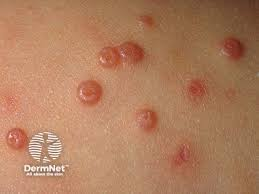
Section: Skin and soft tissue Sub-section: Skin infections and breakdown Curriculum: Curriculum, page 53
Definition
- Infective spreading inflammation of the skin and subcutaneous tissues
- Resulting in pain, erythema, oedema & warmth
Incidence
- Common; in US 2-3 cases per 100 per year
- M > F
- Peak age 45-64
Classification
- Simple cellulitis
- Erysipelas:
- Caused by Strep erythrotoxins
- Affects the upper dermis and extends into the superficial cutaneous lymphatics
- Red, hot, tender, oedematous skin
- Toxic striations
- Local lymphadenopathy with a raised border + toxic pt
- Admit these patients
Aetiology
- Bacteria:
- Group A Streptococcus (pyogenes) & Staphylococcus aureus most common
- Violaceous colour & bullae suggests Strep infection
- Haemophilus influenza in children
- Fungi occasionally, especially immunocompromised
- Group A Streptococcus (pyogenes) & Staphylococcus aureus most common
- Breach of skin from
- Minor trauma
- Post-surgical wounds / luer sites
- Contributing factors
- DM
- Immunodeficiency
- Impaired circulation – PVD or impaired venous stasis
- Lymphoedema
- Pre-existing skin conditions: psoriasis, eczema
Clinical
- Skin erythema, warm, pain
- If crepitus → concerns for fasciitis, gangrene
- Lymphatic tracking → Lymphangitis
- ± Systemic unwellness
Pathology and Investigations
- Pathology
- Disrupted skin
- Bacteria invade
- Infection triggers an inflammatory response
- Investigations
- FBC, CRP ± blood cultures
- Areas of abscess or bullae may be cultured
- → 90% positive yield
- Usually no USS or x-ray required
Management
- Flucloxacillin
- If clinically well – can manage as outpatient
- If signs of SIRS or worse – admit
- Severe or not responding
- Add Clindamycin
- Diabetic
- Consider broader spectrum
- Ceftriaxone (improved profile against gram negatives but not as good against gram positive & doesn’t cover pseudomonas)
- Imipenem, Meropenem
- Others – Penicillin, augmentin, ciprofloxacin
- No advantage in adding benzylpenicillin to iv flucloxacillin
Prognosis / Natural Hx
- Good prognosis; most resolve with Abs
Specific Infections
Bacterial
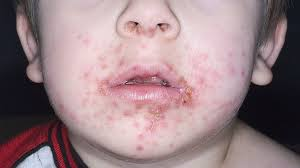
Impetigo
- Children
- Staph, strep or both
- Vesicles, yellow crusting lesions
Folliculitis
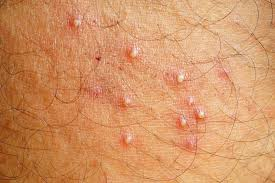
- Infection of hair follicle
- Furuncle or boil
- Multiple – carbuncle
- Staph aureus
- Intense inflammatory reaction,
- FB granulomatous reaction
Scalded Skin Syndrome
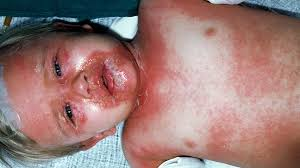
- Children
- Staph infection (phage type 71)
- Toxin = Epidermal splitting
- Peeling and pain
Viral
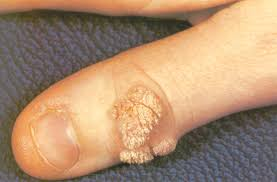
Verruca Vulgaris
- Common wart
- Skin or mucous membranes
- HPV
- Types 1,2,4,26,29
- Hyperplasia of epithelium and hyperkeratosis
- Viral inclusion bodies in epidermis
Molloscum Contagiosum
- Pox virus
- Children
- Skin or mucous membranes
- Pearly pink elevated papules, central punctum
- Single lesions require biopsy
- Characteristic inclusion bodies
- Eosinophilic at base of dermis, basophilic at surface
- Involute and disappear 2/12
- Common in AIDS - 10-20% affected