Section: Breast Curriculum: Curriculum, page 9
- 3rd most common symptomatic breast complaint
- Behind lumps and mastalgia
- 80% benign, 20% malignant
Physiological causes
- Transient in neonate (hormonal stimulation of neonatal breast)
- Pregnancy & lactation (occasionally blood-stained)
- Can be up to 2 yrs post weaning
- Physical stimulation
- Can be produced in > 50% of women - release of keratin plugs
- Can be clear, white, yellow, green, black
Pathological causes
- Duct ectasia of breast
- Intraductal papilloma
- Cancer
- < 5% breast cancers have discharge
- 5-10% with bloody/serous discharge have DCIS or Cancer
- Usually single duct, watery/serous, can be blood stained
- Drug related
- COC, HRT, Cocaine, SSRIs/antipsychotics, Codeine/morphine
- Galactorrhoea
Beware:
- Spontaneous
- Persistent (> 2x per week)
- Non-lactational
- Single Duct
-
50yrs
Clinical Presentation
- ~5% of cases at OPC
- Hx:
- Breast feeding
- Stimulation – spontaneous or elicited (spontaneous more suspicious)
- Unilateral or Bilateral
- Pain – non-cyclical, usually in younger
- PHx / FHx / Risk factors for Ca
- Type of discharge: milky / watery / serous / blood-stained
- Multi-duct vs. single duct (multiple rarely malignant)
- Colour (green / yellow discharge is less suspicious for Ca)
- Examination:
- Associated mass (80%) at areolar margin or pain
- Overlying skin erythema
- Single versus multiple ducts
- Find trigger point
Investigation
- Imaging
- MAM + USS
- IF NOTHING THEN MRI
- Discharge Cytology
- Lump
- Associated with lump – management appropriate to lump
- Obviously if mass; FNA vs. core
- Multi-duct & sebaceous or bilateral:
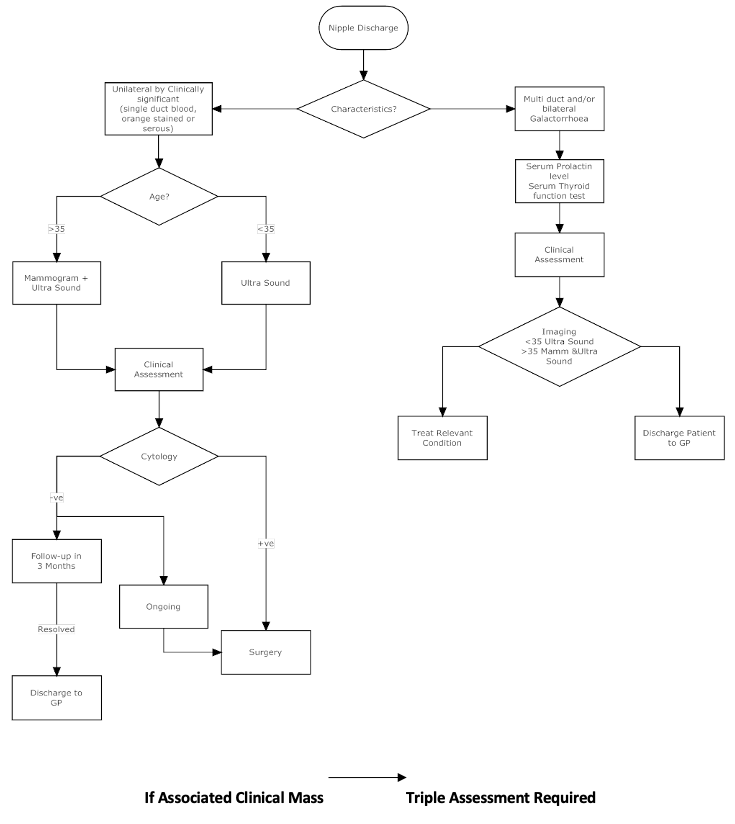
- Ensure that screening imaging is up to date, then reassure & discharge
- ± Bloods if heavy multi-duct discharge:
- TFTs & prolactin if Bilateral Galactorrhoea
- Investigate medications
- Single duct or blood-stained or clear
- Triple assessment
- Cytology of discharge (False -ve = 18%; False +ve = 3%)
- May yield papillary cells
- Mammography ± Retroareolar USS
Galactography or ductography – of little use; rarely indicated, uncomfortable & operator dependant; may not change Mx, injection of contrast into discharging duct. MRI now better
Indications for Intervention
- In the absence of a palpable mass or a suspicious mammogram, discharge is rarely associated with cancer
- Surgery for ectasia rarely indicated
- Single duct
- If triple assessment normal & pt against surgery (or considering pregnancy) → Observe & review in 3-6/12 → If persists offer surgery
- Microdochectomy
- Multi-duct
- Reassurance if minor
- Excise ducts if considerable Sx
- Hadfield’s Total Duct Excision = major duct excision (if older pt & no wish to breast feed)
- Galactorrhoea
- Can use Bromocriptine
- Infection
- Flucloxacillin & Metronidazole
Nipple Discharge – Management Algorithm
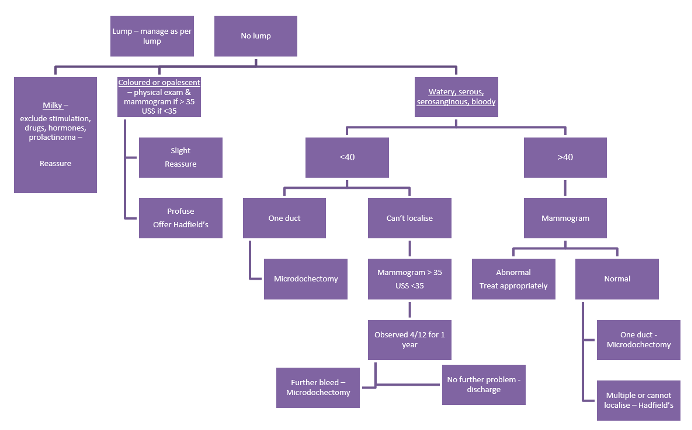
North Shore Hospital Breast Clinic Protocol