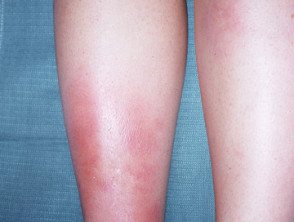
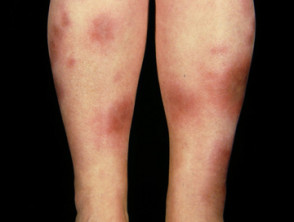
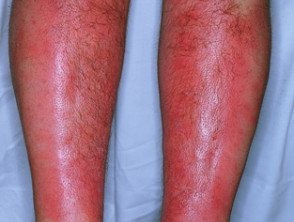
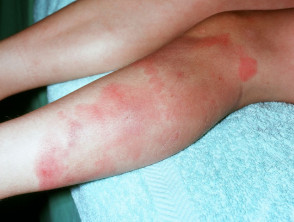
Who gets erythema nodosum? Erythema nodosum can occur in all ethnicities, sexes, and ages, but is most common in women between the ages of 25 and 40. It is 3–6 times more common in women than in men except before puberty when the incidence is the same in both sexes .
What are the causes of erythema nodosum? Erythema nodosum is a hypersensitivity reaction of unknown cause in up to 55% of patients. In other cases, it is associated with an identified infection, drug, inflammatory condition, or malignancy.
Infections:
- Throat infections (streptococcal disease or viral infection)
- Primary tuberculosis (TB), a rare cause in New Zealand
- Yersinia infection; this causes diarrhoea and abdominal pain
- Chlamydia infection
- Fungal infection: histoplasmosis, coccidioidomycosis
- Parasitic infection: amoebiasis, giardiasis
- Other viral and bacterial diseases associated with erythema nodosum include herpes simplex, viral hepatitis, human immunodeficiency virus (HIV) infection, Campylobacter infection, and Salmonella infection.
Drugs (3–10%)
- Sulfonamide
- Amoxicillin
- Oral contraceptive
- Non-steroidal anti-inflammatory drugs
- Bromide
- Salicylate
- Iodide
- Gold salt
Inflammatory
- Inflammatory bowel disease (ulcerative colitis or Crohn disease)
- Sarcoidosis (11–-25%); X-ray shows bilateral hilar adenopathy in Löfgren syndrome
Malignancy
- Lymphoma
- Leukaemia
- Behçet disease
Others
- Pregnancy (2-5%)
In UC
- 10–20% of patients with UC
- tender, inflamed, red nodules mainly on the anterior surfaces of the lower extremities
- Dependent on activity of colitis