- HPV 6 and 11 are the main causes
- Common
- Immune clearance of HPV after infection can be incomplete, with integration of the viral genome into basal cells, which, given no viral reproduction and immune evasion, allows persistent virus to be present for many years, only to display pathological effects later in life.
Lesions
- Small, often multiple, discrete outcrops of raised circular lesions, brown or skin colour with corrugated surface
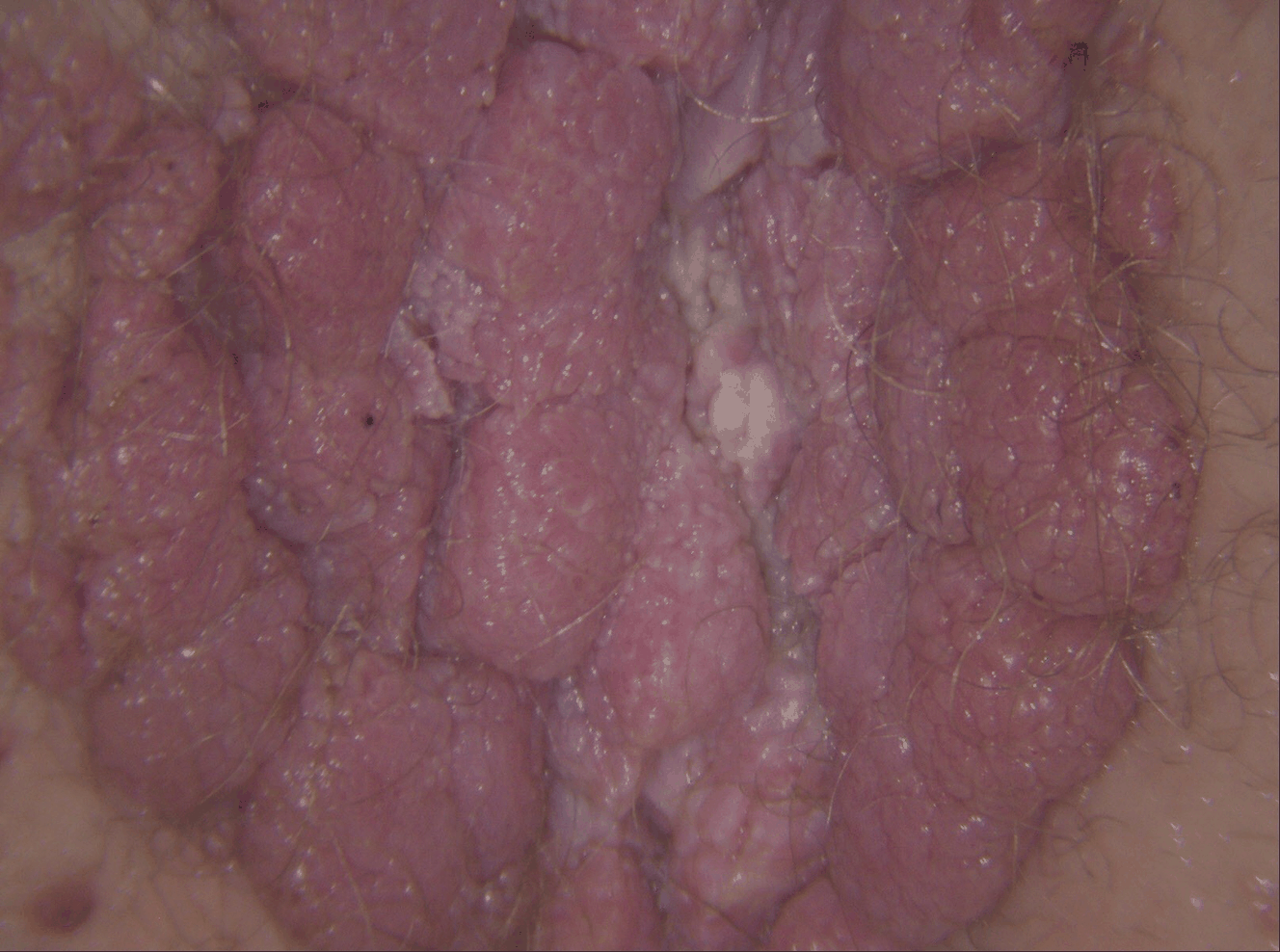
Disease course
- Warts are low risk and benign
- Considered a risk factor for anal cancer as can be associated with high-risk oncogenic HPV types
Management
- Diagnosis is by physical examination, with histological confirmation not necessary unless there is concern of a risk of cancer
- STD screen
- First line topical and cryotherapy
- 5% Imiquimod, a topical immune stimulant (toll-like receptor 7) is 35–75% effective
- Sinecatechins (green tea-derived immunomodulators, multiple pathways) have been shown to be 50–60% effective
- Cryotherapy (success 44–87%)
- Topical ablation with trichloroacetic acid, success 60–90%
- Recurrence rates are substantial for all treatments (25–60% at a year) and most cause local irritation and burning.
- Surgery is second line
- Surgical excision, electrocautery/hyfrecation and laser have a success rate of 95–100% with recurrence rate of 20%.
- Risk of stenosis
Buschke–Lowenstein tumour: giant anal condyloma
- Giant condyloma acuminata (GCA)
- Locally invasive tumour of low malignant potential associated with low-risk HPV types 6 and 11
- There is no good evidence for treatment
- Patients often fail local ablation or excision, undergo skin grafts and end up with a defunctioning stoma, stenosis and eventual abdominoperineal excision.