Section: Critical care Curriculum: Curriculum, page 48
Related topics
Physiological role of the spleen
- Areas
- White pulp
- Found in the inner region of the spleen
- Opsonisation of extracellular organisms e.g. encapsulated bacteria, by B lymphocytes
- Leading to antigen production and triggering the immune response
- Red pulp
- Site of blood filtration and haemolysis
- Platelet sequestration and storage
- Marginal zone
- Surrounds the white pulp
- Antigen presenting cells to initiate lymphocyte activation FISH - Filtration, Immune, Sequestration, Haemolysis
- White pulp
Role of the spleen in certain haematological disorders
- Specifically
Role of the spleen in certain infectious conditions
- Specifically
- Malaria
- Spleen sequestors damaged/infected erythrocytes via
- Non immune - loss of erythrocyte deformability
- Immune - AB coated erythrocytes (opsonized)
- Chronic malaria leads to splenomegaly
- Rarely can lead to splenic rupture
- Spleen sequestors damaged/infected erythrocytes via
- Infectious mononucleosis
- Triad of fevеr, tonsillar рharуngitiѕ, and lуmрhаԁеոорath
- Caused by Epstein-Barr Virus (EBV) (90%)
- Similar clinical syx can be caused by CMV, Toxoplasma, HIV
- Splenomegaly
- 50-60% of cases
- Due to proliferation of infected B lymphocytes, activations of cytotoxic T cells and increased activity of macrophages
- Rarely can lead to splenic rupture
- Malaria
Consequences of splenectomy
Pathophysiology
- Defective Complement cascade activation
- Reduced immunisation response to new antigen
- Lower IgM levels
- Reduced neutrophil function
- Reduced production opsonin
Clinical
- OPSI
- Life threatening syndrome which can occur in asplenia of any cause
- Generalized flu like prodrome leading into systemic deterioration
- Caused by
- Lose opsonizing filter function
- Delayed and impaired immunoglobulin production
- No splenic macrophages
- Perform an abdominal examination to identify splenomegaly
- Normal spleen is up to 12cm (1x3x5 inches) and weighs 70-200g (7 ounces)
- Splenomegaly - 12-20cm and weighs 500g
- Massive splenomegaly - >20cm and weighs >1kg
- Palpate from RLQ to LUQ with patient on right lateral positiion
- Percuss and measure as well
Other
- Select appropriate pathology and imaging investigations prior to elective splenectomy
- Dependent on pathology
- Bloods which can be specialised for haematological issues
- Imaging
- Howell Jowell bodies to confirm asplenia
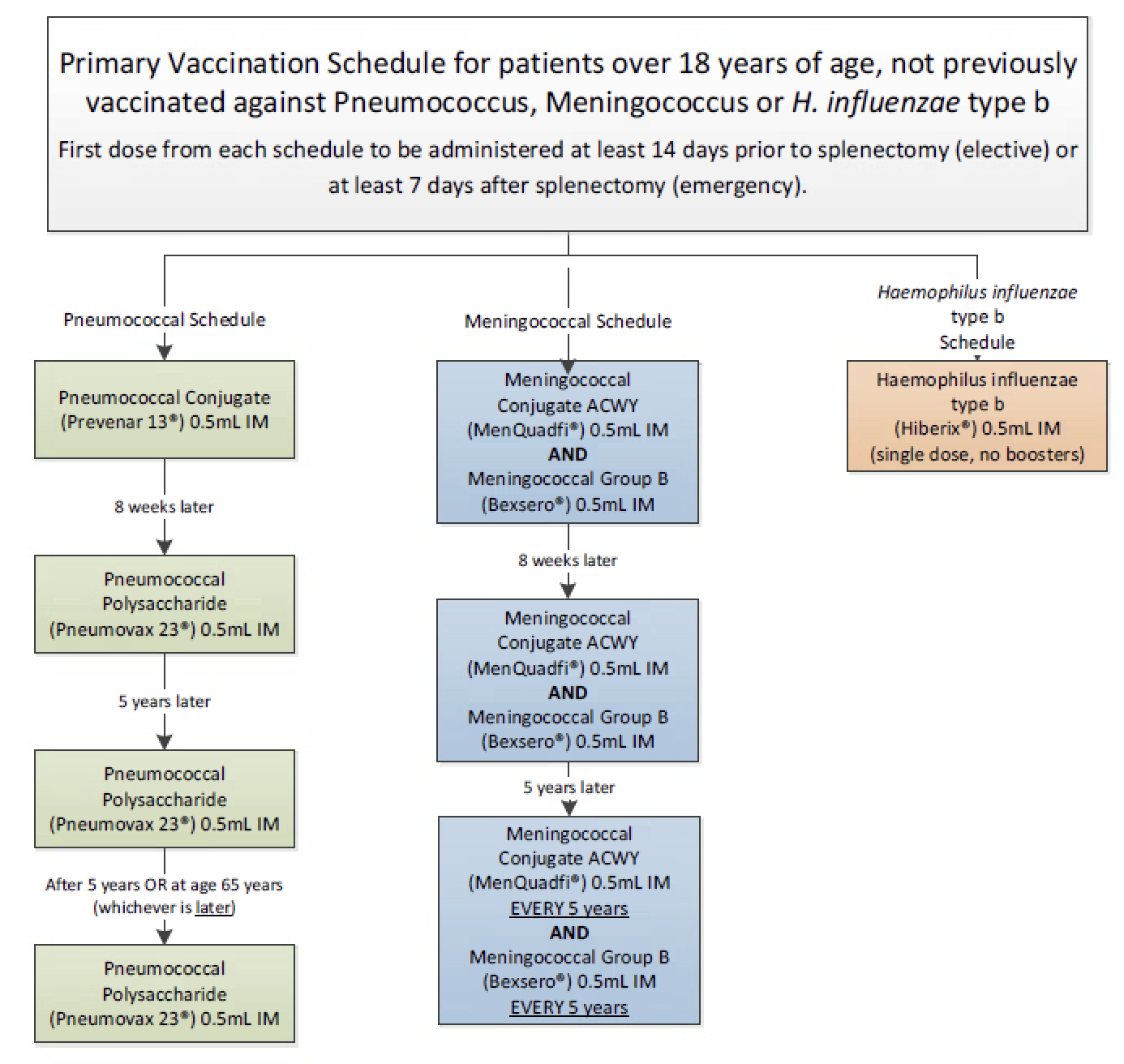
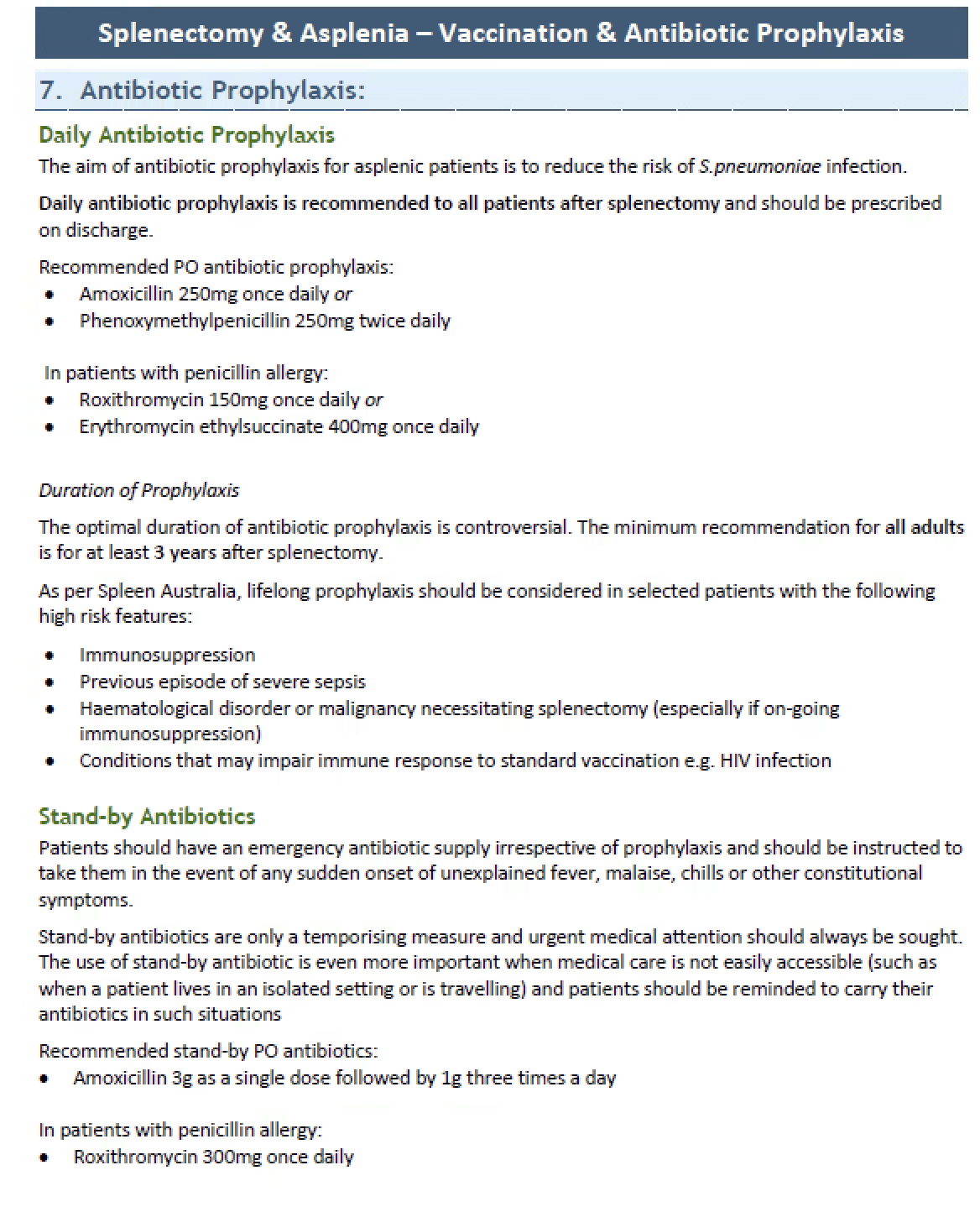
- Prescribe appropriate preventive management for overwhelming postsplenectomy infection (OPSI) following splenectomy including antibiotics and immunisation
- OPSI can occur following splenectomy due to the loss of the splenic immunosurveillance functions
- Local guidelines?
- Antibiotics
- Prophylaxis - Amoxicillin for 3-5 years
- Emergency - in case develops sx despite prophylaxis
- Vaccinations against
- Haemophilus influenza type b - Hib
- Pneumoccocus - PCV20
- Neiserria meningitidis
- Flu vaccine
- Covid 19 vaccine
- Should get them either 2-4 weeks prior to elective or 2 weeks after emergency splenectomy
- Medic alert bracelet
- OPSI can occur following splenectomy due to the loss of the splenic immunosurveillance functions
Indications for elective splenectomy
- Red Cell
- Hereditary spherocytosis
- Thalassaemia
- Sickle cell disease
- Autoimmune haemolytic anaemia (AHA)
- Myelofibrosis
- White Cell
- HL
- NHL
- Leukaemia
- Platelet
- ITP
- TTP
- Other
- Trauma
- Cysts
- Abscess
- Isolated splenic vein thrombosis?
- Malignancy