- Postoperative abdominal septic complications occur in 5–10%
- Overall 98–99% have symptomatic relief.
- Postoperative bleeding 3% of patients,
- Recurrence requiring re-operation is about 30% at 5 years. R
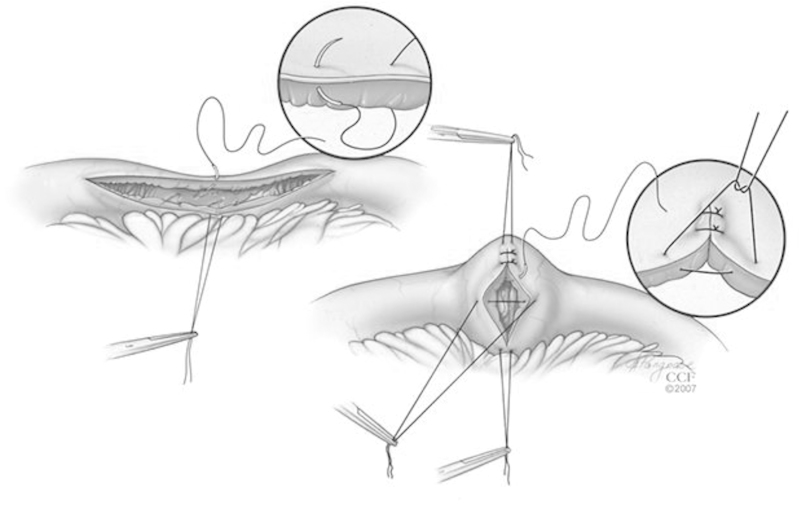
Heineke–Mikulicz Strictureplasty (<10cm)
- A longitudinal anti-mesenteric incision is made over the stricture to non-strictured bowel on either side
- Stay sutures are placed on either side at the middle of the enterotomy to guide closure
- The enerotomy is then closed transversely with interrupted 4-0 PDS suture.
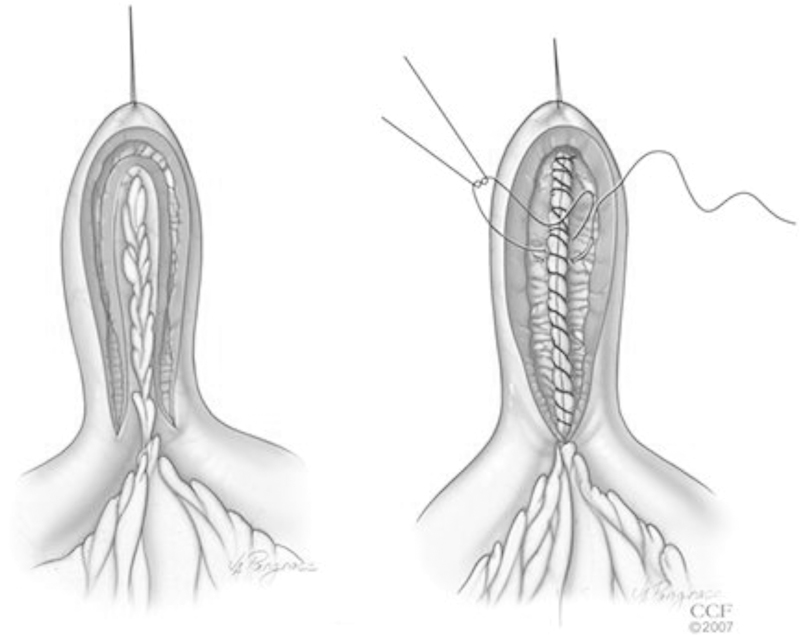
Finney strictureplasty (10-20cm)
- A stay suture is placed in the middle of the stricture
- A longitudinal anti-mesenteric incision is made over the stricture to non-strictured bowel on either side
- The bowel is orientated in a loop using the stay suture for tension
- The posterior (back wall) is sutured closed first with 4-0 PDS
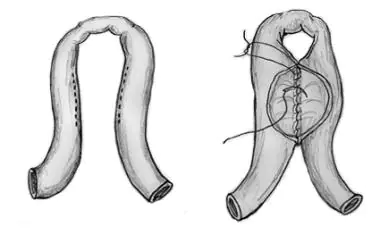
- A small bowel anastmaosis is created to bypass the stricture
- Small bowel enterotomies are made and a hand-sewn anastomosis is performed with 4-0 PDS
 Michelassi - Side-to-side isoperistaltic technique
How I Do It- Side-to-Side Isoperistaltic Strictureplasty for Extensive Crohn’s Disease, page 1
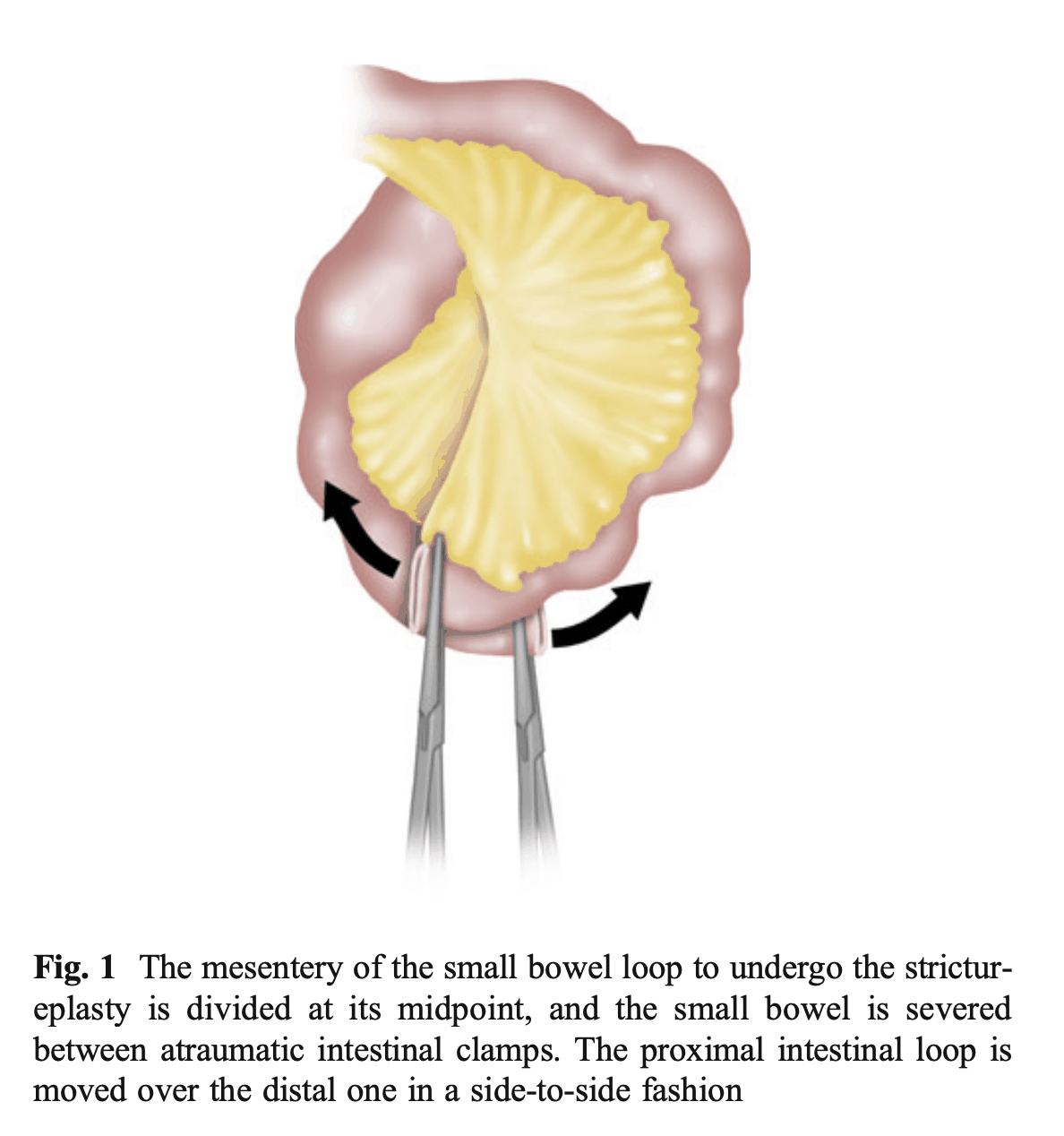
- Mesentery and small bowel is divided at the midpoint of the stricture (fig 1)
- The bowel is then overlapped. Care is taken to ensure that stenotic areas of one loop are opposed to the dilated areas of the other loop, in order to avoid creation of narrow points. (fig 1)
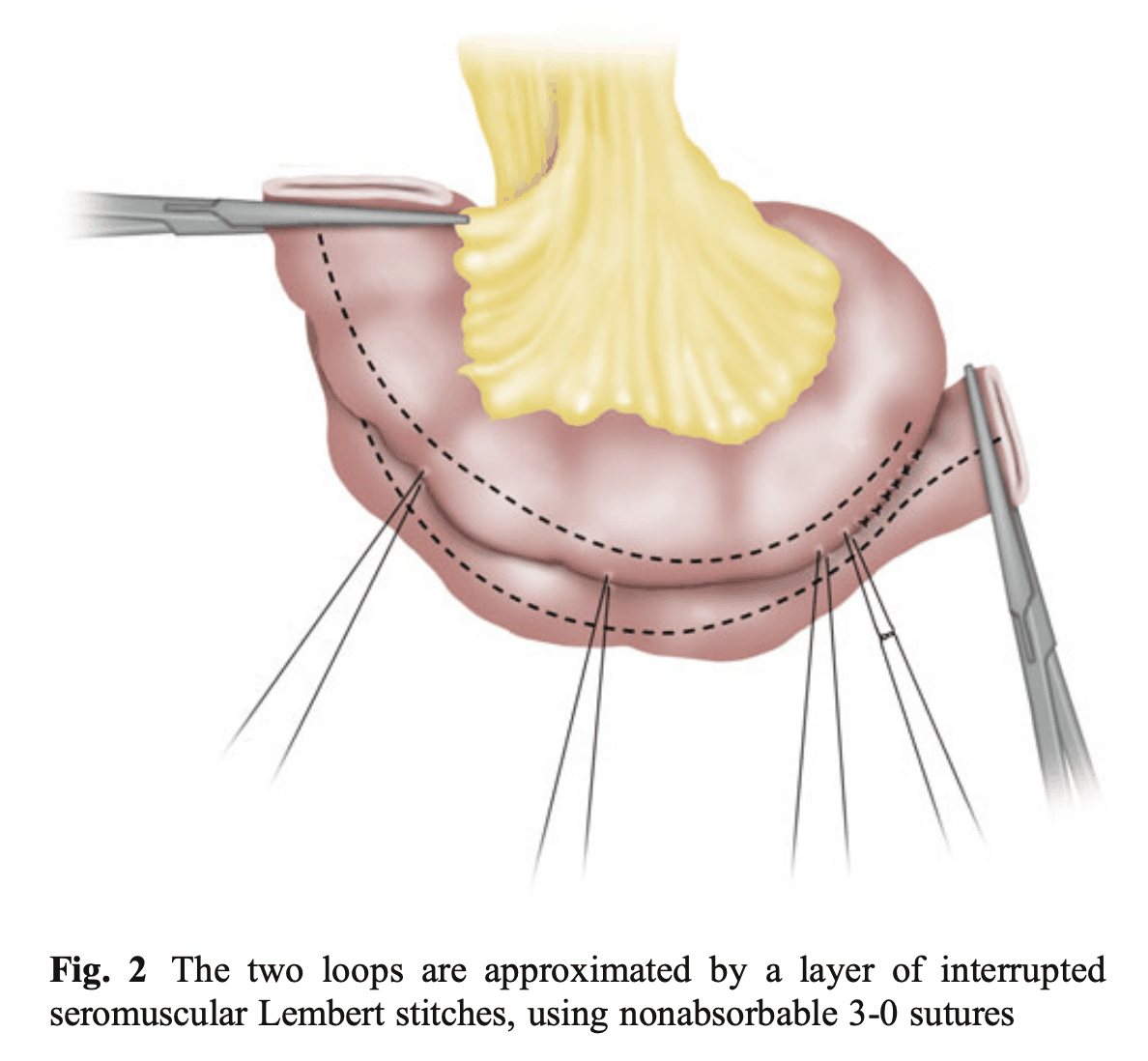
- The two loops are then approximated by a layer of interrupted seromuscular Lembert stitches, using nonabsorbable 3-0 sutures (fig 2)
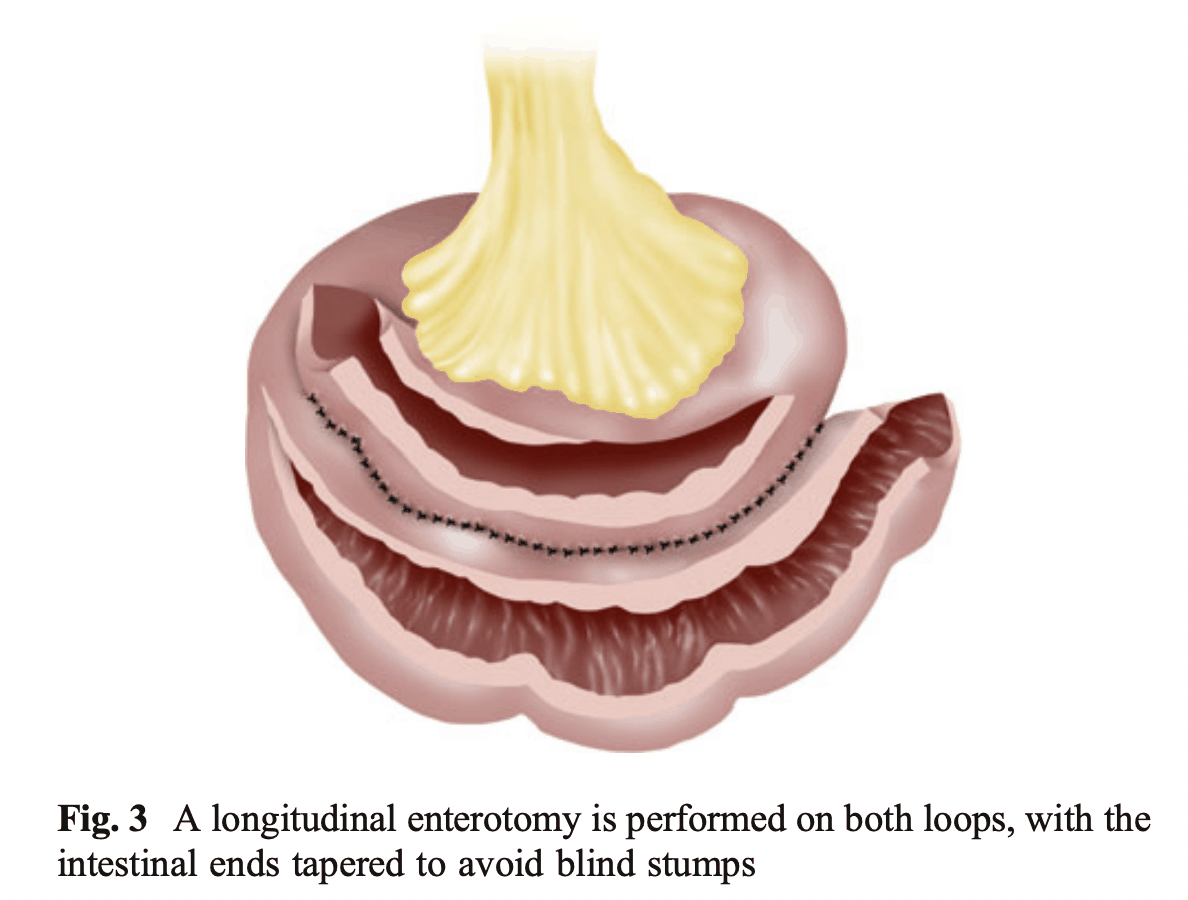
- A longitudinal enterotomy is performed on both loops, with the intestinal ends tapered to avoid blind stumps (Fig. 3).
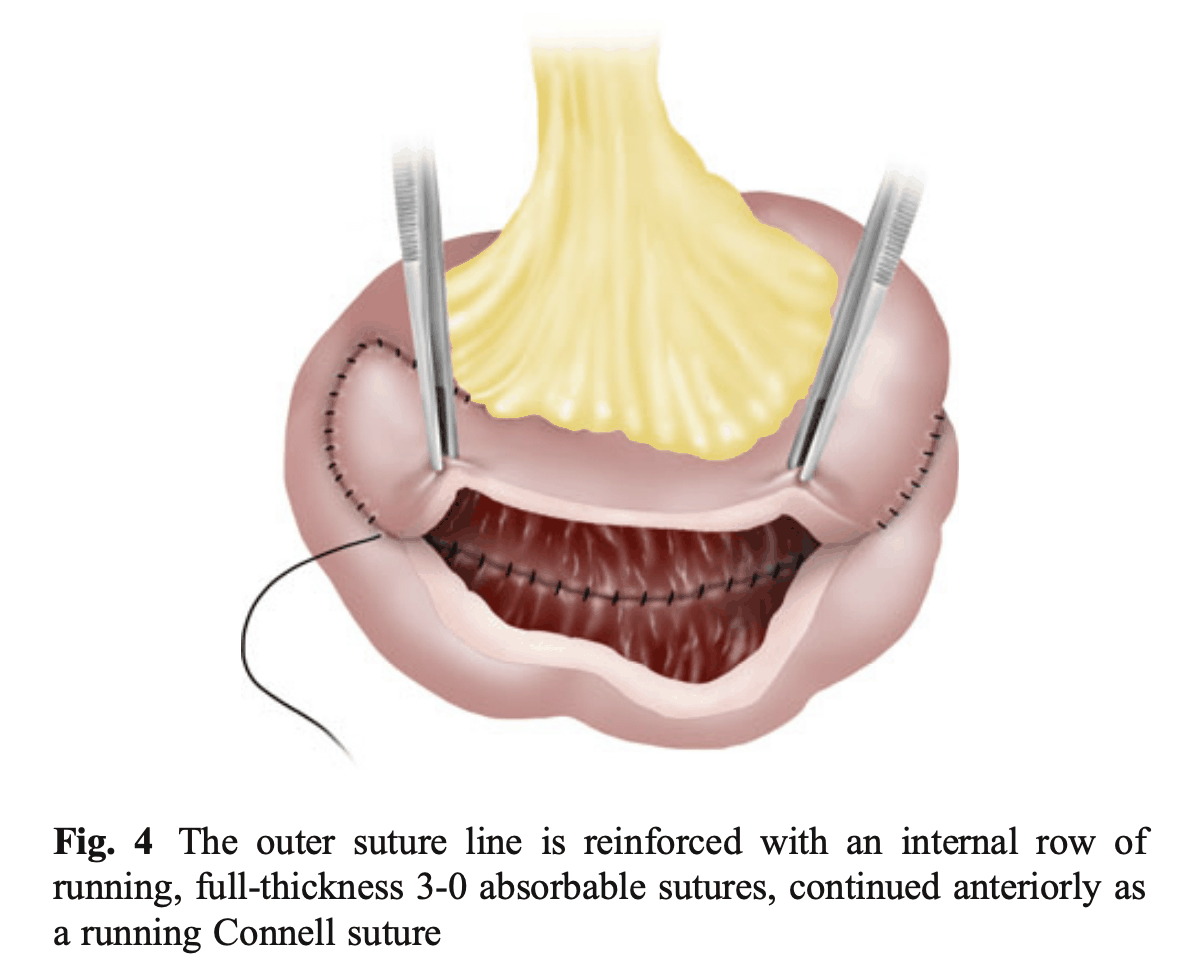
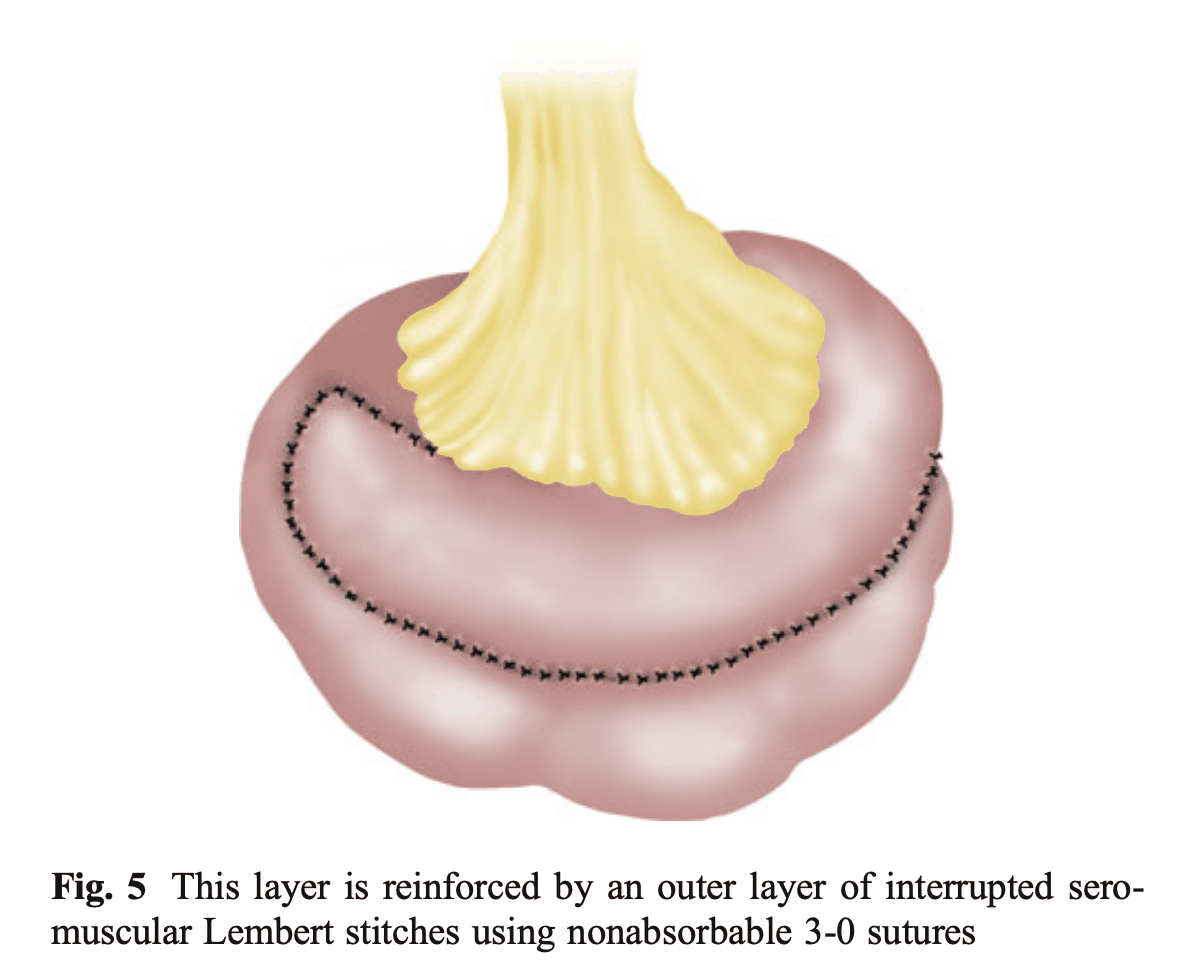
- The outer suture line is reinforced with an internal row of running, full-thickness 3-0 absorbable suturess, continued anteriorly as a running Connell suture (Fig. 4); this layer is reinforced by an outer layer of interrupted seromuscular Lembert stitches using nonabsorbable 3-0 sutures (Fig. 5).