Section: Small bowel Curriculum: Curriculum, page 62
Definition
- Radiation therapy can cause an acute injury to the small and large intestines which develop during or shortly after treatment of a variety of malignancies.
Classification
- Acute
- Delayed
Risk factors
- Total dose, fraction size, treatment duration, volume of intestine within radiation field
- Radiosensitising chemotherapy
- Limited bowel motility
- Adhesions
- Previous abdominal surgery
- Previous PID/peritonitis/endometriosis
- Females, older patients, thin patients
- Vascular disease
- Smoking, diabetes, HTN, atherosclerosis
- (Pretreatment condition is impacted by pathological changes of radiation enteritis)
- Connective tissue disorders
- E.g. RA, SLE
- Adhesions
Pathogenesis/Pathophysiology
- Acute (within 3 months)
- Crypt epithelium is rapidly proliferating
- Radiation causes cells death - direct DNA damage and creation of oxygen free radicles
- Initial damage occurs within hours
- Crypt cell death - insufficient replacement of villous epithelium, mucosal barrier breakdown and mucosal inflammation
- Leukocyte infiltration, crypt abscesses, ulceration
- Chronic (after 3 months)
- ⇒ Mucosal atrophy, vascular sclerosis, progressive gut wall fibrosis
- Mucosal atrophy
- Intestinal wall fibrosis - submucosal, as ulcers heal
- Microvascular sclerosis - endarteritis obliterans
- Accelerated atherosclerosis
Clinical
-
Acute
- AP, N+V, diarrhoea, fatigue
- Usually resolve within 1-3 months
-
Chronic
- Chronic, progressive disorder
- Altered intestinal transit
- Malabsorption
- Bile salt - diarrhoea
- Dysmotility
- Strictures
- Bacterial overgrowth
- Bleeding ulcers
- Abscess formation
-
⇒ Late changes of radiation of enteritis
- Related to progressive intestinal wall vasculitis
- Can lead to ulceration, stenosis, perforation or malnutrition
Investigation
- Deficiencies - B12 (SIBO), low albumin and anaemia from malnutrition/bleeding
- Stool cultures - R/O infection
- Imaging
- CT - thickened bowel loops
- Differential diagnosis
- Endoscopy
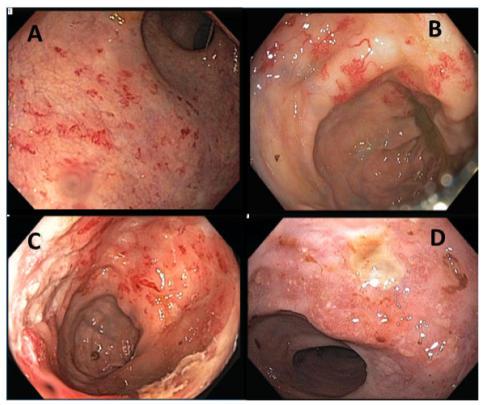
- Palor with friability and telangiectasia.
Management
- Acute
- Self limiting
- Supportive cares
- Chronic
- Predominantly conservative, medical with sx mx
- Diet modification
- Anti-diarrhoeals - Loperamide/Codeine
- Sucralfate
- Bile acid - sequestrants - Cholestyramine
- Bile reabsorption in the TI may be impaired - bile acids in the colon precipitate diarrhoea.
- Hyperbaric oxygen therapy may be of benefit.
- Abx - bacterial overgrowth (AP, bloating, diarrhoea)
Surgery
- Only when persistent complications
- Persistent obstruction
- Fistula
- Perforation
- Malignancy
- GI bleeding that fails medical mx