Section: Critical care Curriculum: Curriculum, page 49, Curriculum, page 62
Principles of Nutrition
Requirements
Food and Metabolism: Guideline for Sedentary and Moderate Lifestyles
-
Daily energy requirements vary greatly depending on age, gender, and physical activity
-
Female energy requirements:
- Height: 1.6m, Age 31-50, Weight 60kg
- Sedentary: Seated work with little or no strenuous leisure activity:
- 7600 kJ/day
- 1800 k/Calories
- Moderate: Standing or walking work, or sedentary work with regular exercise of at least 30 minutes
- 9800 kJ/day
- 2350 k/Calories
-
Male energy requirements:
- Height: 1.9m, Age 31-50, Weight 70kg
- Sedentary: Seated work with little or no strenuous leisure activity:
- 9900 kJ/day
- 2400 k/Calories
- Moderate: Standing or walking work, or sedentary work with regular exercise of at least 30 minutes
- 12700 kJ/day
- 3000 k/Calories
Constituents of Food
Carbohydrates
- Carbohydrates can be divided into:
- Monosaccharaides
- Disaccharides
- Polysaccharides
- Metabolized fairly quickly and stored as glycogen in the liver and muscles
- Reserve lasts between 24-48 hrs
- Regulated by hormones, insulin and glucagon
Protein
- Broken down into amino acids (of which there are 20, and 9 of those are essential)
- Humans can manufacture non-essential amino acids whilst essential ones need to be ingested
- Although muscle bulk can sometimes be thought of as protein storage, protein needs to be ingested regularly
- A complete protein source has all 9 essential amino acids but most commonly a combination of sources is required
- Excess protein is converted into glucose or broken down into urea and excreted
Fats
- Typically made up of Glycerol and 3 Fatty acids (hence triglycerides)
- Major storage of energy in the body
- When broken down: Glycerol component can be used to make glucose
- Depending on the fatty acids, classified as:
- Saturated fats (usually solid at room temperature)
- Unsaturated fats (usually liquid at room temperature)
- Trans fat (usually manufactured by processing)
- Saturated fats are believed to be less healthy than unsaturated fats
- Trans-fats are best avoided altogether
- Unsaturated fats can be further subclassified as omega-3, omega-6 and omega-9 fatty acids
- Some of these cannot be produced by humans making them essential fatty acids
- May have immune-modulatory properties although the evidence is unclear
Vitamins
- Necessary for a variety of intra-cellular chemical processes
- Most are essential and cannot be metabolized, with the exception of vitamin D which can be synthesized in the skin
Trace Elements
- Include sodium, potassium, calcium, iron, nitrogen, carbon, hydrogen, oxygen, magnesium, chlorine
- Less common elements required in minimal quantities include cobalt, chromium, selenium, zinc, molybdenum, manganese and iodine
- So-called trace minerals
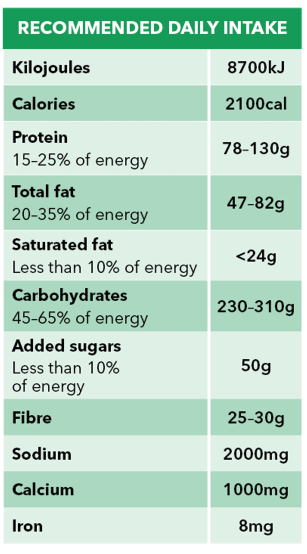
Recommended Daily Intake (RDI)
- Australian Guidelines are as follows:
- Female RDI:
- Carbohydrate: 45-65% of total energy intake
- 230 – 310g/day
- Protein: 45-60g/day
- Fat: 30% of total energy intake
- 70g/day
- Saturated Fat: less than 10% of total energy intake
- < 24g/day
- Fibre: 25g/day
- Sodium: 920-2300mg/day
- Upper limit of 1600mg recommended for those with or at risk of heart disease
- Calcium: 1000 mg/day
- Age 50+: 1300mg/day
- Iron:
- Age 19-50: 18 mg/day
- Age 50+: 8mg/day
- Carbohydrate: 45-65% of total energy intake
- Male RDI:
- Carbohydrate: 45-65% of total energy intake
- 230-310g/day
- Protein: 65-80g/day
- Fat: 30% of total energy intake
- 70g/day
- Saturated Fat: less than 10% of total energy intake
- < 24g/day
- Fibre: 30g/day
- Sodium: 920-2300mg/day
- Upper limit of 1600mg is recommended for those with or at risk of heart disease
- Calcium: 1000mg/day Age 70+: 1300mg/day
- Iron: Age 19+: 8mg/day
- Carbohydrate: 45-65% of total energy intake
- Female RDI:
Starvation
Definition
- Lack of kilojoules in the diet
- In extreme forms can lead to Marasmus
- Most severe form of malnutrition
Pathophysiology
- Short term leads to a different physio-pathological process when compared to sepsis and inflammatory processes
- Initial need for glucose in starvation leads to depletion of glycogen and following this, to some protein loss
- Body adapts by reducing overall metabolism and organs adapt by increasing use of fat as main source of energy
- Thus, overall need for glucose diminished but not eliminated
- Starvation over several weeks leads to loss of fat and lean body mass, which will eventually become unsustainable for life
Glycogenesis
- Process by which the body converts glucose into glycogen to be stored in the liver
- Pathway: Glucose ⇒ Glucose-6-Phosphate ⇒ Glucose-1-Phosphate ⇒ UDP-Glucose ⇒ Glycogen
- When the glycogen storage is depleted and fat is used for energy, acidosis develops:
- Breakdown of fat for energy is called lipolysis
- Process involves breakdown of triglycerides into glycerol and fatty acids
- Glycerol is converted in the liver and kidney to glycerol-3-phosphate
- Hepatic glycerol-3-phosphate is converted to DHAP and GA3P to rejoin glycolysis and gluconeogenesis pathways
- Fatty acids are metabolized to ketone bodies, namely acetone, acetoacetate, and beta-hydroxybutyrate, leading to a ketoacidosis (increased anion-gap metabolic acidosis)
Specific Deficiencies
- Lack of kilojoules = Starvation/Marasmus
- Lack of carbohydrates = No specific condition as the body can convert protein/fats into glucose, but you may become deficient in associated nutrients
- Lack of Protein = Kwashiorkor
- Lack of Saturated Fat = Low testosterone levels
- Lack of Trans Fat = No specific condition
- Lack of Unsaturated Fat = Fat Soluble Vitamin deficiency
Vitamin Deficiencies
- Vitamins:
- Fat soluble (absorbed in jejunum & ileum):
- Vit A – night blindness
- Vit D – ricketts and osteomalacia
- Vit E – neuropathy and haemolytic anaemia
- Vit K – haemorrhage
- Water soluble
- Vitamin C
- Deficiency: scurvy – bleeding gums, petechiae, impaired wound healing
- B1 thiamine:
- Deficiency: Beriberi – CHF, aphonia, peripheral neuropathy, Wernicke-Korsakoff Syndrome, confusion/coma
- B2 riboflavin:
- Deficiency: non-specific – oedema of mucous membranes, stomatitis, glossitis, dermatitis
- B3 niacin (nicotinamide):
- Deficiency: Pellagra – dermatitis, diarrhoea, dysphagia, mouth inflammation, neuropathy
- B6 pyridoxine:
- Deficiency: anaemia, weakness, neuropathy, dermatitis
- B9 Folate
- Megaloblastic anaemia
- B12 cobalamin
- Deficiency: megaloblastic anaemia (pernicious), neuropathy
- Vitamin C
- Fat soluble (absorbed in jejunum & ileum):
- Pabrinex:
- Each No 1 ampoule contains: 5 ml ampoule Thiamine Hydrochloride 250 mg Riboflavin (as Phosphate Sodium) 4 mg Pyridoxine Hydrochloride 50 mg
- Each No 2 ampoule contains: 5 ml ampoule Ascorbic Acid 500 mg Nicotinamide 160 mg Glucose (as Monohydrate) 1000 mg
Trace Mineral Deficiencies
- Iron – RDI 50mg. Bound to protein and cleaved by gastric acid. Absorbed in duodenum and proximal jejunum.
- Deficiency: hypochromic, microcytic anaemia
- Zinc – absorbed in duodenum and proximal jejunum
- Deficiency: growth retardation, impotence, impaired immune function
- Copper – absorbed in stomach and proximal duodenum. Required for red/white cell production and functioning of nervous system.
- Deficiency: anaemia, neutropenia, ataxia
- Selenium – absorbed in duodenum and proximal jejunum
- Deficiency: skeletal muscle dysfunction and cardiomyopathy, mood disorders, impaired immune function
- Calcium – best absorbed in acidic environment, and mostly duodenum and proximal jejunum
- Deficiency: metabolic bone disease and secondary hyperparathyroidism
Nutritional Status of the Patient
Assessment Methods Summary
A: Anthropometric
- BMI often used
- BMI relatively cheap and easy to measure and reproducible
- Other parameters include: skin fold thickness around the arm and waistline measurement B: Biochemical
- Albumin used - can be complicated by a variety of factors incl. sepsis but is frequently measured to assess progress
- Should be considered only in the context of other nutritional markers
- Other key biochemical indices include urea, haemoglobin and phosphate C: Clinical
- Overt signs of deficiencies are uncommon and usually late signs of significant diseases such as disseminated malignancy.
- However, should be part of initial assessment in pts requiring major surgery
- Clinical factors that may influence, or be influenced by nutritional status, i.e. high output stoma, dysphagia, impaired wound healing, should be considered D: Dietary Intake
- Full dietary assessment time consuming - Reserved for complex pts and specific disease states, e.g. Crohn’s, or prior to major surgery, e.g. oesophagectomy
Validated Nutrition Screening Tools
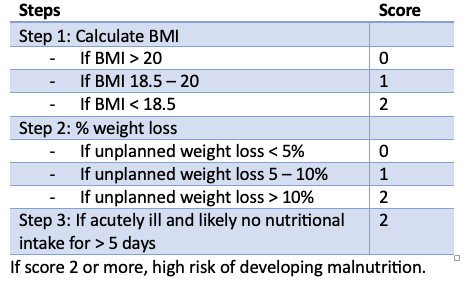
Malnutrition Universal Screening Tool (MUST)
 Others:
- Mini Nutritional Assessment (MNA) includes, in addition, food intake, mobility, neuropsychological status and calf circumference.
- SGA (subjective global assessment)
Others:
- Mini Nutritional Assessment (MNA) includes, in addition, food intake, mobility, neuropsychological status and calf circumference.
- SGA (subjective global assessment)
ABCD Nutritional Assessment Expanded
Source: Reber E, Gomes F, Vasiloglou MF, Schuetz P, Stanga Z. Nutritional Risk Screening and Assessment. J Clin Med. 2019 Jul 20;8(7). pii: E1065. doi: 10.3390/jcm8071065.
Anthropometric Measurements
- BMI
- In older adults, the cut-off for the definition of underweight is higher at < 22, as carrying some extra weight seems to be protective in this population
- Skinfold Measurements
- SFT (Skin Fold Thickness) gives info of energy stores of the body, mainly fat stores
- Subcut fat accounts for half the entire body fat mass
- To estimate total amount of body fat, 4 skinfolds need to be measured:
- Biceps (front side of the middle upper arm)
- Triceps (back side of the middle upper arm)
- Subscapular (under the lowest point of the shoulder blade)
- Suprailiac (above the upper bone of the hip)
- Disadvantage: Higher interindividual variability
- Mid-upper Arm Muscle Circumference (MAMC) – Reflects muscle mass
- Mid-arm Muscle Area (MAMA)
- Gives info about muscle protein stores
- Half of the body’s proteins are stored in skeletal muscles
- MAMA = MAMC – 0.314 x SFT (triceps)
- Disadvantage: Not reliable in pts with fluid overload
- Mostly used for research purposes and not in daily clinical use
- Body Composition
- Describes the body compartments, e.g. fat mass, fat-free mass, muscle mass, bone mineral mass
- Contribute to diagnosis of sarcopenia (progressive and generalized loss of skeletal muscle mass and strength) and sarcopenic adiposity
- Bioelectrical Impedance Analysis (BIA)
- Current is easier to pass through tissues containing a lot of water and electrolytes, like blood and muscles
- Harder to pass through fat tissues, air and bone
- Thus, the greater the fat-free mass, the easier it is to conduct current
- Disadvantages: Not recommended for pts with:
- Fluid overload
- At extremes of BMI (< 16 or > 34)
- ICU
- Elderly
- Creatinine Height Index (CHI)
- Creatinine excretion correlates with lean body mass and body weight
- Requires 24 hr urine collection – which is difficult
- Can be confounded by several factors:
- Renal insufficiency
- Meat consumption
- Physical activity
- Fever
- Infections
- Trauma
- Dual Energy X-ray Absorptiometry (DEXA)
- Gold standard of body composition measurement
- Disadvantage: Some exposure to radiation
- MRI and CT-scan
- Allows quantification of fat mass and fat-free mass and allows estimation of skeletal muscle mass
- Mainly used in research – restricted availability, cost, and time consumption
Biochemical Analysis
- Albumin
- Half-life: 20 days
- Nutrition independent factors:
- Increases in dehydration
- Decreases in:
- Inflammation
- Infections
- Trauma
- Heart failure
- Oedema
- Liver dysfunction
- Nephrotic syndrome
- Detecting malnutrition: Not appropriate in case of anorexia and acute illness
- Monitoring nutritional therapy: not appropriate due to high suggestibility and long half-life
- Insulin-like Growth Factor (IGF-1)
- Half-life: 24 hrs
- Nutrition independent factors:
- Increases in renal failure
- Decreases in:
- Liver diseases
- Severe catabolic status
- Age
- Detecting malnutrition: Rapid decrease in fasting periods
- Monitoring nutritional therapy: Yes! More specific than pre-albumin
- Pre-albumin/ Transthyretin (TTR)
- Half-life: 2 days
- Nutrition independent factors:
- Increases in:
- Renal dysfunction
- Dehydration
- Corticosteroid therapy
- Decreases in:
- Inflammation
- Hyperthyreosis
- Liver dysfunction
- Over-hydration
- Increases in:
- Detecting malnutrition: Not appropriate to detect anorexia, subnormal values within one week in case of fasting
- Monitoring nutritional therapy: Yes! One of the most appropriate proteins
- Transferrin
- Half-lie: 10 days
- Nutrition independent factors:
- Increases in:
- Renal failure
- Iron status
- Acute hepatitis
- Hypoxia
- Decreases in:
- Inflammation
- Chronic infections
- Haemochromatosis
- Liver dysfunction
- Nephrotic syndrome
- Increases in:
- Detecting malnutrition: Low sensitivity and specificity
- Monitoring nutritional therapy: Concentration is independent of the energy and protein intake
- Urinary Creatinine
- Nutrition independent factors:
- Increases in:
- Collection time > 24 hrs
- Infection
- Trauma
- Decreases in:
- Insufficient collection time
- AKI
- Increases in:
- Detecting malnutrition: 1mmol of creatinine is derived from 1.9kg of skeletal muscle mass
- Monitoring nutritional therapy: Not appropriate – very slow
- Nutrition independent factors:
Clinical Evaluation
-
Clinical History
- Key points of:
- GI symptoms, e.g. diarrhoea, vomiting, constipation
- Weight loss
- Loss of appetite
- Inability to chew/swallow
- Poor dentition/oral health
- Key points of:
-
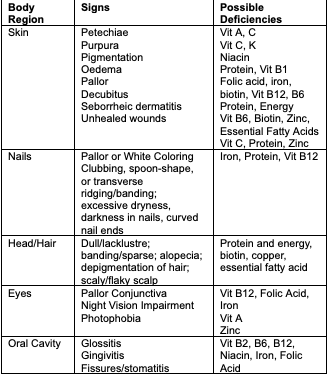
Physical Examination
-
Physical Function
- Hand dynamometry – correlates well with nutritional status, a good predictor of surgical outcome, increased hospital length of stay, higher re-hospitalization rates, and decreased physical status.
- Other possibilities: Knee extension, hip flexion strength, or peak expiratory flow
-
Medication
Dietary History/Current Dietary Intake/Innovative Dietary Assessment Methods
-
Dietary History
- Dietary habits and preferences
- Special diets
- Food allergies and intolerances
- Fluid intake
- Alcohol intake Standardized methods include:
- 24 hr food recall
- Food frequency questionnaires
- Direct observation/food charts
-
Innovative Technologies
- Manual dietary assessment, i.e. use of smartphone apps, webpages
-
Dietician-supported assessment, i.e. users send photos of meals to nutritionists who apply standardized methods, e.g. software, to estimate nutrition values
-
Wearable devices monitoring food intake
-
Computer-aided assessment
-
Energy requirements
- Gold standard for assessment of energy requirements: indirect calorimetry
- Macronutrient requirements for adults
- Proteins: 1.0 – 1.5g/kg/day
- Carbs: 3 – 5g/kg/day
- Fats: 0.8 – 1.5g/kg/day
Disease States
Nutrition in Crohn’s Disease
Nutrition in Pancreatitis
Nutrition in Diabetes
Nutrition in Jaundice
Gastroparesis
Nutrition in Sepsis, Trauma, Burns
The body’s response to sepsis and inflammatory insults is quite different to those of starvation
Response to sepsis and inflammation
- Metabolic rate is increased
- Hyperglycaemia is common
- Lipolysis and glycogenolysis are not reduced by administration of glucose
- Protein catabolism is attenuated by aggressive nutritional support
Influences
- These marked differences are related to the effects of various hormonal and non-hormonal influences
- Cytokines and various immune-modulators have been implicated whilst insulin resistance at the tissue level explain some of the effects
Effects
- Net result – major weight loss, which cannot be easily reversed by aggressive feeding
- This is not usually the case for starvation alone and has a major bearing on the management of septic patients
Nutritional Requirements of the cancer Patient
- Nutritional requirements of patients with malignancy vary considerably with the stage of the cancer, type of cancer, symptoms and treatment plan
Essential Nutritional Consideration for Patients Effects
- Malignancies often result in metabolic and physiological changes which increase the nutritional needs for protein and energy
- Malignancy of the upper GI tract can cause dysphagia or gastric outlet obstruction leading to malnutrition
- Certain malignancies, probably through a paraneoplastic pathway, cause severe loss of appetite and hence cachexia
- In cases of advanced peritoneal disease, mechanical small bowel obstruction can lead to significant nutritional issues
Modalities and Treatment
- Various modalities used to circumvent nutritional problems
- Stents are commonly used to allow pt with upper GI malignancies to eat a soft or at times normal diet
- Steroids used to boost appetite with varying success
- Advanced neoplastic processes are not easily amenable to treatment
Pre-Op and Post-Op Feeding
Evidence and practice for pre-op feeding
- Several studies: pre-op feeding by the parenteral route may not be as safe or as useful as may be intuitively believed. Part of the problem is that the pt may be in a catabolic state because of the underlying disease process. It is important therefore to be judicious in the use of pre-op feeding as the obvious downside may be a delay in the definitive management of the disease process
- In pts who are patently malnourished (e.g. dysphagia from oesophageal neoplasm) then early enteral feeding beyond the point of obstruction is usually a valuable interim step before and during chemotherapy
- Definitive surgical intervention will be after chemo anyhow and enteral feeding would improve the pts pre-op state
- Some belief that pre-op feeding (i.e. immunonutrition) may enhance the pt’s immune system leading to less post-op and peri-op infective complications. Although there is some evidence that this may be the case, it is not widely practiced.
- Of note, avoiding prolonged periods of fasting pre-op in many pt groups is supported by recent literature.
Evidence and practice for post-op feeding
- Post-op feeding is commonly used after major surgery such as oesophagectomy and pancreatectomy. The preferred route is enteral and usually delivered into the jejunum as it is distal to all the anastomoses in both types of surgery
- Some evidence that early jejunal feeding leads to enhanced mucosal function and reduces risk of bacterial translocation from GI tract
- Usually, jejunal feeding is commenced at a low rate, and increased gradually according to patient tolerance (however, limited evidence for this practice)
Variations in approaches to feeding
- In most routine cases, specific pre or post-op feeding is not required, esp. if the pt is of a well-nourished status
- Traditionally surgeons have opted for a gradual transition of ice only to 30mls per hour then 60mls per hour of fluid to full fluids and light diet and finally to a normal diet. A great deal of attention was given to the return of bowel sounds before the pt was allowed to progress. Evidence for these practices is limited
- In recent years, it has become increasingly obvious that pts are not harmed by an unrestricted, early and more rapid progression of intake. Among others, this is demonstrated in ERAS studies, an evidence-based, multidisciplinary approach to peri-operative pt mgmt
- Resolution of ileus is evidenced by reduced abdo distension and passage of flatus. Nonetheless, when a high anastomosis is performed (e.g. oesophagectomy or total gastrectomy) most surgeons would keep the pt nil per orally until healing has occurred. This is sometimes checked with gastrograffin swallow.
Methods to Access for Feeding
There are various methods for providing access for feeding.
- Parenteral
- Central line: subclavian vein (supra and infra-clavicular approaches, insertion of long tube via the cephalic vein)
- Central line: jugular vein
- Peripheral line: cephalic vein
- Enteral nutrition
- NG tube
- Nasoenteric tube (bedside, radiological, or surgical placement of naso-duodenal, naso-jejunal tubes)
- Percutaneous endoscopic gastrostomy (PEG)
- Open gastrostomy
- Tube gastrostomy
- Tube/needle enterostomy
Enteral access
-
- Feeding directly into the GI tract is more physiological and preferred.
- Achieved by insertion of a NG or NJ tube.
- Position of those tubes will require radiological confirmation before use as feeding into the airway will lead to major respiratory complications and can be fatal
- Insertion of an NG tube in a pt with marked facial trauma and base of skull fracture can lead to misplacement of the tube. This can be done via the oral route instead and under radiological or endoscopic control.
-
PEG Complications
- Bleeding
- Infection of the site
- Erosion of the tube
- Skin erosion/necrosis
- Feeding into the abdo cavity
- Occasionally necrotizing fasciitis
- Peri-tube leak of ascites
- Gastric or gastrocolic fistula
-
How to Avoid Complications
- Complications minimized by careful placement techniques and avoidance of excessive pressure at initial tube adjustment
- In the first 24 hrs after insertion, the PEG must be snug against the gastric mucosa but not too tight
- If it is not snug, it may leak around the tube and if too tight, it may lead to gastric or skin necrosis
- Evidence supports enteral nutrition can be commenced 4 hrs after PEG insertion
- Antibiotics are often used at the time of insertion and the site needs daily inspection for 5-7 days
-
Circumstances when PEG insertion is not possible
- May be impossible after major gastric surgery, multiple adhesions and in the presence of a large hiatus hernia as the stomach may be intrathoracic.
- In some cases, e.g. hiatus hernia, a laparoscopically assisted gastrostomy insertion has been described.
- An alternative technique is to place a tube inside the stomach under radiological guidance.
-
- Feeding jejunostomy tubes are usually inserted at the time of major surgery or when a complication has arisen. An alternative insertion technique is under radiological guidance.
-
Associated Complications:
- Infection at the site
- Leakage of feeds at site
- Adhesions and small bowel obstruction
- Volvulus of the loop of small bowel around its fixation point
- Internal hernia
-
How to avoid complications
- Some are avoidable, e.g. use broad-based fixation points rather than a single point around which the bowel can rotate
- Tubes are smaller calibre than PEG tubes and are more likely to occlude if not flushed regularly
- If occluded, they should not be removed but rather exchanged over a guide wire under radiological guidance
- Blocked tubes may occur with some types of medications being put through the tube or if the tube is not flushed regularly enough. Most practitioners prefer that medications are not given via those tubes.
Parenteral nutrition
Goals:
- Maintain lean body mass
- Provide energy for basal metabolism and activity
- Provide macro- and micro-nutrients for healing
Indications:
- Non-functioning or inaccessible GI tract
- High output fistula
- Postop ileus
- Insufficient enteral absorption e.g. short gut, IBD, dysmotility
Contraindications:
- Fasting < 5 days
- Ability to receive enteral feeding
- Terminal illness
Routes of access:
- CVL
- Peripheral venous access – short term only
Nutrient solutions
- Energy sources – 25-35 kCal/kg/day.
- Dextrose (aka D-glucose) (~50%) ~3-4 g/kg/day
- Fat as lipid emulsions (~30%) 1 g/kg/day
- During critical illness, fat is the preferred source, and need to reduce feeds – overfeeding is dangerous. Metabolism is in acute phase and not ready to process nutrients.
- Nitrogen sources – solution of crystalline amino acids. Insoluble amino acids may be absent or present in inadequate amounts.
- Protein (~20%) 0.8 – 1.5 g/kg/day to avoid lean tissue loss
- Water – 30-40 ml/kg/day
- Electrolytes (mmol/L): sodium 100 – 150, potassium 50 – 100, magnesium 8 – 24, calcium 10 – 20, phosphate 15 – 30.
- Trace elements and vitamins must be added daily. Vitamin K not included.
Complications of TPN:
- Metabolic disturbances:
- Hyperglycaemia → lactic acidosis
- Electrolyte disturbances
- Refeeding syndrome
- TPN associated liver dysfunction - https://doi.org/10.1002%2Fcld.888
Complications Associated with Parenteral nutrition
- Central line insertion and parenteral nutrition can lead to the following complications:
- Pneumothorax
- Major vein thrombosis
- Thrombophlebitis
- Sepsis and occasionally endocarditis
- Arterial rather than venous cannulation
- Eroded or misplaced catheter
- Arrythmias
- Abnormal LFTs and cholestasis
Managing TPN Line Sepsis
- If pt unstable and high index of suspicion, e.g. high fevers:
- Remove the line
- If pt stable:
- Take central and peripheral cultures
- Start antibiotics
- Start ethanol locks
- Stop TPN – perfect culture medium
- If Staph aureus or Fungal:
- Hard to clear
- Will probably lose the line
- If replacing TPN line:
- Consider antibiotic coated line
- Start 70% ethanol locks twice weekly
TPN Cholestasis
- Big difference between early and late
- Early cholestasis:
- Ubiquitous
- Almost always due to reversible steatosis
- Can be ignored most of the time
- If concerned, can increase lipid content and reduce glucose or total caloric load
- Late cholestasis:
- More severe and dangerous
- Management Options for Late Cholestasis:
- Avoid sepsis
- Cycling TPN to give body TPN-free hours during each day for liver to recover
- Ursodeoxycholic acid
- Metronidazole – if SIBO suspected
Nutritional Products: Formula
Choice of formula to be given is influenced by:
-
Pt’s nutritional requirements
-
Any abnormality of GI absorption
-
Motility
-
Diarrhoeal loss
-
Presence of other system abnormality, e.g. renal or liver failure
-
Most commercial formulae contain 4.2 kJ/ml, with higher energy versions containing 6.3 kJ/ml.
-
Generally available in fibre free and fibre enriched forms
-
Nutritionally complete but expert dietetic advice should be sought
What are the most commonly used formula?
- Polymeric Formula
- Contain nitrogen as whole protein
- Carb source is partially hydrolysed starch
- Fat contains long-chain triglycerides (LCTs)
- Fibre content variable, the evidence that higher levels are of real benefit is not strong (although most authorities recommend that fibre should be included)
- Semi-elemental (Pre-digested formula/ Oligomeric feeds)
- Contain nitrogen as either short peptides or, in the case of elemental diets, as free amino acids
- Carbs provide much of the energy content with content variable in both quantity and the proportion provided as long-chain triglycerides (LCTs) and medium chain triglycerides (MCTs)
- Aim of ‘pre-digested diets’ is to improve nutrient absorption in the presence of significant malabsorption
- Importance is probably greater in maldigestive, e.g. pancreatic disease, rather than malabsorptive states
- If pt has short gut and no colon, the high osmolality can cause excess movement of water into the gut and hence higher stomal losses
- Additional MCT intake in the presence of a chyle leak may be considered
- Elemental diet
- All protein present as individual amino acids
- Occasionally used nowadays (via both oral and enteral routes)
- When consumed orally, most pts find formula unpalatable and poorly tolerated
- Finds occasional use when there is a significant mal-digestive state.
- TPN or PN
- Composition of PN formulations can vary greatly
- Typical standard bags are often ready-to-hang and may contain 2 or 3 macronutrients (in varying quantities) with some electrolytes and micronutrients
- May also need to be added in pharmacy prior to admin
- Non-standard solutions exist, designed to meet the needs of a specific individual or pt group but more expensive and less commonly used
- PN solutions can be altered to suit individual needs
- Aim is to satisfy calorific, protein, fatty acid, vitamin and trace mineral requirements
- Ability to alter formulations does often depend on pharmacy compounding facilities, budget and storage capability
- Common reasons for alteration include increased GI losses, burns, pregnancy, renal failure, liver failure, re-feeding syndrome and long term PN
- Disease specific and pharmaco nutrient feeds
- Low carb, higher fat enteral formula are available with pts with respiratory failure, however, avoidance of overfeeding is probably the more important in limiting respiratory demands
- Renal pts may require modified protein, electrolyte modified, and volume-restricted formulae while liver pts may need lower sodium, volume-restricted formula
- No good evidence that pts with hepatic encephalopathy should have low protein intakes and evidence for benefit of feeds rich in branch chain amino acids is weak
- Sodium supplemented enteral or oral nutrition support products are not available commercially but can be very useful in the management of pts with high output stomas who tend to become salt depleted
- Consequently, instability of feed components may be an issue and checks should be made with manufacturer
TPN Contents
- Macronutrients:
- Lipid Emulsions
- Protein
- Essential and non-essential amino acids (except Arginine and Glutamine)
- Requirement: 1g/kg/day
- Carbohydrate
- Dextrose Monohydrate
- Max utilisation rate 5-7mg/kg/min
- Electrolytes
- Sodium – 100 to 150 mEq
- Potassium – 50 to 100 mEq
- Calcium – 10 to 20 mEq
- Magnesium – 8 to 24 mEq
- Phosphorus – 15 to 30 mEq
Effects of Re-feeding
- Refers to the severe fluid and electrolyte abnormalities and hyperglycaemia that may occur when a malnourished or starved pt is recommenced on oral, enteral or parenteral nutrition
- Can result from metabolic or hormonal abnormalities
- If unrecognised and left untreated, complications arise and can be fatal
- Syndrome relates to suppressed release of insulin duration starvation so that when feeding restarts, hypophosphataemia can occur
- Important to screen for pts at risk of re-feeding syndrome, e.g. pts who have been starved for more than 1 week
- Abnormalities may persist for 3-4 days after feeding restarts
-
Symptoms: abdo cramps, dizziness, heart palpitations, nausea, fainting and/or diarrhoea
-
Tends to occur after partial gastrectomy and pyloroplasty although it can occur to a lesser extent after other major upper GI surgery
-
Early dumping: rapid emptying of food into proximal small bowel ⇒ significant loss of enteric juice into GI tract Symptoms are those of hypovolaemia with dizziness, fainting and tachycardia. In addition: distension of small bowel leads to cramping and diarrhoea. Not mixing fluids with solids during meals and having smaller meals more frequently can be helpful.
-
Octreotide has been used with some benefits in more severe cases
-
Late dumping: occurs 2 hrs after a meal – related to reactive hypoglycaemia. Initial surge of carbohydrate leads to a relative excess of insulin release ⇒ Subsequent hypoglycaemia
-
Often treated with a sweet when symptoms appear
-
Symptoms typical of hypoglycaemia
Obesity
- Obesity (latin ‘obesus’ - to devour) - condition in which there is a surfeit of ingested calories in excess of the body’s physiological energy requirements, which is then stored in adipose tissue.
Measures of Adiposity
- Body Mass Index (BMI) – obesity classified using BMI
- Not perfect but reproducible, non-invasive, readily obtained, and moderately accurate over the commonly used range with some minor caveats
- Categories and BMI:
- Underweight: < 18.5
- Ideal: 18.5 – 24.9
- Overweight: 25 to 29.9
- Obese – Class I: 30 – 34.9
- Obese – Class II: 35 – 39.9
- Obese – Class III: 40 to 50
- Super obese: > 50
- Waist Circumference (WC) – performed with a fixed tension tape, at the midpoint between the lower margin of the last palpable rib and the top of the iliac crest
- Hip Circumference (HC) – measured around the widest portion of the buttocks with the tape parallel to the floor
- Waist to hip ratio (WHR) – waist measurement divided by hip measurement
- Waist-height ratio (WHtR) – waist measurement divided by height
- Measure of the distribution of body fat with higher values indicating higher risks of obesity-related cardiovascular diseases.
- Correlated with abdominal obesity
Cultural Considerations in Interpreting BMIs in Adults
- South Asian, Chinese and Japanese population groups may have more body fat at lower weights and at greater risk of ill-health than people from other population groups
- Lower BMI threshold (e.g. > 23) may be considered
- Pacific islander populations, including Torres Straight Islander peoples and Maori, tend to have a higher proportion of lean body mass, so a higher BMI threshold may be considered
- Aboriginal peoples have a relatively high limb to trunk ratio, so a lower BMI threshold may be considered
- Many aboriginal people have proportionately more body fat and it is deposited centrally so even modest levels of overweight are associated with increased risk of T2DM
Aetiology and Epidemiology
-
Obesity rates increasing globally over the past three decades
-
In Australia and NZ, mean BMI has been increasing steadily since 1980, with now up to 2/3 of adults either overweight or obese
-
More worrying trend exists in childhood obesity rates
-
WHO recognizes increasing prevalence is a result of unhealthy eating and low levels of physical activity
-
Problem linked not only to children’s behaviour but also to social and economic development and policies in the areas of agriculture, transport, urban planning, the environment, food processing, distribution, marketing, and education
-
Problem is societal, and therefore, it demands a population-based multi-disciplinary approach
Nature vs. Nurture of Obesity
Source: Naukkarinen J, Rissanen A, Kaprio J, Pietilainen K. Causes and consequences of obesity: the contribution of recent twin studies. Int J Obes (Lond). 2012 Aug; 36(8): 1017 – 1024.
- Out of a total of 658 MZ twin pairs at 25 years, only 18 healthy pairs of MZ twins significantly discordant for obesity (intra-pair BMI difference >= 3) were identified. The majority of MZ twin pairs are very similar for BMI – underscores the strong genetic component to BMI and predisposition to obesity.
- Less demonstrated in childhood obesity
Causes of Obesity
-
Labour-saving technology has decreased the amount of daily physical exertion previously associated with occupational and domestic tasks.
-
Sedentary leisure activities continue to increase in scope and duration, in contrast with opportunities for incidental physical activity during the day
-
Single portion sizes have increased over the past 30 years
-
Driven by the availability and food industry profit margins and driving a 20% increase in per capita energy ingestion between 1970 and 2009.
-
Our conceptual approach to food and our notions of normal eating behaviour are learnt in early childhood, which raises concern for future generations since children are now constantly bombarded by advertising for, and perennial access to, energy dense foods of questionable nutritional value.
Pathophysiology of Obesity
Source: Guyenet S, Scwartz M. Clinical review: regulation of food intake, energy balance, and body fat mass: implications for the pathogenesis and treatment of obesity. J Clin Endocrinol Metab. 2012. 97 (3), 745 – 755.
Short-term, Meal-related Determinants of Food Intake
- Gastric distension ⇒ Sensed by mechanoreceptor neurons in stomach ⇒ Relayed to hindbrain via vagal afferent and spinal sensory nerves
- Examples of satiation/satiety peptides released from intestinal enteroendocrine cells include:
- CCK
- Secreted by duodenal and jejunal mucosa primarily in response to fat and protein ingestion
- Decreases food intake rapidly but transiently via activation of vagal afferents
- Glucagon-like peptide 1 (GLP-1)
- Oxyntomodulin
- Peptide YY
- Apolipoprotein A-IV
- Enterostatin
- Additional satiety-inducing peptides released from the endocrine pancreas include pancreatic polypeptide, glucagon, and amylin
- Ghrelin
- Secreted by gastric mucosa
- Stimulates feeding and implicated in meal initiation
- Afferent signals involved in satiety processed in the hindbrain – Nucleus of the Solitary Tract (NTS) – processes satiety-related input from vagal sensory fibers
- Adjacent area postrema (outside the BBB) can sense input from circulating peptides directly
Long-term Regulation of Food Intake and Energy Balance
- Leptin
- Secreted by adipocytes in proportion to body fat mass
- Acts in brain as negative feedback regulator of adiposity
- Limits energy intake and supporting energy expenditure
- Mediated via leptin receptors in hypothalamic area such as the arcuate nucleus, paraventricular nucleus, ventromedial hypothalamic nucleus, and lateral hypothalamic area
- Arcuate nucleus
- Two distinct leptin-sensitive neuron subpopulations in arcuate nucleus
- Neurons express proopiomelanocortin (POMC) synthesize and release melanocortin peptides, e.g. alpha-MSH – potentially anorexigenic (inhibit food intake) and are stimulated by leptin and insulin
- Adjacent to POMC cells are orexigenic neurons that express neuropeptide Y and agouti-related peptide (an endogenous antagonist of the melanocortin-4 receptor)
- Reciprocal to POMC cells
- Enable/stimulates feeding behaviour
- Negative energy balance and loss of body fat ⇒ Lower plasma levels of adiposity negative-feedback signals, e.g. leptin and insulin + raises ghrelin levels ⇒ Neuropeptide Y and AgRP neurons activated ⇒ POMC cells inhibited ⇒ Promotion of hyperphagia, positive energy balance and recovery of lost fat
Food Reward and Palatability
- Brain regions involved in the reward value of food: dopaminergic neurons of the ventral tegmental area and substantia nigra, the insula, amygdala, striatum, nucleus accumbens, orbitofrontal cortex, and the lateral hypothalamic area
- Dopamine signalling involved in the ‘wanting’ of food, and opioids involved in the ‘liking’ of food
- Endocannabinoid system includes ligands anandamide and 2-arachydonlyglycerol – act on cannabinoid receptors
- CB1 receptor agonism selectively increases consumption of palatable foods
Obesity and Energy Homeostasis
- Reduced fat mass ⇒ Increase in hunger and energy efficiency via a mechanism involving low leptin signal
- Obesity: a state in which the defended level of body fat is increased
- CNS dopamine signalling – affect food intake and body fat mass
- D2 receptor availability in the striatum is reduced in obesity
- Notion that obesity arises from a reward deficit – affected pts over-eat to compensate for a diminished perception of food reward
- Alternative theory: Desensitization of specific dopamine circuits caused by overexposure to highly palatable/rewarding food and/or suppressive effect of elevated leptin and insulin on reward regions in obese pts
- Gastric bypass surgery
- Simply excluding the duodenum and/or increasing nutrient exposure of the ileum may favour defence of a reduced level of body fat mass
- Postprandial levels of PYY3-36 and GLP-1 increase substantially whereas Ghrelin levels decrease in most studies – Anorexigenic changes ⇒ Fat loss
- Neural signals from gastric distention increase due to surgically induced reduction of stomach volume ⇒ Enhance inhibitory effect of gut peptides on appetite and food intake
- Bypassed duodenum involved in reward processing ⇒ Diminishes food reward valuation
Genetic Factors
- To date, all known non-dysmorphic monogenic obesity syndromes in humans arise from loss-of-function mutations in genes involved in the leptin signalling pathway
- Heritable factors (genetics and epigenetics) explains 45 – 75% of BMI variability in human populations
Leptin Resistance: Cause or Effect of Obesity?
- Obesity: characterized by both increases in fat mass and circulating leptin levels ⇒ Suggests leptin resistance
What percentage of energy expenditure does basal metabolic rate account for? BMR accounts for 60 – 75% of daily calorie expenditure – Wikipedia
BMR accounts for 50 – 70% - Blundell et al, 2012, Role of resting metabolic rate and energy expenditure in hunger and appetite control: a new formulation.
BMR accounts for 60% - Science direct
Medical Complications of Obesity Annual all-cause mortality doubles at a BMI around 35 kg/m2 and increases exponentially thereafter
Obesity contributes to morbidity and mortality through 3 mechanisms:
- Alteration of hormonal balance
- Increased levels of free fatty acids
- Mechanical effects
However, obesity is not indicative of the individual’s nutritional status Despite an excessive caloric intake, obese individuals have relatively high rates of micronutrient deficiencies
Medical Complications of Obesity Cardiovascular
- HTN, IHD, venous stasis
Respiratory
- Reduced exercise tolerance, chronic airway limitation, sleep apnoea
Gastrointestinal
- GORD, steatohepatosis, cholelithiasis
MSK
- Back pain, arthropathy, osteoarthritis
Endocrine diseases
- Dyslipidaemia, diabetes mellitus, PCOS, metabolic syndrome
Malignancy
- Breast, endometrial, oesophageal, colorectal, and pancreatic cancers
Loss of quality of life
- Susceptibility to injury and to post-op complications - difficult to quantify
- Translate into loss of quality of life and years of productive life
Therapeutic Options Best therapeutic strategy: massive and sustained weight loss Achieved through total caloric reduction and/or increased physical activity US weight control registry discusses some of the best evidence for sustained weight loss as a result of lifestyle changes
Non-Surgical Options for Weight Loss
- Average weight loss at 2 years with the weight loss strategy
- Diets – 1.1-2.7kg
- Supervised modified low calorie diets – 4.1kg
- Meal replacement – 6.5kg
- Behaviour modification – 2.8kg
- Pharmaceuticals – up to 6.9kg
- Exercise Programs – 1.3kg
What is the average weight loss at 2 years using a Very Low Energy Diet (VLED)?
- 1.4kg – Parretti et al. 2016. Clinical effectiveness of very-low-energy diets in the management of weight loss: a systematic review and meta-analysis of randomized controlled trials.
Bariatric Surgery
- In contrast to non-surgical treatment, evidence for bariatric surgery – the strongest of which comes from the Swedish Obese Subjects trial (Sjostrom, NEJM 2007) – suggests that surgery is a reliable option for significant initial weight loss and long-term weight maintenance
- This non-randomised, comparative study enrolled pts into control or surgery groups, according to their personal preference
- Control group were permitted to receive any combination of non-surgical treatments
- No significant weight change in the control group, whereas each of the surgical groups demonstrated sustained weight loss that was statistically significant and clinically meaningful
Source: 2007 Sjostrom, Effects of bariatric surgery on mortality in Swedish obese patients
Intro:
-
Life expectancy of severely obese pts reduced by an estimated 5-20 years
-
Current obesity management guidelines from the National Health & Medical Research Council recommend consideration of bariatric surgery for patients with BMI >= 40 kg/m2 or for those with BMI >= 35 with obesity-related health problems who have failed other weight loss treatments
-
Management of bariatric surgery patients should be carried out in a multi-disciplinary setting involving specialist surgeons, endocrinologists, endoscopists, interventional radiologists, specialised nursing staff, physiotherapists, dieticians and psychologists in a facility with equipment and resources appropriate for special care needs of morbidly obese individuals
Surgical Options for Weight Loss
- Surgical procedures may be classified into one of three categories:
- Restrictive procedures – limits quantity consumed at any given meal
- Malabsorptive surgery – limits the caloric absorption from food
- Combined procedures – have elements of both restrictive and malabsorptive mechanisms
Procedures performed most commonly are:
- Laparoscopic adjustable gastric banding
- Laparoscopic gastric sleeve resection
- Roux-en-Y gastric bypass
Other procedures have been developed but are not commonly performed. Amongst others, these include:
-
Biliopancreatic diversion
-
High gastric reduction
-
Ileojejunal bypass
-
Banded gastroplasty
-
These procedures have largely been forced into obsolescence by the advent of safer procedures with comparable efficacy.
Which procedure has the highest re-operation rate? Gastric banding
Gastric Balloon Intragastric balloon therapy, which involves a soft, saline-filled balloon endoscopically placed in the stomach to promote a feeling of satiety, has been proposed as a minimally invasive option for weight loss following failed dietary and exercise regimens.
-
Nausea is a common complication, and ulceration of the stomach or obstruction can occur less commonly
-
Associated weight loss with gastric balloon more effective than with diet alone
-
Not comparable to surgical interventional alternatives
-
Advantage of being non-invasive and can be performed as a day procedure
-
Mechanism essentially restrictive - maintenance of weight loss can be problematic due to non-compliance with adjunctive lifestyle measures
-
In morbidly obese pts, it may be seen as a form of induction therapy prior to definitive bariatric surgery
Source: Lim, 2018, Intragastric balloon therapy for weight loss
Intro:
- Temporary method of inducing weight loss
- Soft, saline-filled balloon in stomach to promote satiety and restriction – any balloon with volume 400mls or greater can induce satiety
- Delayed gastric emptying – alternative mechanism of action
Indications
- BMI > 27 in Europe or > 30 in USA
- Pt has tried and failed previous attempts at weight management with diet and exercise alone AND
- One of the following situations:
- Early intervention to induce weight loss
- If BMI > 40 or > 35 with one or more obesity related medical illnesses who are eligible for bariatric surgery but refuse bariatric surgery
- BMI > 50 – bridging intervention prior to bariatric surgery – reduce the complexity and risk of subsequent bariatric surgery
Contraindications
- Absolute contraindications:
- Previous gastric surgery
- Coagulation disorder
- Bleeding lesion in the upper GI tract
- Pregnancy or desire to become pregnant
- Alcoholism or drug addiction
- Severe liver disease
- Contraindications to endoscopy
- Relative contraindications:
- Previous abdo surgery
- Large hiatal hernia
- IBD
- Chronic NSAID use
Types of Intra-gastric Balloons
- Orbera
- Most commonly used worldwide
- Silicone – placed endoscopically – filled with 400-700mls saline
- Resides in stomach for 6 months and then removed endoscopically
- ReShape
- Dual balloon system
- Silicone – placed endoscopically – filled with 450mls each
- Resides in stomach for 6 months and then removed endoscopically
- If one balloon ruptures, second balloon prevents migration into small intestine which may cause SBO
Efficacy
- Weight loss
- Approx 33% excess body weight or 10% of total body weight
- Orbera balloon – At 12 months post implantation, meta-analysis shows average total body weight loss is 11.27 % (95% CI 8.17 – 14.36)
Comparison to Other Surgical Techniques
- Percentage of excess weight loss for gastric bypass, sleeve gastrectomy and adjustable gastric band are 70, 60 and 50% at 2 years
Adverse Events
- Common:
- Nausea, vomiting, abdo pain, reflux, burping, dyspepsia, and constipation
- 7.2% of pts required treatment for dehydration, 2% required readmission, 1.1% required re-operation and 6.2% required intervention within 30 days
- Few pts (4-7%) experience significant GI symptoms after the first week of therapy
- Serious Adverse Events:
- Rupture and migration – if balloons left in longer than intended
- May cause obstruction
- Rupture and migration – if balloons left in longer than intended
- Many balloons are filled with blue dyed saline. If rupture occurs, pt’s urine will turn blue or green
- Other: severe vomiting, abdo pain, epigastric pain, nausea, bleeding ulcer, gastric outlet obstruction, gastric perforation
- Procedure-related adverse events
- Most occur during balloon removal, e.g. oesophageal tear, pneumonia, GI bleeding, oesophageal perforation
A Closer Look at Bariatric Surgery Operative mortality
- Bariatric procedures have been performed safely in recent years, with 0.2 – 0.5% operative mortality for gastric bypass and 0.1% for band and sleeve procedures.
- Complications are specific to the type and complexity of surgery performed, and their investigation and management should be undertaken by clinicians with specialised training and experience in this branch of surgery with appropriate resources at their disposal.
Nutritional deficiency following surgery Part 1:
- Nutritional deficiencies sometimes occur following bariatric surgery, particularly following procedures with malabsorptive component, but maladaptive eating due to severe food intolerances following gastric banding may also be a contributing factor. The mechanisms include:
- Insufficient intake due to dietary restrictions and food intolerance (esp. milk, meat and fibre)
- Exclusion of gastric antrum results in reduced secretion of gastric acid, sometimes required to absorb vitamins and minerals, esp. vitamin B12 and iron
- Duodenojejunal rapid transit, impairing absorption of calcium, iron and thiamine, which mainly occurs in the duodenum
- Asynergy between food boluses and biliopancreatic secretions in the common intestinal limb
Nutritional deficiency following surgery Part 2:
- Half of protein absorption occurs in the duodenum. Decreased ingestion due to intolerance of high protein foods can lead to a protein deficient diet without essential amino acids.
- Decreased contact time between a food bolus and the absorptive surfaces of the duodenum and upper jejunum which further decreases protein absorption.
- Can lead to general deterioration with loss of muscle mass, anomalies of skin, mucosa, hair, and nails and pitting oedema, which occur in 6 – 13% of gastric bypass cases with a long roux limb, with peak incidence 1-2 years post-surgery
- Lipid-soluble vitamins may not be adequately digested due to diminished contact with bile
- Ca2+ largely absorbed from the duodenum and proximal jejunum, deficiencies may occur in up to 10% of gastric bypass pts at 2 years after surgery, which may in turn lead to secondary hyperparathyroidism with resultant loss of bone mineral density, esp. in post-menopausal women
Iron deficiency following surgery
- Iron deficiencies are the most frequent deficiency after gastric bypass, due to multiple mechanisms, including:
- Decreased ingestion, due to intolerance of red meat
- Reduced exposure to gastric hydrochloric acid results in reduction of transformation from the ferric (Fe3+) to the absorbable ferrous (Fe2+) form
- Reduced contact with the absorptive surfaces of the duodenum and upper jejunum results in reduced absorption.
- Despite daily multivitamin ingestion, iron deficiency can occur in up to one third of gastric bypass patients 2 years post-op rising to over half of women of childbearing age Anaemia may result from iron deficiency, or from deficiencies of vitamin B12 or folate
Rowan French NZAGS Nutrition Lecture
General Benefits of Nutrition Post-Surgery
- Wound healing
- Immunological function
- Mobilisation
- Respiratory function
- Psychological wellbeing
- Gut health, better absorption, reduced translocation, better motility
Goals of TPN
- Maintain lean body mass
- Provide energy for basal metabolism and activity
- Provide macro- and micro- nutrients for healing
What to Provide:
- Energy – 25-35 kCal/kg/day depending on status
- Reduced feeds in critically ill
Risks of overfeeding include:
- Increased CO2 production
- Hyperglycaemia
- Hepatic Steatosis
- Increased renal solute load
- Refeeding syndrome
- Protein – 0.8 to 1.5g/kg/day to avoid lean tissue loss
- Carbohydrates and Lipids have protein- sparing effect, i.e. Carbs and fat will be used for energy instead of using up protein
- Lipid – 1g/kg/day – 20% triglyceride solution
- Long-Chain Fatty Acids = Intralipid
- Medium-Chain Fatty Acids = Clinoleic
- Omega 3 Fatty Acids = Omegaven
- Provides 9kcal/g as opposed to 4
- Benefits:
- Reduced CO2
- Iso-osmotic
- Reduced fatty liver
- Reduced insulin
- Carbohydrates – 4-7 mg/kg/min provided as glucose (or 5g/kg/day)
- Maximum oxidative rate for glucose is 5- 10g/kg/day
- Water – 30-40ml/kg/day
- Vitamins – Water and Fat Soluble
- Vitamin K not included
- Minerals – MTFEE or similar
- Electrolytes
Short Bowel
- Generally, pt will be okay with > 100cm of small bowel or > 60cm of small bowel with intact colon
- In Short Bowel Syndrome, colon can absorb water, sodium and some amino acids and energy from short chain fatty acids
- Ileum can take over jejunal function but not the other way around
- After large lengths of small bowel resection, pts get hypergastrinaemia for 6 months – thus, add PPI or H2 Antagonist
- Reserve Octreotide – can slow adaptation and cause gallstones
- Limit hypotonic fluids to 500ml/day
- Add oral rehydration to leverage sodium/glucose cotransporter mechanisms
Managing TPN Line Sepsis
- If pt unstable and high index of suspicion, e.g. high fevers:
- Remove the line
- If pt stable:
- Take central and peripheral cultures
- Start antibiotics
- Start ethanol locks
- Stop TPN – perfect culture medium
- If Staph aureus or Fungal:
- Hard to clear
- Will probably lose the line
- If replacing TPN line:
- Consider antibiotic coated line
- Start 70% ethanol locks twice weekly
TPN Cholestasis
- Big difference between early and late
- Early cholestasis:
- Ubiquitous
- Almost always due to reversible steatosis
- Can be ignored most of the time
- If concerned, can increase lipid content and reduce glucose or total caloric load
- Late cholestasis:
- More severe and dangerous
- Management Options for Late Cholestasis:
- Avoid sepsis
- Cycling TPN to give body TPN-free hours during each day for liver to recover
- Ursodeoxycholic acid
- Metronidazole – if SIBO suspected