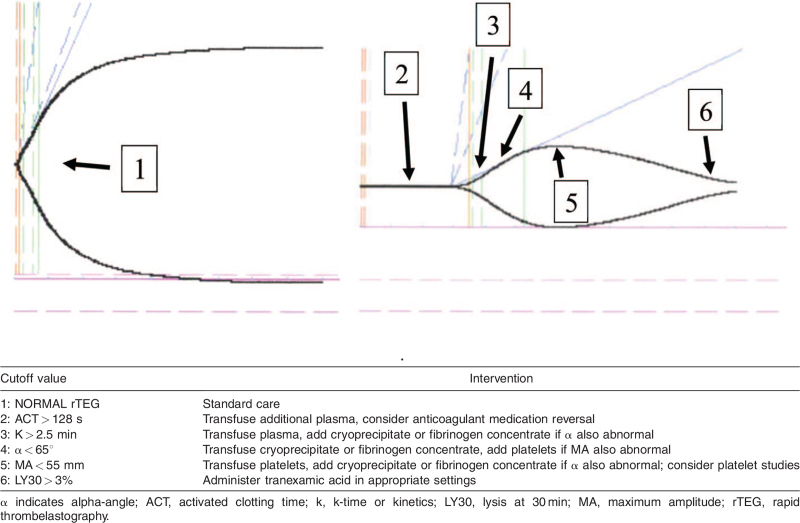
Viscoelastic testing is a point-of-care whole blood assay used to assess coagulation function in real time. It provides dynamic information on clot formation, stability, and breakdown, which is useful in trauma, surgery, liver disease, and massive transfusion protocols.
- Both VHA - Viscoelastic Haemostatic Assays
- INR and aPTT is not useful in a potentially hypothermic trauma patient as these samples are heated so may not reflect the true value → TEG
- How is it done
- Blood sample in cup with pin then oscillated creating fibrin strands
- Pin connected to detector system to get information regarding rotation (TEG) or impedance (ROTEM)
- Generates graph
- What are they testing
- Test of real time coagulation effectiveness
- Can be done bedside and result available within 10 minutes
- Allow goal directed haemostatic therapy - only give what’s needed
- Information about platelets, clotting factors, fibrinolysis
- Helps differentiate between pathological abnormality and surgically correctable bleeding
- Outcomes
- Loss of coag factors → Give FFP
- Loss of fibrinogen → Give FFP or cryoprecipitate or fibrinogen
- Loss of platelets/function → Give platelets
- Hyperfibrinolysis → TXA
- Heparinized → Protamine
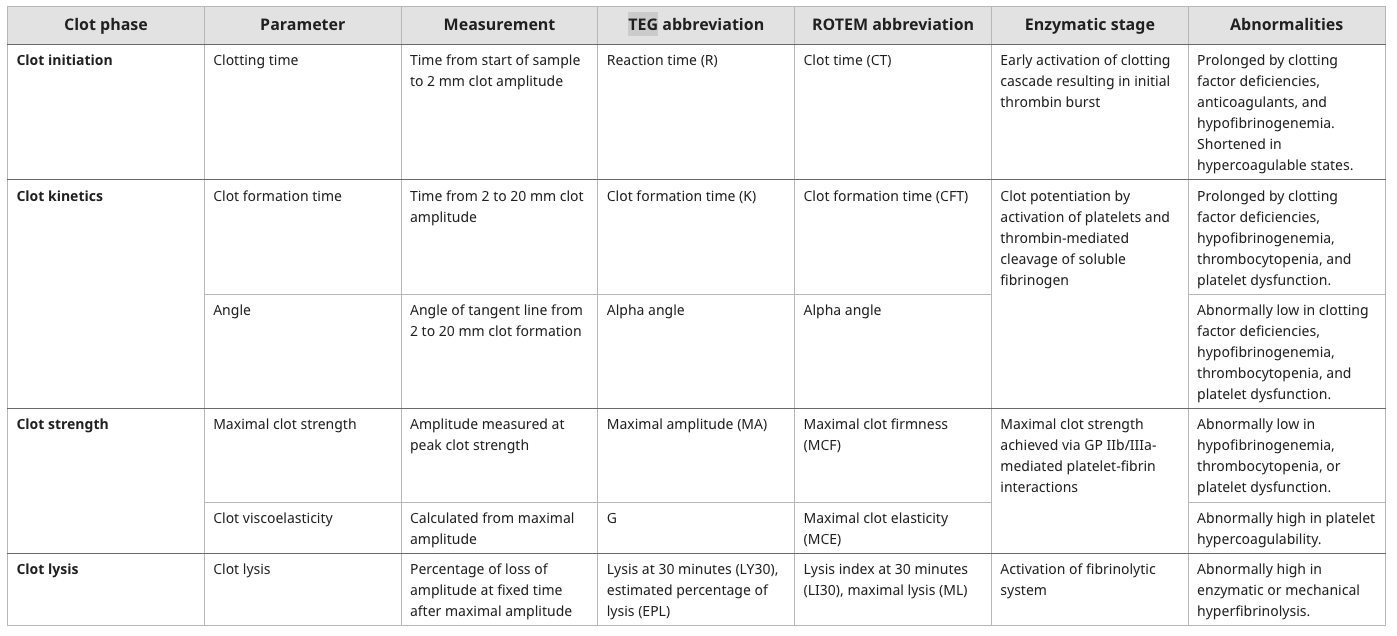
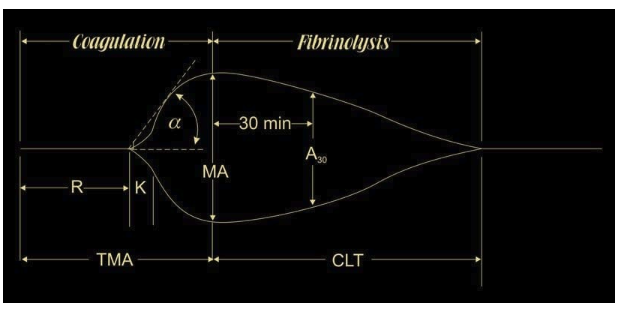
- R value = reaction time (s)
- time of latency from start of test to initial fibrin formation (amplitude of 2mm)
- initiation phase
- dependent on clotting factors
- K = kinetics (s)
- time taken to achieve a certain level of clot strength (amplitude of 20mm)
- amplification phase
- dependent on fibrinogen
- alpha = angle (slope of line between R and K)
- measures the speed at which fibrin build up and cross-linking takes place, hence assesses the rate of clot formation
- “thrombin burst” / propagation phase
- dependent on fibrinogen
- TMA = time to maximum amplitude(s)
- MA = maximum amplitude (mm)
- represents the ultimate strength of the fibrin clot; i.e. overall stability of the clot
- dependent on platelets (80%) and fibrin (20%) interacting via GPIIb/IIIa
- A30 or LY30 = amplitude at 30 minutes
- percentage decrease in amplitude at 30 minutes post-MA
- fibrinolysis phase
- CLT = clot lysis time (s)
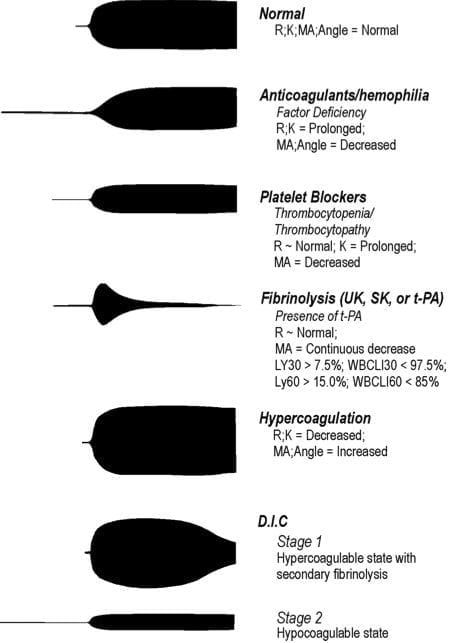
- Increased R time ⇒ FFP
- Decreased alpha angle ⇒ cryoprecipitate
- Decreased MA ⇒ platelets (consider DDAVP)
- Fibrinolysis ⇒ tranexamic acid (or aprotinin or aminocaproic acid)