Section: Critical care Curriculum: Curriculum, page 50
Clotting cascade
Overview
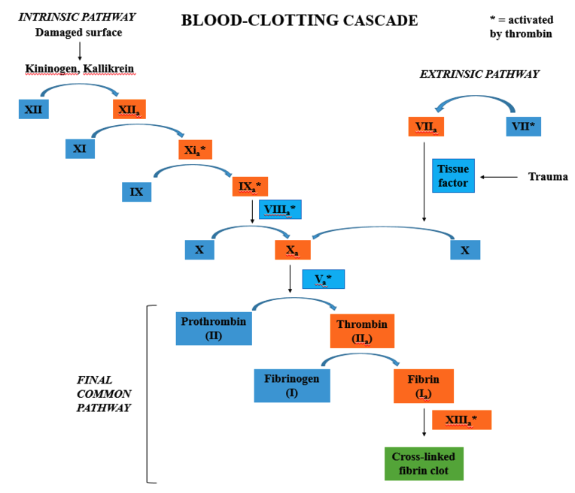
- The clotting cascade is a complex series of biochemical events that lead to the formation of a blood clot, crucial for hemostasis and the prevention of excessive bleeding.
- It involves two pathways (intrinsic and extrinsic) that converge on a common pathway.
Key Phases
- Initiation:
- Triggered by vascular injury exposing tissue factor (TF) or collagen.
- Amplification:
- Rapid activation of clotting factors to amplify the response.
- Propagation:
- Formation of a stable fibrin clot.
Intrinsic Pathway (“Contact Activation Pathway”)
- Trigger: Exposure of blood to collagen or negatively charged surfaces (e.g., subendothelial tissue).
- Steps:
- Factor XII → Factor XIIa (activated by contact with collagen).
- Factor XI → Factor XIa (activated by XIIa).
- Factor IX → Factor IXa (activated by XIa).
- Factor IXa, along with Factor VIIIa (activated by thrombin), activates Factor X in the common pathway.
Extrinsic Pathway (“Tissue Factor Pathway”)
- Trigger: Exposure of tissue factor (TF) from damaged tissue.
- Steps:
- Tissue factor (TF) binds to and activates Factor VII → Factor VIIa.
- TF-VIIa complex activates Factor X in the common pathway.
Common Pathway
- Trigger: Activation of Factor X by either the intrinsic or extrinsic pathway.
- Steps:
- Factor X → Factor Xa (activated by IXa-VIIIa or TF-VIIa complexes).
- Factor Xa, with Factor Va (activated by thrombin), converts prothrombin (Factor II) → thrombin (Factor IIa).
- Thrombin converts fibrinogen (Factor I) → fibrin, forming the clot.
- Factor XIIIa (activated by thrombin) cross-links fibrin strands, stabilizing the clot.
Atrial fibrillation
Anticoagulant
Warfarin
- MOA
- Inhibits vitamin K epoxide reductase complex 1 (VKORC1)
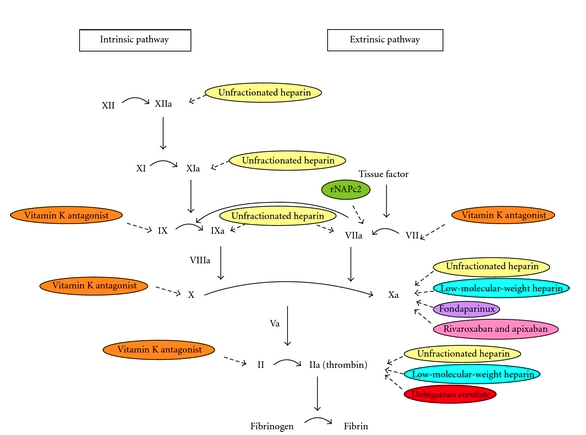
- Vitamin K antagonist - affects factors 2, 7, 9 and 10
- Extrinsic (trauma/tissue factor) and intrinsic (damaged surface) pathways both affected
- Starting warfarin initially causes ≈ 5/7 increased thrombotic tendency because
- An initial effect of warfarin is to ↓Protein C & S → ↑ Thrombosis
- Factor 7 ↓s first this → ↑s INR but other coagulations factors may still be high (INR falsely reassuring initially, after starting warfarin)
- Not safe in pregnancy → ↑ Birth defects
- Half-life 40 hours, duration of effect = 2-5 days
- Current Australasian guidelines: Start on 5mg
- Interactions: Amiodarone, Antibiotics, Statins, Anticonvulsants
- INR > 6 – need to be worried
- Monitor
- INR
- Surgery
- Stop 5 days before elective or reverse effect with vitamin K (24 hrs), FFP and Prothrombinex
- Dose
- Guided by INR
- Takes 3 days reflect change in dose in INR
- Considerations
- Risk of effective dose reduction or increase due to impact on CYP enzymes
- Bleeding risk
- Easily reversible with Vitamin K, FFP and prothrombinex
- Perioperative management
- Withhold for 5 days
- If high risk VTE - bridging clexane to start 3 days pre procedure
- Can check INR 1-2 days before procedure
- Reversing
- Expect rebound hypercoagulability
- Can operate once INR < 1.6
- Consider to cover with clexane/ heparin if
- For high & moderate risk
- Reversal approach
- Rapid reversal e.g bleeding or emergency surgery
- 10mg Vitamin K
- Prothrombinex + Fresh frozen plasma
- Supra-therapeutic INR
- Oral vitamin K
- W/H Warfarin
- Monitor INR
- Rapid reversal e.g bleeding or emergency surgery
- Prothrombinex – usually 30-50 U/kg
- Purified human coagulation factors from plasma
- Has II, IX, X
- Don’t need to match ABO
- Half-life 3-60 hours – what little 7 there is gets used up first
- FFP
- To supplement for the lack of VII in the above
- 150-300mL
- Do need to match ABO
- Vitamin K - Orally, if possible, as IV has been linked to anaphylaxis
- 2mg if just need to reduce as the level has crept up
- 5-10mg if need reversal
- Acts within 6-12 hours
- Need to give if want to sustain effect of FFP, Prothrombinex
- Restart 12-24 hours post-operative
Dabigatran
- MOA
- Direct reversible thrombin inhibitor (factor 2a)
- Prevents conversion of fibrinogen to fibrin
- Surgery
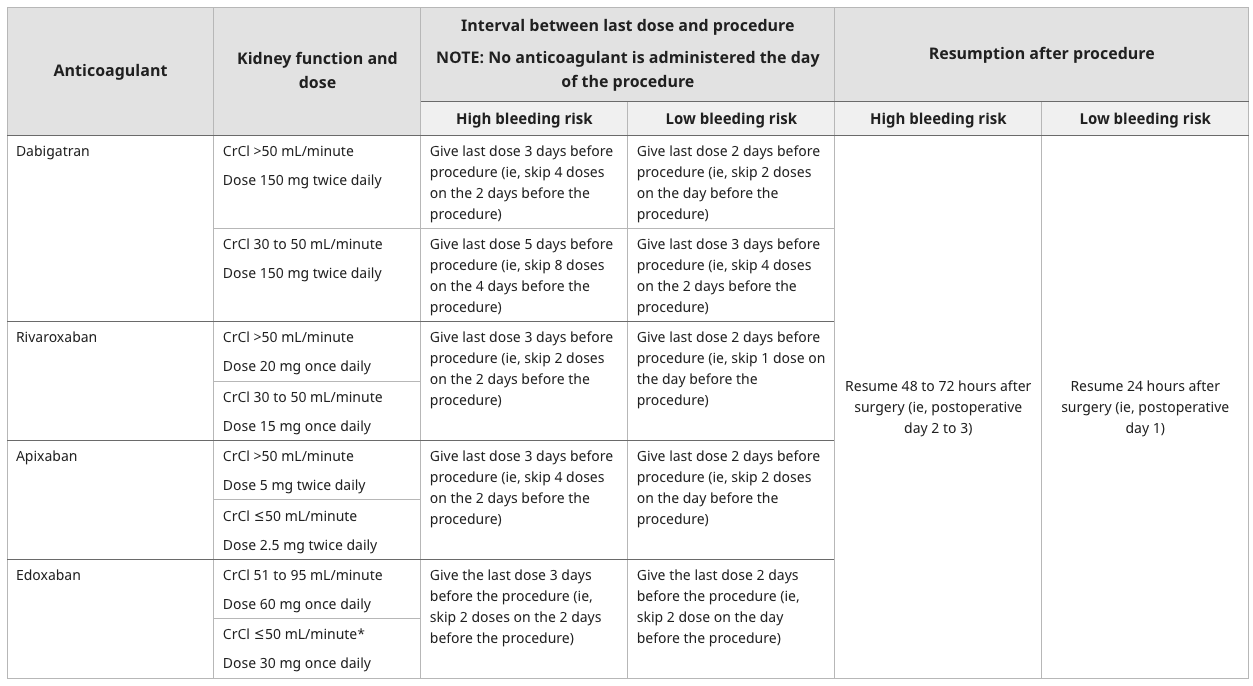
- Stop 3 days before surgery and 4 if renal failure
- Monitor
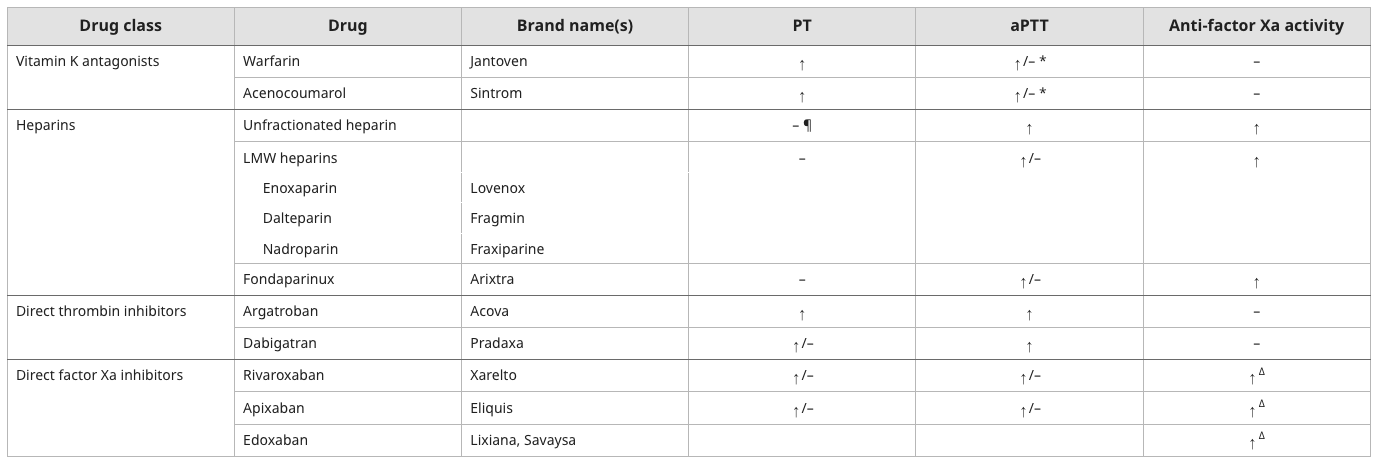
- Thrombin time
- Highly sensitive to dabigatran. A normal TT suggests minimal drug effect, but a prolonged TT does not correlate directly with drug levels.
- aPTT
- Provides a rough estimate of dabigatran’s effect. Prolonged aPTT suggests anticoagulation, but the relationship is nonlinear at higher drug concentrations
- Dilute TcT
- A specialised assay specifically designed to measure dabigatran levels.
- Thrombin time
- Reversal
- Monoclonal antibody
- Praxbind (Idarucizumab)
- Dose
- 150mg BD if >50 CrCL
- 110mg BD if 30-50 CrCL
- Considerations
- Renal excreted
- Takes longer to washout in renal impairment
- Only reversal agent is Praxbind (Idarucizumab) - works instantly
- Perioperative management
- CrCL >50 - withhold for 48hrs prior to day of surgery
- CrCL 30-50 - withhold for 4-5 days prior to day of surgery
- Resumption
- 24 hours after surgery if low bleeding risk
- 48-72 hours after surgery if high risk bleeding
Rivaroxaban
- MOA
- Direct factor Xa inhibitor (reversibly)
- Prevents conversion of prothrombin (2) to thrombin (2a)
- Dose
- 20mg OD
- 15mg OD in renal impairment
- Considerations
- No antidote available in NZ yet
- Andexanet Alfa (Andexxa®)
- Perioperative management
- Same as Dabi
- WH 3 days before for normal renal function
- WH 4 days before for renal impairment
Clexane
- Low molecular weight heparin (LMWH)
- Lower protein binding = More predictable dose response
- Main types used in NZ:
- Enoxaparin (Clexane): fragments of 2000 to 8000 daltons
- Dalteparin (Fragmin): mean molecular weight 4,500 daltons
- Main types used in NZ:
- Lower protein binding = More predictable dose response
- MOA
- Enhancing the activity of antithrombin III
- Leading to inhibition of specific clotting factors, primarily Factor Xa and, to a lesser extent, Factor IIa (thrombin).
- 4-6 hour t1/2
- Dose
- Depends on indication
- Safe in pregnancy
- Considerations
- OD vs BD dosing
- Perioperative Mx
- Withhold the dose day before procedure
- Reversal of Heparin (& LMWH)
- Protamine: 1mg for 100U heparin, maximum of 50mg
- For clexane 1mg protamine for each 1mg of clexane
- Only 60% of the anti-Xa activity is neutralised
- Short half-life so may need to repeat
Heparin
- Unfractionated Heparin (UFH)
- Sulphated glycosaminoglycan from bovine lung or porcine intestinal mucosa
- MOA
- Enhancing the activity of antithrombin III to form a complex
- Inhibits factor 10a
- To a greater degree than Clexane
- Small direct inhibition of factor 2a (thrombin)
- Hepatic metabolism with some renal excretion
- Start working within an hour of starting (same for LMWH), peak 3-5 hours
- 45 minute t1/2 – need to turn off 6 hours pre-surgery
- Dose
- Depends on indication
- Considerations
- Continuous on the ward
- Monitor
- Using protocol
- Regular APTT
- Loading and maintenance dosing
- Perioperative Mx
- Stop the infusion 6 hours prior to procedure
- Reversal of Heparin (& LMWH)
- Protamine: 1mg for 100U heparin, maximum of 50mg
- For clexane 1mg protamine for each 1mg of clexane
- Only 60% of the anti-Xa activity is neutralised
- Short half-life so may need to repeat
Antiplatelet
Aspirin
- MOA
- COX1 inhibitor
- Dose
- 100mg OD
- Considerations
- Irreversible action
- New platelets need to be made to replace function
- No antidote
- Perioperative Mx
- Continue
- Continue
Clopidogrel
- MOA
- Antiplatelet
- Converted to active metabolite then
- Binds P2Y12 receptor on platelet to prevent ADP binding
- Selective irreversible antagonist of P2Y12 receptor (platelets)
- Dose
- 75mg OD
- Considerations
- No antidote
- Perioperative Management
- Withhold 5 days prior to surgery
Ticagrelor
- MOA
- Antiplatelet
- Direct noncompetitive antagonist of P2Y12 receptor (platelets)
- Independent of ADP binding site
- Dose
- 90mg BD
- Considerations
- No commercially available antidote
- Perioperative Management
- Withhold 5 days prior to surgery
Reversing
- When considering reversing anticoagulation, consider:
- Risk (of bleeding) of procedure
- Low risk procedures
- Diagnostic gastroscopy (with or without Bx)
- EUS
- ? Minor operations
- High risk procedures
- Colonoscopic polypectomy
- ERCP
- Dilation of strictures
- Endoscopic Rx of varices
- PEG formation
- EUS with FNA
- ? Major operations
- Low risk procedures
- Risk of condition for which pt is being anticoagulated
- Low risk
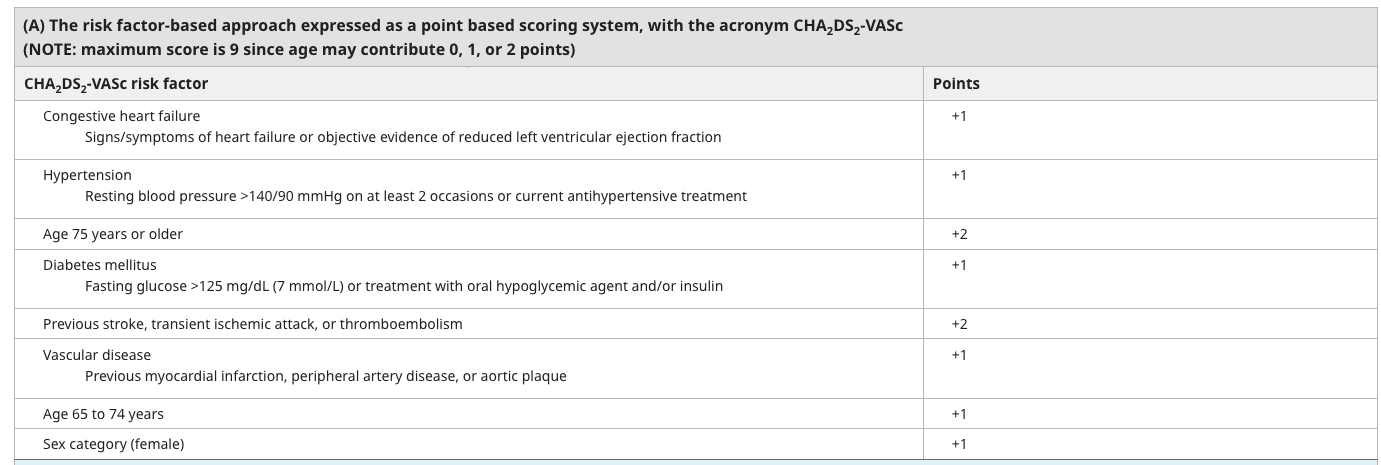
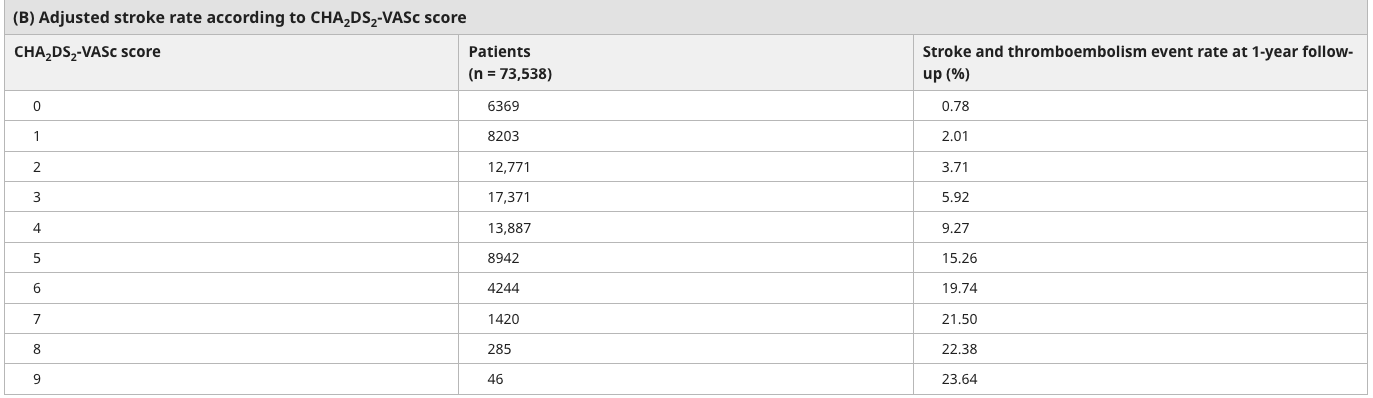
- AF without valvular disease
- Prosthetic metal Aortic heart valve
- Xenograft heart valve
-
3mths after DVT
- High risk
- AF + Mitral stenosis / Prosthetic heart valve
- Prosthetic metal Mitral heart valve
- < 3mths after VTE
- Thrombophilic syndromes
- Pts on clopidogrel and coronary artery stenting within last 6-12mths (for drug-eluting stents) or within one month (for bare metal stents)
- Low risk
- Risks of Bleeding
- Elderly
- Major surgery within 14/7
- Recent prosthetic arterial graft within last 1/12 (thrombus seals graft until new intima)
- Thrombotic CVA within 14/7
- PUD
- Visceral (cerebral) tumours
- Severe hypertension
- Bleeding disorders
- Risk (of bleeding) of procedure
Jehovah’s Witness
- Patients often refuse blood products due to religious beliefs, but their acceptance of specific treatments varies based on individual interpretation and discussion with their religious advisors.
Generally Refused (Considered Blood Products)
These are derived from whole blood and typically not accepted:
- Fresh Frozen Plasma (FFP) – Contains all clotting factors.
- Cryoprecipitate – Rich in fibrinogen, Factor VIII, vWF, and Factor XIII.
- Platelets – Direct blood product.
- Whole Blood, Packed RBCs, or White Cells – Strictly prohibited.
Potentially Acceptable (Fractionated Products – Case-by-Case Basis)
Some Jehovah’s Witness patients may accept small-volume, fractionated plasma derivatives, such as:
- Prothrombin Complex Concentrate (PCC) – Contains Factors II, VII, IX, X (e.g., Beriplex, Octaplex).
- Fibrinogen Concentrate (e.g., RiaSTAP) – Alternative to cryoprecipitate.
- Recombinant Factor Products (synthetic, not blood-derived):
- Recombinant Factor VIIa (e.g., NovoSeven).
- Recombinant Factor VIII / IX (for hemophilia).
- Albumin-Based Solutions – Some may accept if highly purified.
- Antithrombin III, Protein C & S Concentrates – If derived from plasma, acceptance varies.
Fully Acceptable (Non-Blood Alternatives)
- Tranexamic Acid (TXA) – Antifibrinolytic agent.
- Desmopressin (DDAVP) – Increases Factor VIII and vWF release.
- Vitamin K – Helps in clotting factor synthesis but does not replace factors.
- Erythropoietin (EPO) – Stimulates RBC production, reducing transfusion need.
- Iron Therapy – IV or oral for anemia management.