Definition
- Type of Neurofibromatosis
- Autosomal Dominant neurocutaneous condition that can involve almost any organ
- Disease in which Schwann cells grow tumours in skin, skeleton and spinal nerve roots
- AD mutation in NF1 (tumour suppressor) gene, Ch17
- Leads to loss of function of the protein product neurofibromin (a GTPase)
- Leads to unopposed RAS activity & dysregulated cell proliferation
Clinical
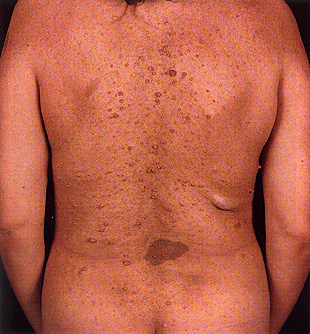
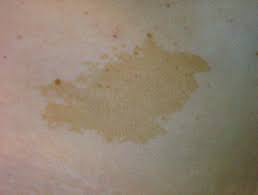
- Café-au-lait macules
- The presence of six or more café-au-lait macules is highly suggestive
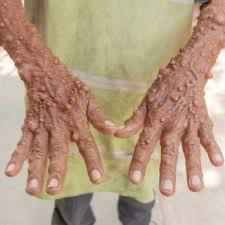
- Neurofibromas
- Benign tumors of peripheral nerve sheaths
- Can become malignant Malignant peripheral nerve sheath tumor
- Freckling of groin and armpit
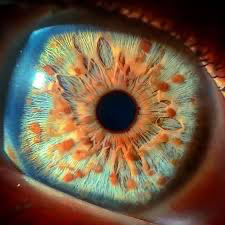
- Lisch spots
- Pigmented spots (hamartomatous lesions) of the iris
- Optic Glioma / Meningiomas / Astrocytomas
- Pheochromocytoma (in 3-5% of pts)
- Sarcoma, GIST, Breast cancer
- Learning disabilities
- Pancreatic neuroendocrine neoplasms
Pathology
- 50% of patients present with new (rather than inherited) mutations
- Neurofibromas:
- Composed of Schwann cells, Fibroblasts, Mast cells & vascular components
- Can develop at any point along a nerve
- Types: Cutaneous, Subcutaneous & Plexiform
- On skin, appear: Brown, pink or skin coloured
- < 10% develop cancerous growths
Diagnosis
- Revised diagnostic criteria for neurofibromatosis type 1 (NF1)
- A: The diagnostic criteria for NF1 are met in an individual who does not have a parent diagnosed with NF1 if 2 or more of the following are present:
- ≥ 6 Café au lait spots
-
5 mm if pre-puberty
-
15 mm if post-puberty
-
- Freckling in the axillary or inguinal region*
- 2 or more neurofibromas of any type or 1 plexiform neurofibroma
- Optic pathway glioma
- 2 or more iris Lisch nodules
- A distinctive osseous lesion such as sphenoid dysplasia, anterolateral bowing of the tibia, or pseudarthrosis of a long bone
- A heterozygous pathogenic neurofibromin 1 (NF1) variant with a variant allele fraction of 50% in apparently normal tissue such as white blood cells
- ≥ 6 Café au lait spots
- B: A child of a parent who meets the diagnostic criteria specified in A merits a diagnosis of NF1 if 1 or more of the criteria in A are present
- A: The diagnostic criteria for NF1 are met in an individual who does not have a parent diagnosed with NF1 if 2 or more of the following are present:
Investigations
- Genetic testing
Management
- The approach to treatment of the various tumors associated with NF1 depends upon the type of tumor, its effect on adjacent tissues, and related complications.
- Surgical treatment and pain management of plexiform neurofibromas (PNs) can be challenging.
- Surgical resection often is limited to debulking of a specific area of a large lesion.
- Progressive or symptomatic plexiform neurofibromas may be treated with mitogen-activated protein kinase kinase (MEK) inhibitors
Prognosis
- Estimated 3-15% lifetime risk of malignant disease
- Change in size / pain could be a sign of malignant transformation
Pictures
- Café-au-lait macules
- Lisch nodules (picture below)
- Subcutaneous neurofibromas